Explore how observability and telemetry transform live games through real-time monitoring, player insights, and performance optimization, enabling developers to deliver seamless and engaging gaming experiences.
In the era of live service games, success is no longer defined solely by launch quality—it depends on continuous monitoring, iteration, and player satisfaction. This is where observability and telemetry play a critical role. Together, they provide deep insights into system performance, player behavior, and overall game health, enabling developers to make data-driven decisions in real time.
What is Observability in Games?
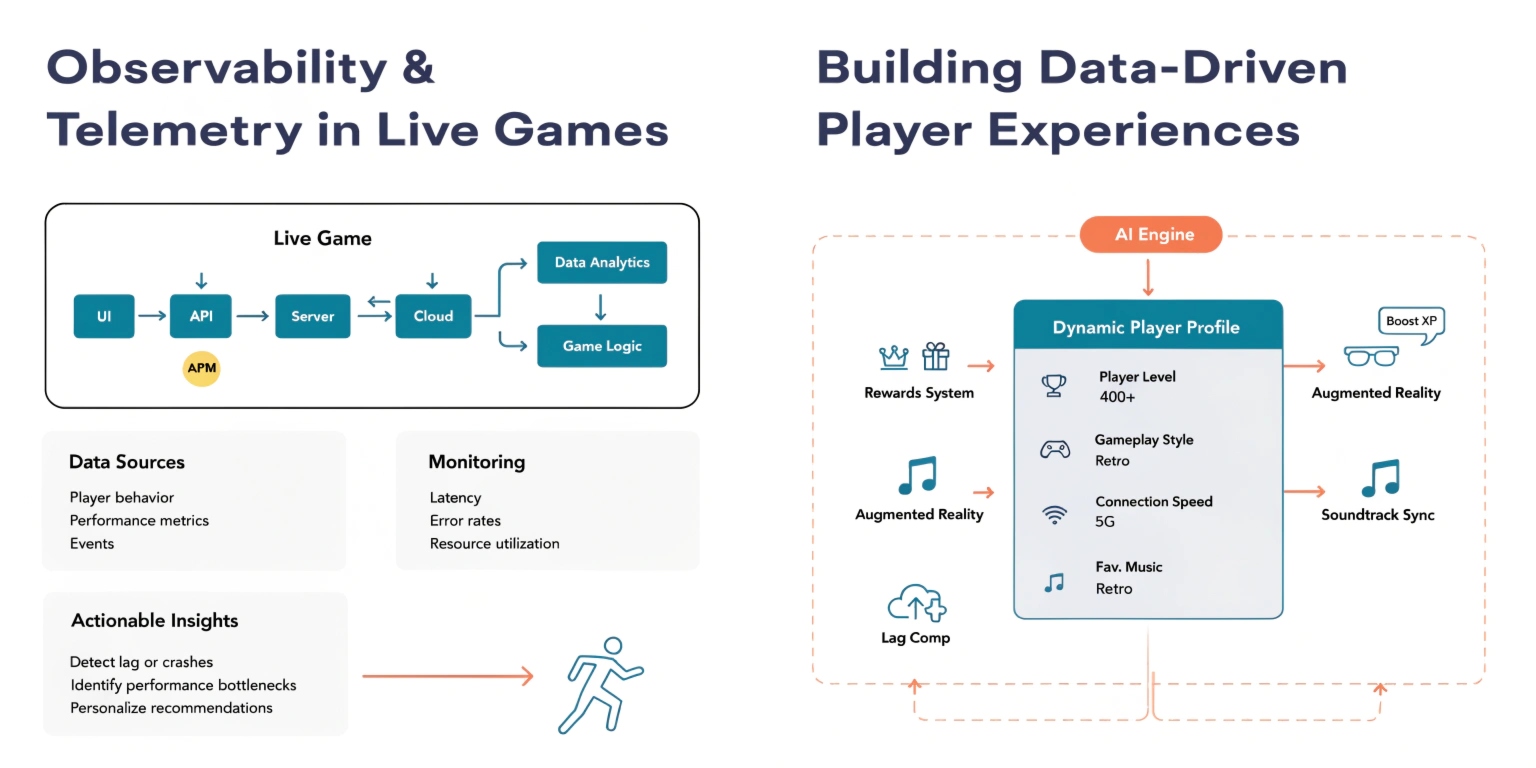
Observability refers to the ability to understand the internal state of a system by analyzing its outputs. In game development, this includes logs, metrics, and traces generated during gameplay. Observability helps developers detect issues such as server lag, crashes, or unexpected gameplay behavior without directly accessing the internal system.
Unlike traditional debugging, observability is proactive. It allows teams to identify patterns, predict failures, and maintain stability in live environments.
Understanding Telemetry
Telemetry is the process of collecting data from players and systems during gameplay. This includes:
- Player actions (movement, combat, purchases)
- System performance (FPS, latency, memory usage)
- Game events (level completion, achievements, failures)
Telemetry provides the raw data that feeds observability systems. When analyzed effectively, it offers valuable insights into how players interact with the game and where improvements are needed.
Why Observability & Telemetry Matter in Live Games
Modern games operate as complex, distributed systems with millions of concurrent users. Without proper monitoring, even minor issues can escalate quickly.
Key benefits include:
1. Real-Time Issue Detection
Developers can instantly detect crashes, bugs, or server overloads. This minimizes downtime and ensures a smoother player experience.
2. Performance Optimization
By tracking metrics like frame rate and latency, teams can optimize performance across devices and networks.
3. Player Behavior Insights
Telemetry reveals how players engage with content—what they enjoy, where they drop off, and what drives monetization.
4. Data-Driven Game Design
Game designers can refine mechanics, difficulty levels, and progression systems based on real player data rather than assumptions.
Core Components of Observability
To build an effective observability system, developers rely on three pillars:
Logs
Detailed records of events that occur within the game. Logs are essential for debugging and tracing issues.
Metrics
Quantitative data such as CPU usage, server response time, and active player count. Metrics provide a high-level view of system health.
Traces
These track the journey of a request through different systems, helping identify bottlenecks in multiplayer or backend services.
Implementing Telemetry in Games
Successful telemetry implementation requires careful planning. Collecting too much data can overwhelm systems, while too little can limit insights.
Best practices include:
Define Clear Objectives
Identify what you want to measure—player retention, session length, or in-game economy balance.
Use Event-Based Tracking
Capture specific actions such as level starts, item purchases, or quest completions.
Ensure Data Privacy
Comply with data protection regulations and anonymize sensitive player information.
Optimize Data Pipelines
Use efficient pipelines to process and store large volumes of data without affecting game performance.
Tools and Technologies
Several tools help developers implement observability and telemetry effectively:
- Analytics platforms for player behavior tracking
- Cloud monitoring services for infrastructure insights
- Custom dashboards for real-time visualization
- Alerting systems for anomaly detection
Integrating these tools ensures a seamless flow of data from the game client to backend systems.
Challenges in Observability & Telemetry
Despite their benefits, implementing these systems comes with challenges:
Data Overload
Massive volumes of telemetry data can become difficult to manage and analyze.
Latency Issues
Real-time processing requires robust infrastructure to avoid delays in insights.
Integration Complexity
Combining multiple tools and systems can be technically demanding.
Cost Management
Storing and processing large datasets can increase operational costs.
The Future of Observability in Games
As games continue to evolve, observability is becoming more advanced with the integration of AI and machine learning. Predictive analytics can identify potential issues before they occur, while automated systems can respond to anomalies without human intervention.
Additionally, real-time personalization powered by telemetry data is shaping the future of gaming. Developers can dynamically adjust content, difficulty, and rewards based on individual player behavior, creating highly engaging experiences.
Conclusion
Observability and telemetry are no longer optional—they are essential for the success of live games. By providing real-time insights into performance and player behavior, these systems enable developers to maintain stability, optimize gameplay, and deliver engaging experiences.
In a competitive gaming landscape, the ability to understand and act on data can be the difference between a game that thrives and one that fades away. Investing in robust observability and telemetry systems ensures that developers stay ahead, delivering seamless and immersive experiences to players worldwide.
We build scalable web, mobile, and game products for clients worldwide — combining modern frameworks, cloud infrastructure, and best engineering practices.
.jpg)