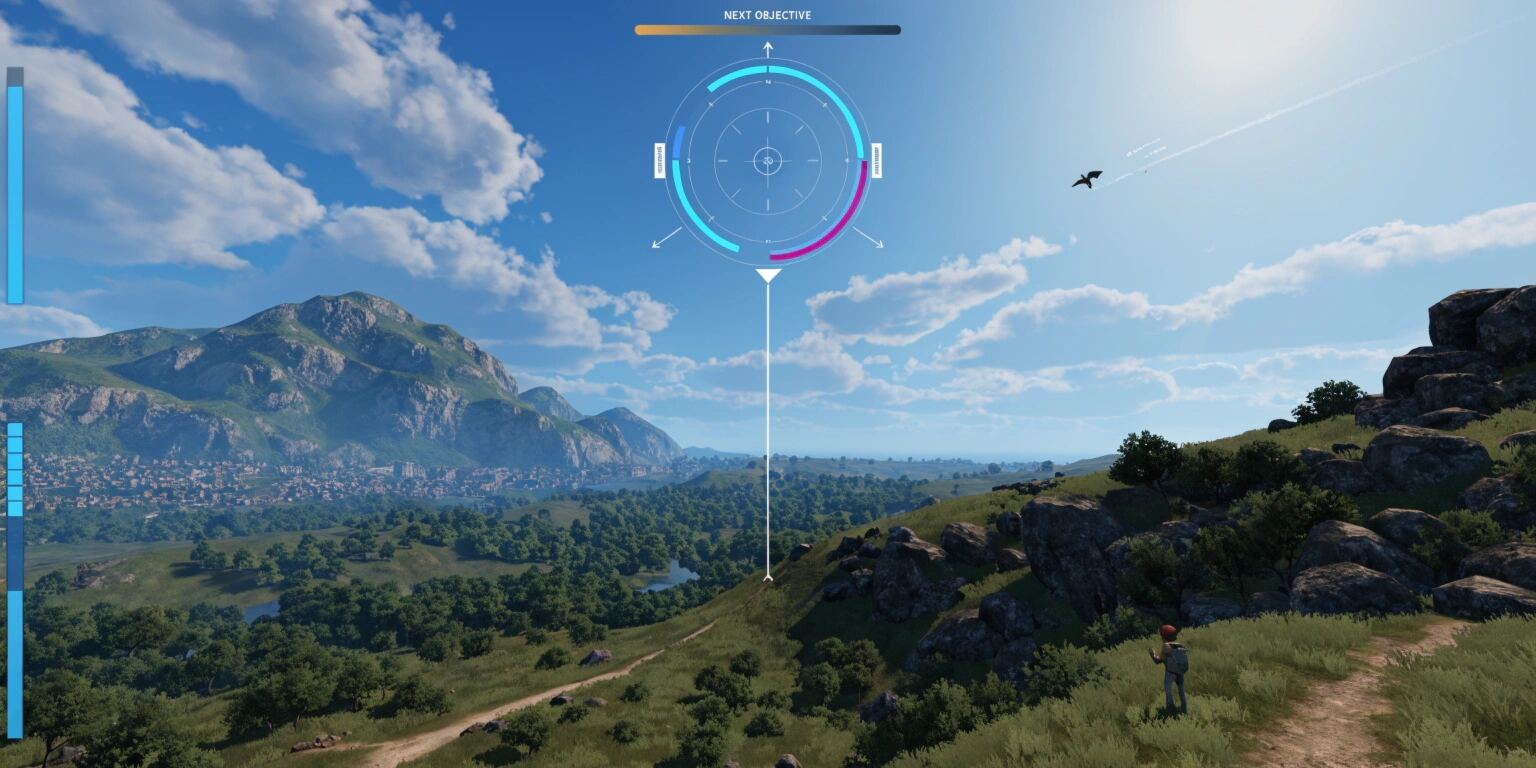
Discover how navigation systems enable intelligent AI movement in massive open-world games. Learn about NavMeshes, A* pathfinding, hierarchical navigation, dynamic obstacle handling, and optimization techniques used in modern game development.
namic Obstacle Avoidance
Open worlds constantly change.
Examples include:
- Vehicles
- Wildlife
- Other NPCs
- Moving platforms
- Destructible objects
- Temporary barriers
Navigation systems must adjust paths in real time rather than relying solely on precomputed routes.
Techniques include:
- Local avoidance algorithms
- Steering behaviors
- Dynamic NavMesh updates
- Collision prediction
These methods create believable AI movement.
Multi-Agent Navigation
Open-world games often feature hundreds or thousands of simultaneously active NPCs.
If every character follows identical routes, congestion occurs.
Multi-agent navigation systems enable NPCs to:
- Maintain personal space
- Avoid collisions
- Form groups
- Queue naturally
- Navigate crowds efficiently
This creates more realistic city environments and large-scale battles.
Terrain-Aware Navigation
Modern open worlds include diverse terrain types:
- Mountains
- Rivers
- Forests
- Bridges
- Caves
- Buildings
Navigation systems evaluate terrain properties such as:
- Movement speed
- Elevation
- Accessibility
- Surface type
- Environmental hazards
AI can then choose safer or faster routes depending on its objectives.
Procedural World Navigation
Many modern games generate environments procedurally.
Since maps do not exist before gameplay begins, navigation data must also be generated dynamically.
Developers create navigation meshes or graph structures during world generation to support AI movement immediately after terrain creation.
This approach is common in survival and sandbox games.
AI Decision-Making and Navigation
Navigation is closely integrated with decision-making systems.
Behavior Trees and Utility AI determine where NPCs should travel based on goals such as:
- Finding resources
- Attacking enemies
- Seeking shelter
- Following companions
- Exploring new areas
Navigation systems then compute the optimal route to achieve those objectives.
Optimization Techniques
Efficient navigation is essential for maintaining high frame rates.
Developers optimize navigation using:
- Hierarchical pathfinding
- Navigation caching
- Path smoothing
- Asynchronous path calculation
- Level-of-detail (LOD) AI
- Selective path recalculation
- GPU-assisted navigation
These techniques reduce CPU usage while maintaining responsive AI.
Emerging Technologies
Artificial intelligence continues to improve navigation systems.
Emerging innovations include:
- Machine learning-based pathfinding
- Reinforcement learning navigation
- Neural navigation models
- Crowd simulation powered by AI
- Predictive movement algorithms
- Cloud-assisted AI processing
These technologies enable NPCs to adapt more intelligently to changing environments.
Best Practices
When designing navigation systems for massive open worlds:
- Use hierarchical navigation for large maps.
- Combine NavMeshes with dynamic obstacle avoidance.
- Optimize world streaming and navigation loading.
- Test AI across different terrain types.
- Minimize unnecessary path recalculations.
- Integrate navigation with behavior systems.
- Continuously profile CPU and memory usage.
Following these practices ensures smooth gameplay and realistic NPC interactions.
Conclusion
Navigation systems are a cornerstone of modern open-world game development. They allow AI characters to move intelligently across expansive environments, react to dynamic obstacles, and interact naturally with players and the world around them. Technologies such as Navigation Meshes, A* pathfinding, hierarchical navigation, and world streaming work together to create immersive experiences while maintaining high performance.
As open-world games continue to expand in scale and complexity, navigation systems will increasingly leverage artificial intelligence, procedural generation, and cloud computing to deliver even smarter NPC behavior. Developers who master these technologies will be well-equipped to build the next generation of engaging, seamless, and believable game worlds.
We build scalable web, mobile, and game products for clients worldwide — combining modern frameworks, cloud infrastructure, and best engineering practices.
.jpg)