Discover how Mixed Reality is revolutionizing business applications by improving collaboration, training, product visualization, and customer engagement. Learn its benefits, implementation strategies, industry use cases, and future potential for digital transformation.
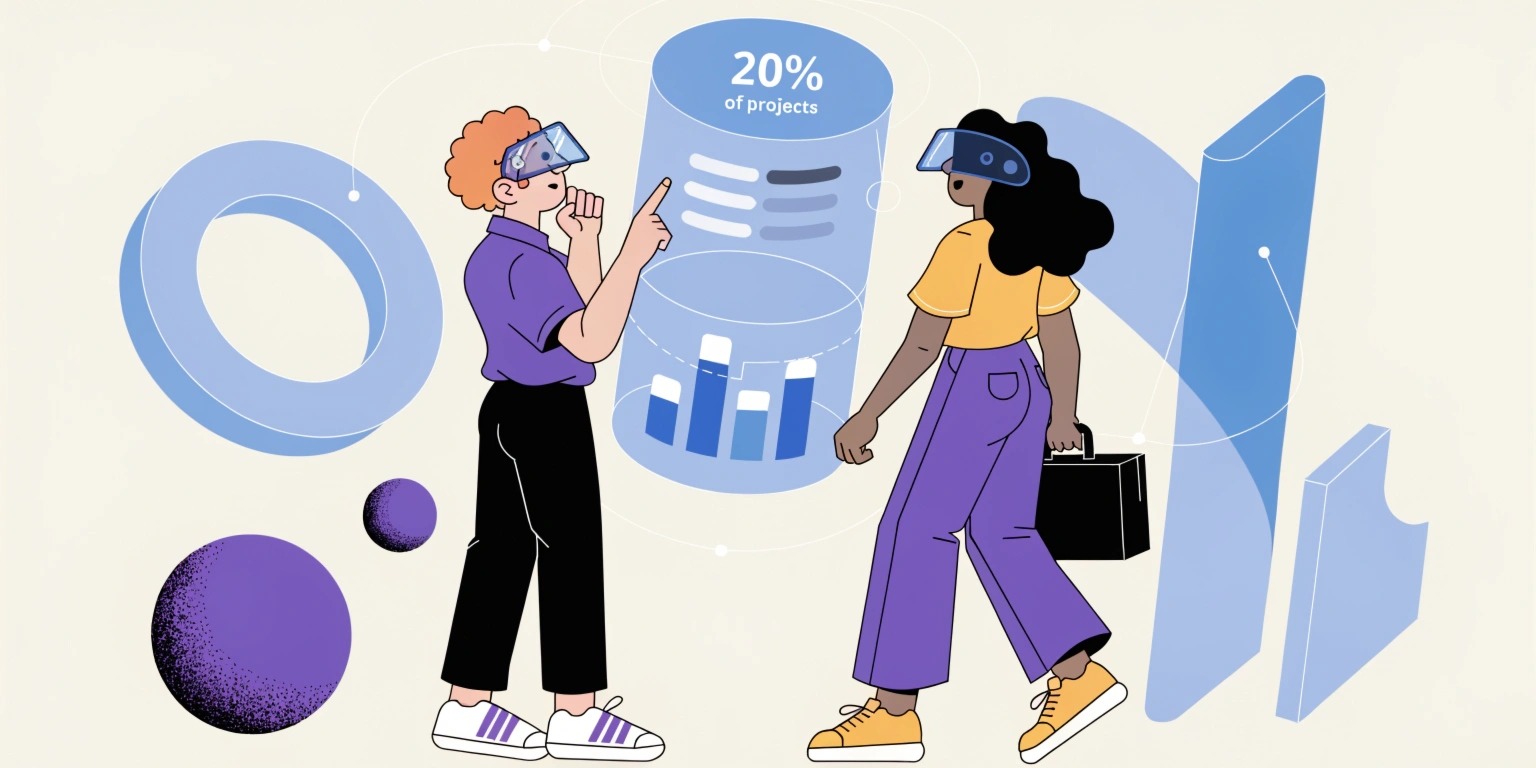
Businesses today are embracing immersive technologies to improve productivity, enhance customer experiences, and accelerate digital transformation. Among these innovations, Mixed Reality (MR) has emerged as a powerful technology that blends the physical and digital worlds, allowing users to interact with virtual objects in real-world environments.
Unlike Virtual Reality (VR), which creates a fully digital environment, or Augmented Reality (AR), which overlays digital information onto the physical world, Mixed Reality combines both approaches. It enables digital objects to understand, respond to, and interact with the surrounding environment in real time.
From employee training and remote collaboration to product visualization and industrial maintenance, Mixed Reality is helping organizations streamline operations and create innovative business solutions. This article explores how MR is transforming modern enterprises and why it is becoming an essential part of future-ready business strategies.
What Is Mixed Reality?
Mixed Reality is an immersive technology that merges physical environments with computer-generated content, enabling real-time interaction between users, digital objects, and the surrounding space.
MR systems use technologies such as:
- Spatial mapping
- Computer vision
- Depth sensing
- Artificial Intelligence
- Gesture recognition
- Voice commands
- Environmental tracking
This creates highly interactive experiences where digital elements behave naturally within real-world surroundings.
Key Components of Mixed Reality
Successful MR business applications rely on several technologies working together.
Spatial Mapping
The system scans and understands physical spaces, allowing virtual objects to remain anchored accurately within the environment.
Gesture Recognition
Users can interact with digital content using natural hand movements, reducing dependence on traditional input devices.
Voice Interaction
Voice commands enable hands-free operation, especially valuable in manufacturing, healthcare, and field service environments.
Artificial Intelligence
AI enhances object recognition, workflow automation, predictive assistance, and intelligent recommendations within MR applications.
Business Applications of Mixed Reality
Employee Training
MR provides immersive training environments where employees can safely practice complex procedures without risking equipment or personal safety.
Examples include:
- Machine operation
- Equipment maintenance
- Medical procedures
- Safety simulations
- Emergency response training
Interactive learning improves knowledge retention and reduces training costs.
Remote Assistance
Businesses can connect field technicians with remote experts through MR devices.
Experts can:
- View the technician's environment
- Provide live annotations
- Share step-by-step guidance
- Reduce travel costs
- Resolve issues faster
This significantly improves operational efficiency.
Product Design and Prototyping
Design teams can visualize full-scale 3D prototypes before manufacturing.
Benefits include:
- Faster design reviews
- Reduced prototyping costs
- Improved collaboration
- Early error detection
- Better design validation
Teams can make changes instantly without creating physical models.
Sales and Customer Experience
Mixed Reality allows customers to interact with products before purchasing.
Applications include:
- Virtual product demonstrations
- Interactive showrooms
- Furniture placement previews
- Real estate walkthroughs
- Automotive customization
- Industrial equipment visualization
These experiences help customers make informed purchasing decisions.
Manufacturing and Maintenance
MR assists technicians by displaying contextual information directly within their field of view.
This includes:
- Assembly instructions
- Equipment diagnostics
- Maintenance checklists
- Safety alerts
- Workflow guidance
Hands-free access to information increases productivity while reducing operational errors.
Benefits of Mixed Reality for Businesses
Organizations adopting MR gain several competitive advantages.
Improved Productivity
Employees complete tasks faster with real-time guidance and visual instructions.
Better Collaboration
Remote teams can work together on shared digital models regardless of their physical locations.
Reduced Costs
MR minimizes travel expenses, prototype development costs, and training expenditures.
Higher Accuracy
Visual guidance reduces mistakes during assembly, maintenance, and quality inspections.
Enhanced Customer Engagement
Interactive experiences improve customer confidence and increase conversion rates.
Industries Using Mixed Reality
Mixed Reality is transforming numerous industries.
Healthcare
- Surgical planning
- Medical education
- Patient rehabilitation
- Remote consultations
Manufacturing
- Equipment maintenance
- Factory planning
- Worker training
- Quality control
Retail
- Virtual shopping
- Product visualization
- Interactive displays
- Personalized customer experiences
Architecture and Construction
- Building visualization
- Project collaboration
- Site inspections
- Design validation
Education
- Virtual laboratories
- Interactive classrooms
- Technical training
- Immersive learning experiences
Challenges of Implementing Mixed Reality
Despite its advantages, businesses may encounter challenges when adopting MR.
Common obstacles include:
- High hardware costs
- Application development complexity
- Employee training requirements
- Integration with existing systems
- Data privacy concerns
- Network performance limitations
- User adoption resistance
Careful planning and phased implementation can help overcome these challenges.
Best Practices for Successful MR Adoption
Businesses should consider the following strategies:
- Identify processes that benefit most from immersion.
- Start with pilot projects before scaling.
- Invest in user training and support.
- Integrate MR with existing enterprise systems.
- Prioritize data security and compliance.
- Measure ROI using productivity and efficiency metrics.
- Continuously gather user feedback for improvements.
A strategic approach maximizes the long-term value of MR investments.
Future Trends in Mixed Reality
Mixed Reality continues to evolve with emerging technologies.
Future developments include:
- AI-powered virtual assistants
- Cloud-based MR collaboration
- Digital twins for industrial operations
- 5G-enabled immersive experiences
- IoT-integrated smart environments
- Wearable enterprise devices
- Persistent shared virtual workspaces
As hardware becomes more affordable and software capabilities improve, MR adoption is expected to grow across businesses of all sizes.
Conclusion
Mixed Reality is redefining how organizations interact with digital information, collaborate with teams, and engage customers. By seamlessly blending physical and virtual environments, MR enables businesses to improve productivity, enhance employee training, streamline maintenance, and deliver immersive customer experiences.
As digital transformation accelerates, organizations that invest in Mixed Reality gain a competitive advantage through innovation, operational efficiency, and smarter decision-making. With advancements in artificial intelligence, cloud computing, and connectivity, Mixed Reality is poised to become a cornerstone of modern business applications, helping enterprises unlock new opportunities and shape the future of work.
We build scalable web, mobile, and game products for clients worldwide — combining modern frameworks, cloud infrastructure, and best engineering practices.