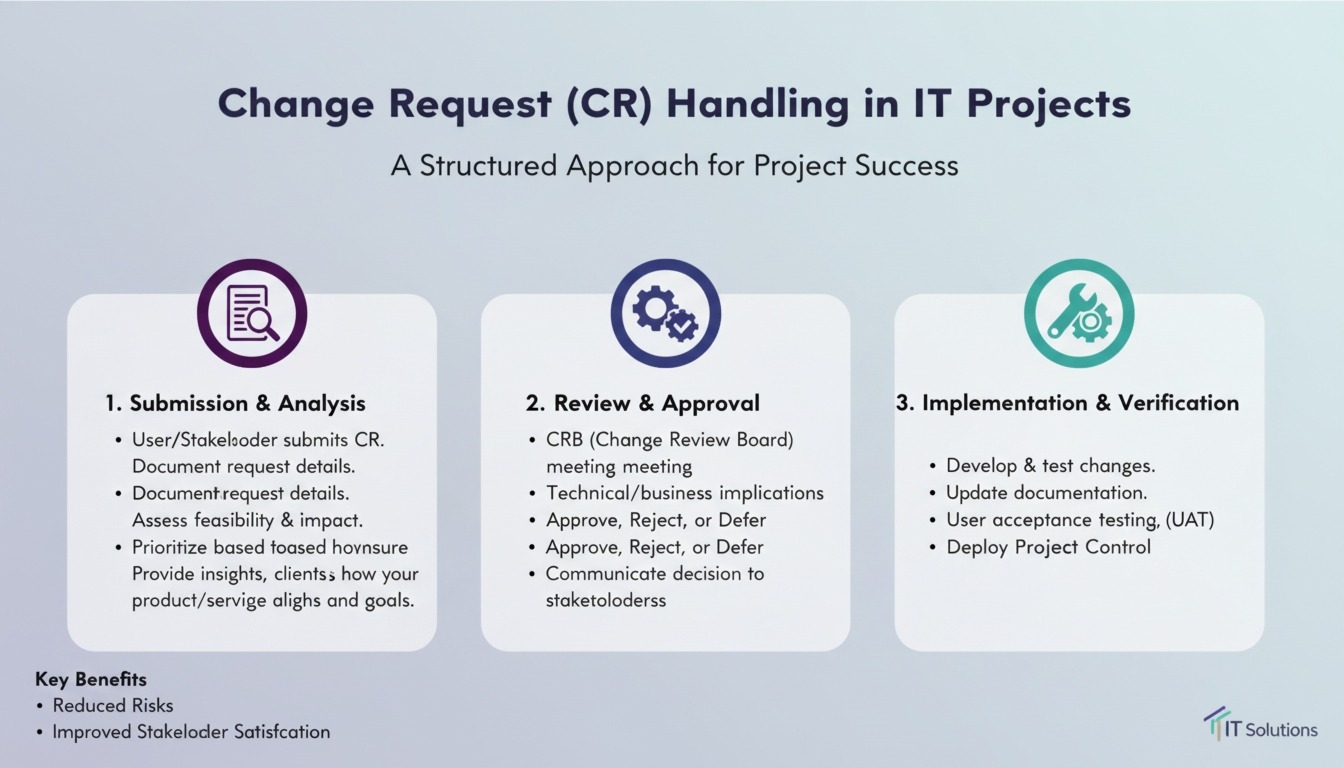
Learn how to manage Change Requests (CR) in IT projects effectively using structured processes, impact analysis, and best practices to control scope, timelines, and costs while ensuring client satisfaction.
In the dynamic world of IT projects, change is inevitable. Whether it’s due to evolving business needs, market trends, or unforeseen technical challenges, Change Requests (CRs) are a constant part of the software development lifecycle. Effectively handling these changes can make the difference between project success and failure.
What is a Change Request (CR)?
A Change Request (CR) is a formal proposal to modify any aspect of a project, including scope, design, features, timelines, or budget. These requests can originate from clients, stakeholders, developers, or even regulatory requirements.
Without a proper CR handling process, projects can quickly spiral into scope creep, missed deadlines, and increased costs.
Why CR Handling is Critical
Managing Change Requests is not just about approving or rejecting changes—it’s about maintaining control over the project. Poor CR management can lead to:
- Scope creep
- Budget overruns
- Delayed timelines
- Miscommunication between stakeholders
On the other hand, a structured CR process ensures transparency, accountability, and better decision-making.
The Change Request Lifecycle
A well-defined lifecycle helps streamline CR handling. Here’s a step-by-step approach:
1. Request Submission
Every change should be documented formally. This includes:
- Description of the change
- Reason for the request
- Expected outcomes
Using standardized templates ensures consistency and clarity.
2. Impact Analysis
This is the most critical step. Before approving a CR, evaluate its impact on:
- Project scope
- Timeline
- Cost
- Resources
- Technical architecture
For example, a small feature addition might require significant backend changes, affecting delivery timelines.
3. Review and Approval
The change request should be reviewed by relevant stakeholders such as project managers, technical leads, and clients. Based on the impact analysis, the CR is:
- Approved
- Rejected
- Deferred
Clear communication during this stage is essential to avoid misunderstandings.
4. Implementation
Once approved, the change is added to the project plan. Tasks are assigned, and timelines are updated accordingly.
In Agile environments, CRs are often added to the backlog and prioritized in upcoming sprints.
5. Testing and Validation
Every implemented change must go through proper testing to ensure it does not affect existing functionalities.
6. Documentation and Closure
Finally, the CR is documented, and stakeholders are informed. Maintaining a CR log helps track all changes for future reference.
Best Practices for Handling CRs
1. Establish a Clear Process
Define a standardized workflow for CR handling. This ensures that every request follows the same evaluation and approval path.
2. Avoid Scope Creep
Not every change should be accepted immediately. Evaluate whether the change aligns with project goals. If not, consider deferring it to a future phase.
3. Communicate Transparently
Keep all stakeholders informed about the status of CRs. Miscommunication can lead to unrealistic expectations and dissatisfaction.
4. Prioritize Changes Wisely
Not all changes have equal importance. Categorize CRs based on urgency and business impact.
5. Use Tools and Documentation
Leverage project management tools like Jira, Trello, or Asana to track and manage CRs efficiently. Proper documentation ensures accountability and traceability.
6. Include Buffer in Planning
Always account for potential changes in your project timeline and budget. This reduces the impact of unexpected CRs.
CR Handling in Agile vs Waterfall
- Agile Approach:
- Agile frameworks are inherently flexible. Change Requests are expected and managed through backlog prioritization and sprint planning.
- Waterfall Approach:
- Changes are more rigid and often require formal approvals and documentation, making CR handling more structured but less flexible.
Understanding the methodology helps in choosing the right CR handling strategy.
Common Challenges in CR Management
Despite having processes in place, teams often face challenges such as:
- Frequent last-minute changes
- Lack of proper documentation
- Misalignment between stakeholders
- Underestimating the impact of changes
Addressing these challenges requires discipline, communication, and strong project governance.
Final Thoughts
Change Requests are not a threat—they are an opportunity to improve the final product and align it more closely with business needs. However, without a structured approach, they can disrupt project timelines and budgets.
By implementing a clear CR handling process, conducting thorough impact analysis, and maintaining transparent communication, IT teams can manage changes effectively while delivering high-quality results.
In today’s fast-paced digital landscape, the ability to adapt to change is not just an advantage—it’s a necessity.
We build scalable web, mobile, and game products for clients worldwide — combining modern frameworks, cloud infrastructure, and best engineering practices.