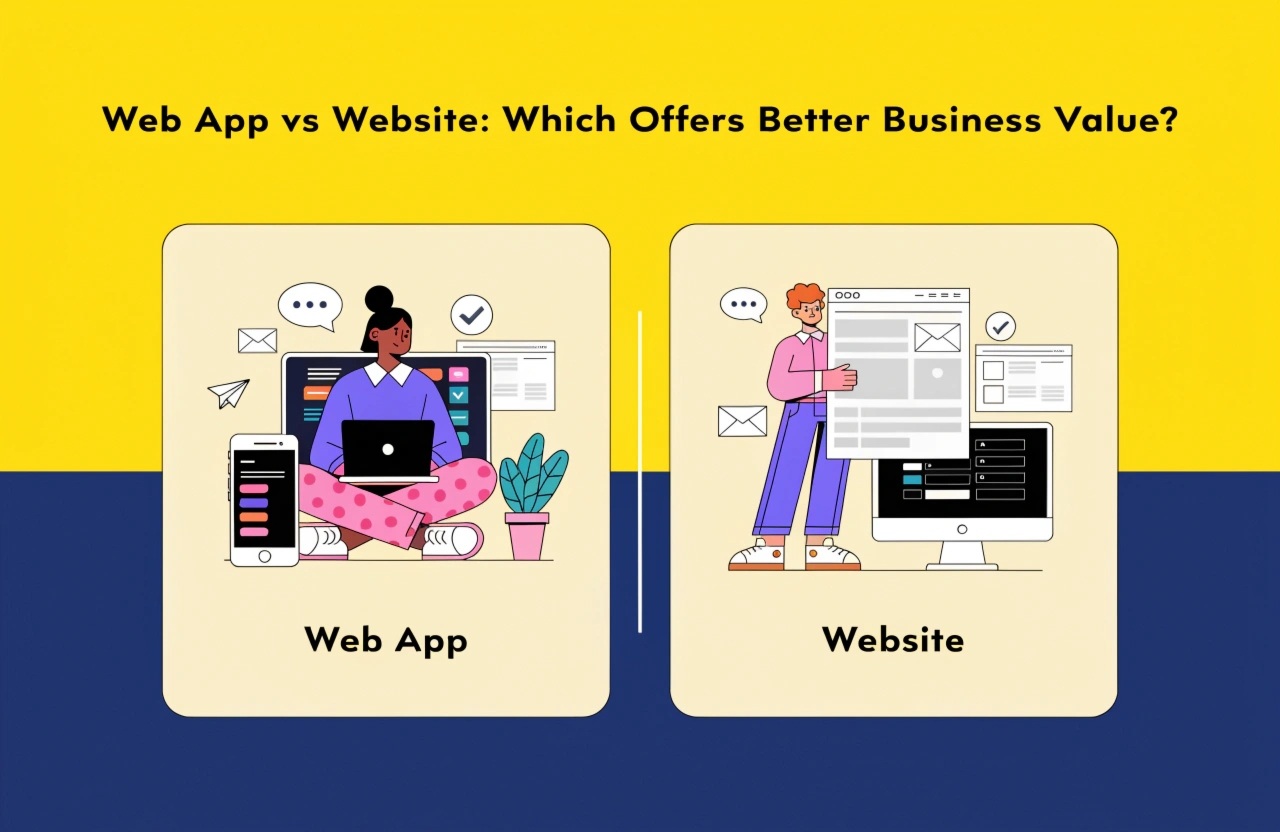
Discover how Progressive Web Apps and traditional websites differ in performance, cost, accessibility, and user experience. Understand which solution offers better business value based on your company's goals, customer expectations, and long-term digital growth strategy.
Introduction
In today's digital business environment, having an online presence is essential for reaching customers, building brand awareness, and generating revenue. However, simply having a website may not always be enough to meet modern customer expectations. Businesses increasingly need digital solutions that offer fast performance, mobile accessibility, smooth navigation, and engaging user experiences.
Two popular options are traditional websites and Progressive Web Apps (PWAs). Both help businesses connect with customers online, but they offer different features, capabilities, and business advantages.
A traditional website focuses on delivering information and services through a web browser, while a Progressive Web App combines website accessibility with several app-like features. Understanding their differences can help businesses make smarter technology investments.
1. What Is a Traditional Website?
A traditional website is a collection of web pages that users access through browsers such as Google Chrome, Safari, or Microsoft Edge. Websites can provide company information, product details, service descriptions, blogs, contact forms, and e-commerce functionality.
Modern websites are generally developed using technologies such as HTML, CSS, JavaScript, React, Angular, and various backend frameworks.
Key features of traditional websites include:
- Accessible through web browsers without installation.
- Responsive layouts for desktops, tablets, and smartphones.
- Search engine optimization capabilities.
- Easy content updates and website management.
- Integration with third-party services and payment gateways.
- Suitable for business portfolios, blogs, corporate websites, and online stores.
Traditional websites are particularly useful for businesses that want to establish an online presence, showcase their services, and attract customers through search engines.
2. What Is a Progressive Web App (PWA)?
A Progressive Web App is a web-based application that uses modern browser technologies to deliver an experience similar to a native mobile application.
Unlike traditional websites, PWAs can offer additional functionality such as offline access, push notifications, home-screen installation, and faster repeat visits through caching.
PWAs use technologies such as service workers, web app manifests, HTTPS, and modern JavaScript frameworks to deliver app-like experiences.
Key features of Progressive Web Apps include:
- Installable on supported devices.
- Offline or limited-connectivity functionality.
- Push notifications on supported platforms and browsers.
- Faster repeat visits through caching.
- Responsive and mobile-friendly interfaces.
- Access through a web browser without requiring a traditional app-store download.
PWAs are useful for businesses that want to provide interactive digital experiences while maintaining the accessibility of web-based platforms.
3. Progressive Web App vs Website: Key Differences
Although both solutions operate through web technologies, their capabilities differ.
Accessibility: Traditional websites are accessed through browsers, whereas PWAs can also be installed on supported devices for easier access.
Offline Functionality: Most traditional websites require an internet connection to load new content. PWAs can provide selected offline features through service workers and cached resources.
Performance: Both can be fast when properly developed. PWAs can improve repeat-visit performance through intelligent caching and resource management.
Notifications: Traditional websites have limited notification capabilities, while PWAs can support push notifications on compatible devices and browsers.
Installation: Traditional websites generally cannot be installed as applications. PWAs can offer an installation experience on supported platforms.
User Experience: Websites primarily focus on browsing and accessing information, while PWAs can provide more application-like interactions.
4. Business Benefits of Progressive Web Apps
Progressive Web Apps offer several advantages for businesses looking to improve customer engagement and digital performance.
Better Mobile Experience: PWAs provide mobile-friendly interfaces and app-like navigation, making it easier for customers to interact with business services.
Improved Customer Engagement: Push notifications can help businesses communicate promotions, updates, reminders, and important announcements with users who have opted in.
Offline Accessibility: Businesses can make selected content and features available even when users experience poor internet connectivity.
Reduced App Distribution Barriers: Customers can access a PWA through a browser and install it on supported devices without following the traditional app-store download process.
Potential Cost Efficiency: A single web-based application can serve multiple device categories, potentially reducing the need to maintain separate native applications. However, development and maintenance costs depend on the project's complexity.
5. Business Benefits of Traditional Websites
Traditional websites remain valuable because they provide a straightforward and effective way to establish a digital presence.
SEO Opportunities: Websites can target relevant keywords, publish blogs, attract organic traffic, and improve search engine visibility.
Lower Initial Complexity: A standard business website is often simpler and less expensive to develop than a feature-rich PWA.
Easy Content Management: Businesses can regularly update service pages, blogs, product information, and company details through content management systems.
Wider Accessibility: Customers can access websites through different browsers and devices without installing anything.
Brand Visibility: A well-designed website helps businesses communicate their identity, showcase expertise, build credibility, and generate leads.
For companies that primarily need an informational platform or lead-generation website, traditional website development can provide excellent value.
6. Development Cost and Maintenance Comparison
Development cost is an important consideration when choosing between these technologies.
A traditional website generally requires fewer advanced functionalities, making it suitable for businesses with limited budgets or straightforward requirements.
A PWA may require additional development work, including service worker implementation, caching strategies, installation support, offline functionality, and notification integration.
Maintenance requirements also depend on the project's features, security needs, integrations, and expected traffic.
Businesses should evaluate the total cost of ownership rather than focusing only on initial development expenses.
7. SEO and Digital Marketing Considerations
Search engine visibility plays an important role in online business growth.
Traditional websites and PWAs can both support SEO when developed with proper technical foundations.
Important SEO practices include:
- Mobile-friendly and responsive design.
- Fast page-loading performance.
- Proper heading structures and metadata.
- Search engine-friendly URLs.
- High-quality, relevant website content.
- Internal linking and structured data where appropriate.
- Secure HTTPS connections.
One important consideration is that PWA installation does not automatically improve search rankings. Search engines primarily evaluate accessible, useful, technically sound content and overall page experience.
Businesses should focus on SEO-friendly architecture regardless of which solution they choose.
8. Which Solution Should Your Business Choose?
The right choice depends on your business objectives, target audience, budget, and required functionality.
Choose a traditional website if:
- You need a company portfolio or corporate website.
- Your primary objective is generating leads.
- You want to publish blogs and business information.
- Your customers mainly browse and access information.
- You need a cost-effective digital presence.
Choose a Progressive Web App if:
- Your business requires frequent customer interactions.
- Offline access is important.
- You want app-like functionality without a traditional app-store distribution process.
- Push notifications can support your customer engagement strategy.
- You operate an interactive platform, online marketplace, or customer portal.
Some businesses may benefit from combining both approaches by building an SEO-friendly website with PWA capabilities.
Conclusion
Progressive Web Apps and traditional websites both provide valuable opportunities for business growth. However, the better choice depends on what your business wants to achieve.
Traditional websites are excellent for online visibility, brand awareness, content marketing, and lead generation. Progressive Web Apps offer additional capabilities such as installation, offline functionality, and push notifications, making them suitable for businesses that require more interactive customer experiences.
Before selecting a solution, evaluate your business requirements, target audience, development budget, and long-term objectives. The right web development strategy can improve customer satisfaction, strengthen your digital presence, and create sustainable business value.
We build scalable web, mobile, and game products for clients worldwide — combining modern frameworks, cloud infrastructure, and best engineering practices.