Choosing the right UI/UX design company can improve your website usability, customer satisfaction, and business growth. Learn how to evaluate portfolios, design expertise, research methods, pricing, communication, and long-term support before selecting your ideal design partner.
How to Choose a UI/UX Design Company for Your Business
In today's competitive digital environment, a well-designed website or mobile application is essential for business success. Customers expect digital platforms to be visually appealing, easy to navigate, responsive, and convenient to use. A confusing interface or complicated user journey can cause visitors to leave before exploring your products or services.
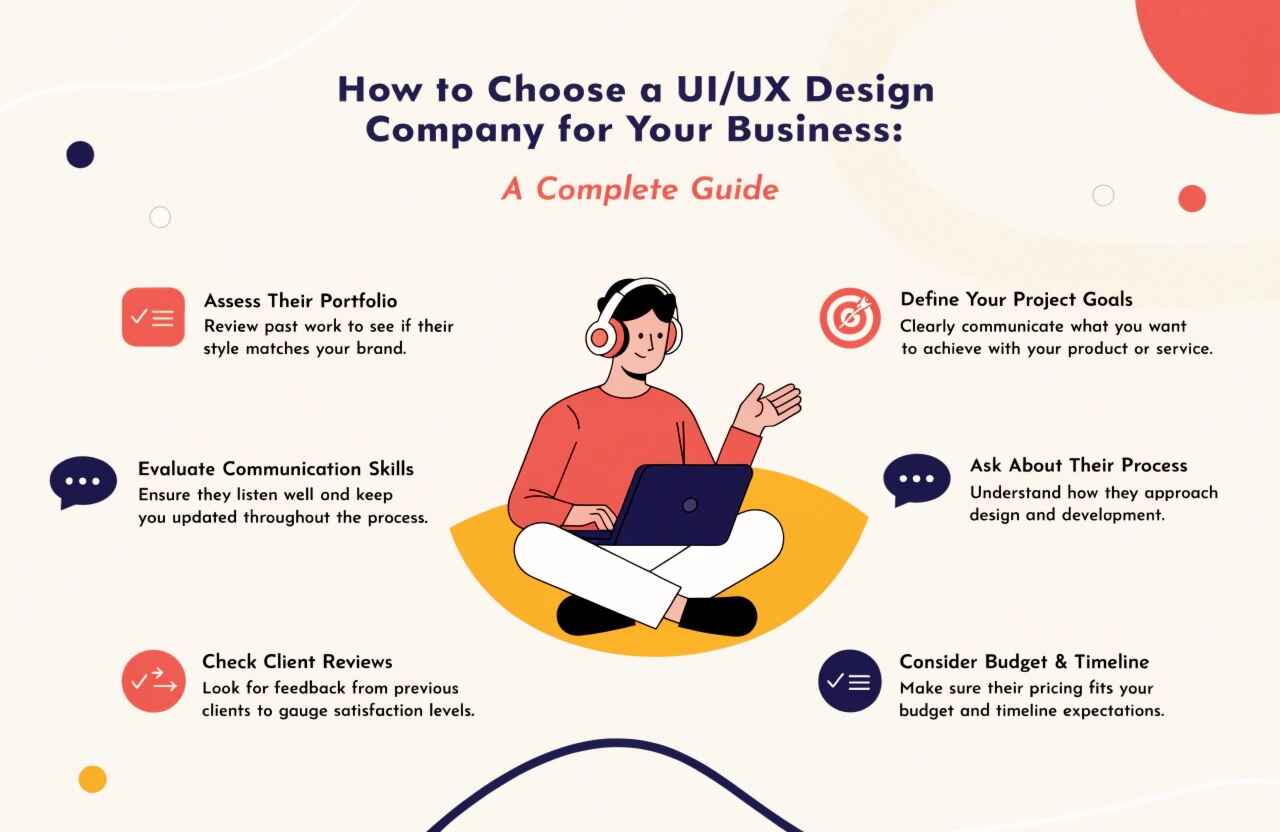
This is why choosing the right UI/UX design company is an important business decision. The right partner can help you create digital experiences that strengthen your brand, improve customer engagement, and support your business goals. Here are the essential factors to consider when selecting a UI/UX design company.
1. Understand Your Business Requirements
Before searching for a UI/UX design company, clearly identify your business objectives and project requirements. Determine whether you need a new website, a mobile application interface, a complete product redesign, or improvements to an existing digital platform.
Consider your target audience, industry, competitors, and the problems you want to solve. For example, an e-commerce business may prioritize simple navigation and a smooth checkout experience, while a SaaS company may focus on dashboard usability and user onboarding.
Having clearly defined requirements helps you communicate your expectations and identify a design partner with relevant expertise. It also makes it easier to evaluate proposals and measure project success.
2. Review the Company's Portfolio and Previous Projects
A company's portfolio provides valuable insights into its design capabilities, creativity, and problem-solving approach. Review previous projects to understand the quality and variety of its work.
Look for experience with websites, mobile applications, dashboards, e-commerce platforms, or other digital products relevant to your business. Examine whether the designs are visually consistent, easy to navigate, and suitable for their intended audiences.
Do not evaluate a portfolio based on appearance alone. Consider how effectively each design addresses user needs and business objectives. Ask about the challenges involved in previous projects and how the team approached them.
A strong portfolio should demonstrate thoughtful design decisions rather than simply attractive screens.
3. Evaluate UI and UX Expertise
Although UI and UX are closely related, they serve different purposes.
User Interface (UI) design focuses on the visual elements of a digital product, including colors, typography, buttons, icons, layouts, and interactive components.
User Experience (UX) design focuses on how people interact with a product, including navigation, accessibility, usability, information architecture, and the overall user journey.
A reliable UI/UX design company should understand both disciplines and know how to combine them effectively. An attractive interface is not enough if users struggle to complete essential tasks.
Ask potential partners about their design process, prototyping methods, usability testing practices, and approach to creating intuitive digital experiences.
4. Check User Research and Testing Methods
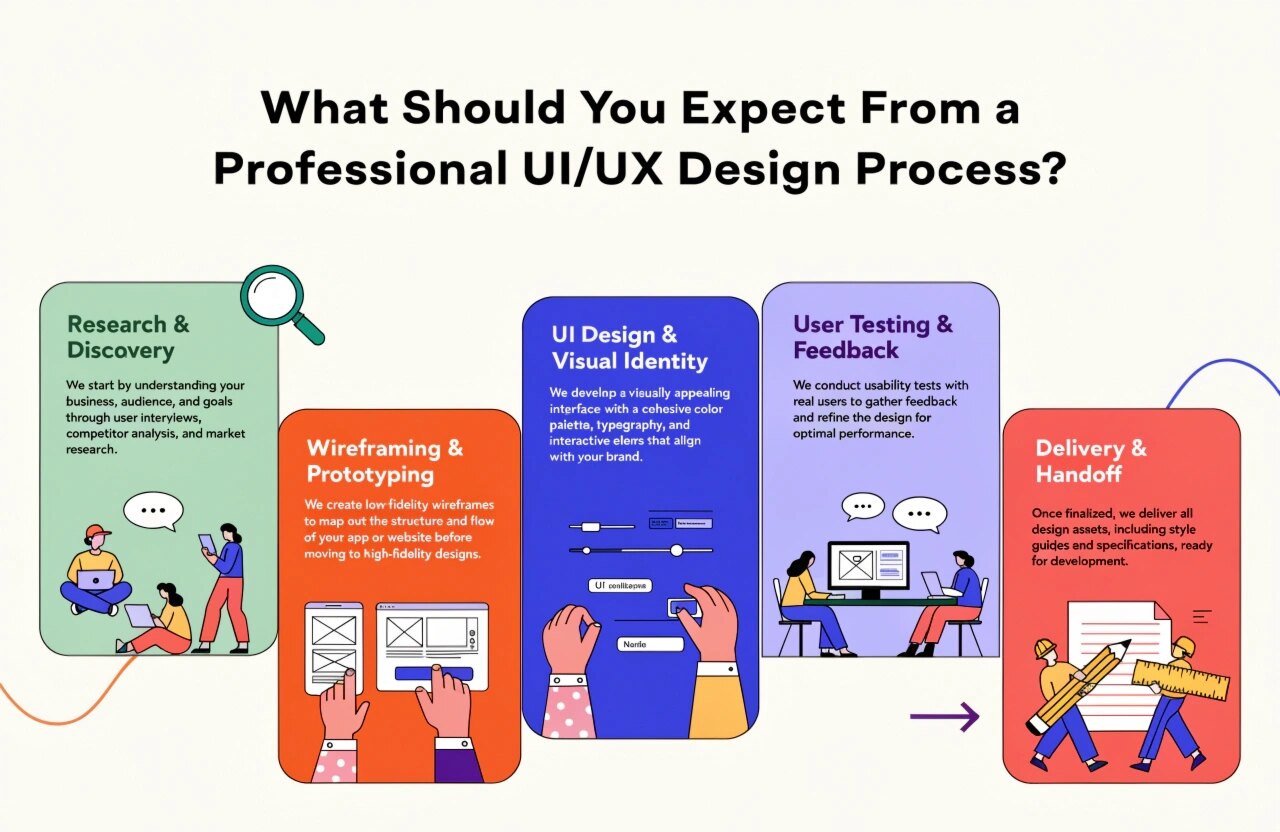
Effective design begins with understanding users. A professional design company should use appropriate research methods to identify user expectations, behaviors, and challenges.
Depending on your project, these methods may include user interviews, surveys, competitor analysis, usability testing, analytics reviews, and the creation of user personas.
Research helps designers make informed decisions rather than relying entirely on personal preferences or assumptions. Usability testing can also reveal navigation problems, confusing content, and unnecessary steps in important user journeys.
Ask how the company validates its design decisions and incorporates feedback throughout the project. A research-driven approach can help reduce costly redesigns and improve the overall quality of your digital product.
5. Compare Pricing, Deliverables, and Value
Budget is an important consideration when selecting a UI/UX design partner. However, choosing the cheapest provider may not deliver the best long-term value.
Request a detailed proposal outlining the project scope, design deliverables, estimated timeline, revision policy, and payment structure. Confirm whether the quotation includes wireframes, interactive prototypes, design systems, responsive layouts, usability testing, and developer handoff documentation.
Pricing can vary according to project complexity, the team's experience, research requirements, and the number of screens or user journeys involved.
Instead of comparing prices alone, evaluate the expected quality, clarity of deliverables, and potential business benefits. A well-planned design investment can help improve customer satisfaction and reduce usability-related issues.
6. Assess Communication and Project Management
Clear communication is essential for successful collaboration. Your design partner should understand your requirements, provide regular progress updates, and respond constructively to feedback.
Ask about the project management tools, meeting schedules, approval process, and communication channels the team uses. Establish who will be responsible for project coordination and how design changes will be handled.
It is also important to understand how the company manages deadlines and unexpected challenges. Transparent communication helps prevent misunderstandings, keeps stakeholders aligned, and makes the design process more efficient.
Choose a company that treats your team as a collaborative partner rather than simply accepting instructions without discussing potential improvements.
7. Verify Technical Knowledge and Developer Handoff
UI/UX design must work effectively when implemented by developers. A visually appealing design that is difficult to build, slow to load, or unsuitable for different screen sizes can create unnecessary challenges.
Choose a company that understands responsive design, accessibility principles, design systems, and the technical requirements of modern websites and applications.
Ask whether the team uses tools such as Figma and provides organized design files, reusable components, interaction specifications, and clear developer handoff documentation.
Collaboration between designers and developers helps ensure that the final product closely matches the approved design while remaining practical, accessible, and maintainable.
8. Consider Scalability and Long-Term Support
Your business requirements may change as your customer base grows. Therefore, select a design partner that can support future improvements and evolving product needs.
Ask whether the company can update existing interfaces, extend design systems, conduct additional usability testing, and support new features as your business expands.
A scalable design approach promotes consistency across different pages, platforms, and products. It can also simplify future updates and reduce repeated design work.
Before signing an agreement, clarify whether post-launch support is available and whether it is included in the project cost or charged separately.
Conclusion
Choosing the right UI/UX design company requires more than comparing portfolios and prices. You should evaluate business understanding, design expertise, user research, communication, technical knowledge, and long-term support.
The ideal partner will understand your goals, prioritize your users, and create practical digital experiences that align with your brand and business strategy.
Take time to compare potential companies, ask relevant questions, and review their proposed approach before making a decision. By selecting a reliable UI/UX design partner, you can build a stronger digital presence, improve customer experiences, and establish a foundation for sustainable business growth.
We build scalable web, mobile, and game products for clients worldwide — combining modern frameworks, cloud infrastructure, and best engineering practices.