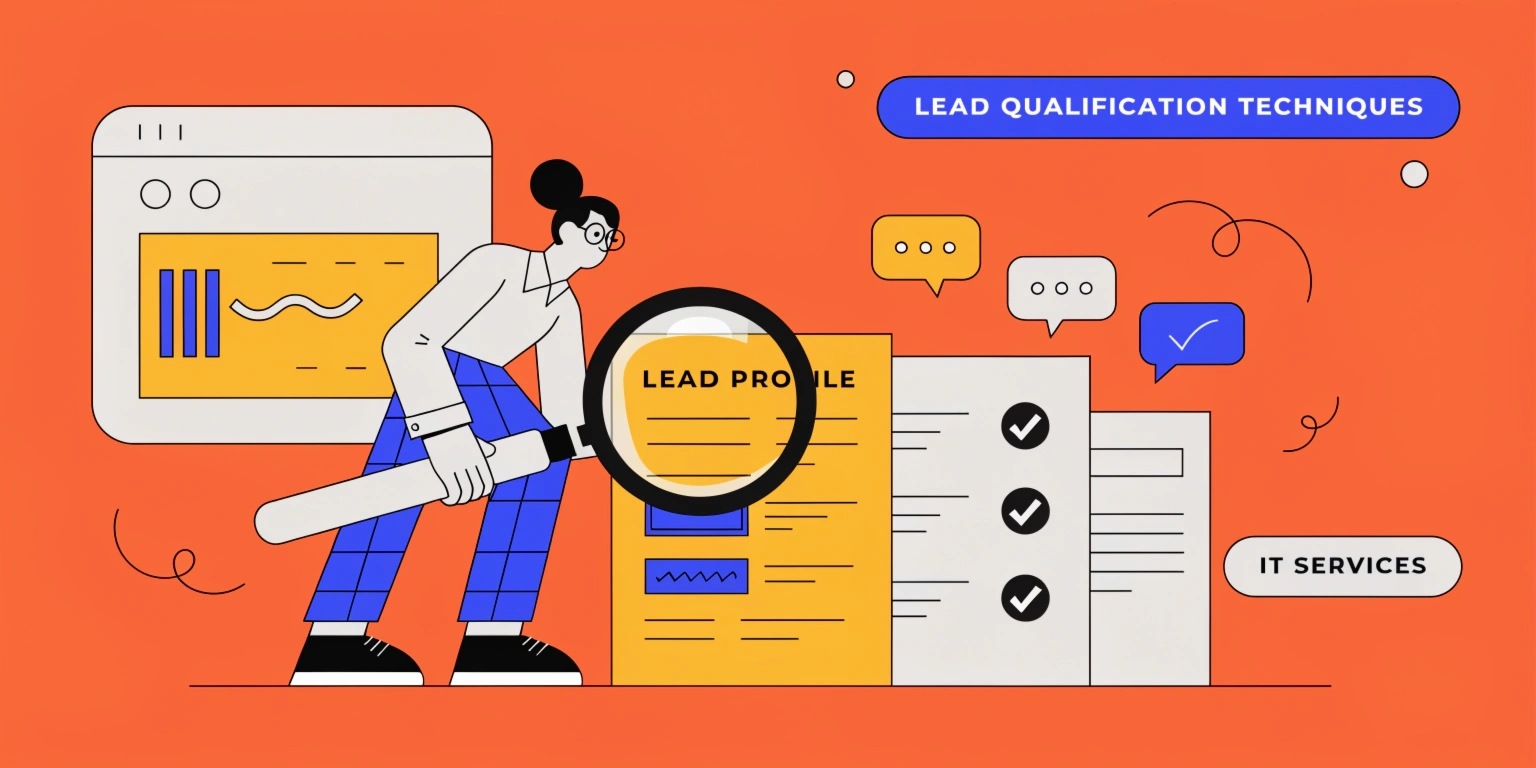
Discover powerful lead qualification techniques for IT services companies to identify quality prospects, improve conversions, and increase business growth efficiently.
In the highly competitive IT services industry, generating leads is only the beginning of the sales process. Many software companies, development agencies, and technology service providers struggle not because they lack leads, but because they spend too much time pursuing prospects that are unlikely to convert.
This is where lead qualification becomes essential.
Lead qualification helps IT businesses identify which prospects have the highest potential to become paying clients. Instead of focusing on every inquiry equally, sales and business development teams can prioritize leads that align with the company’s services, budget expectations, project requirements, and long-term business goals.
Effective lead qualification improves:
- Conversion rates
- Sales efficiency
- Revenue predictability
- Resource allocation
- Client retention
In modern IT businesses, lead qualification is one of the most important components of a successful sales strategy.
What is Lead Qualification?
Lead qualification is the process of evaluating potential clients to determine whether they are a good fit for a company’s services or solutions.
The purpose is to identify:
- Serious buyers
- High-value opportunities
- Long-term business potential
- Project feasibility
Instead of wasting time on unqualified inquiries, companies focus on leads that are more likely to convert successfully.
In IT services, qualified leads often include clients who:
- Have a defined project requirement
- Possess an appropriate budget
- Need technical expertise
- Have decision-making authority
- Are actively searching for solutions
Lead qualification helps sales teams work smarter rather than harder.
Why Lead Qualification Matters in IT Services
IT services involve complex projects, long sales cycles, and customized solutions. Unlike simple product sales, software development and technology consulting require significant collaboration, planning, and resource investment.
Poor lead qualification can result in:
- Time wasted on low-quality leads
- Delayed project pipelines
- Unprofitable projects
- Higher sales costs
- Reduced team productivity
Strong qualification processes allow IT companies to focus on opportunities that generate real business value.
Key Lead Qualification Techniques for IT Services
1. The BANT Framework
One of the most widely used lead qualification methods is the BANT framework.
BANT stands for:
- Budget
- Authority
- Need
- Timeline
Budget
Can the client afford the proposed solution?
Understanding budget expectations helps avoid unrealistic negotiations later.
Authority
Is the person contacting you the decision-maker?
In B2B IT sales, multiple stakeholders may be involved. Identifying decision-makers early improves communication efficiency.
Need
Does the prospect genuinely need your services?
Understanding business pain points helps determine whether your solution aligns with their goals.
Timeline
When does the client plan to start the project?
Urgent projects may require faster engagement and proposal preparation.
The BANT framework remains highly effective for qualifying enterprise and software development leads.
2. Lead Scoring Systems
Lead scoring assigns numerical values to leads based on predefined criteria.
Scoring factors may include:
- Company size
- Industry relevance
- Budget range
- Website engagement
- Inquiry quality
- Technical requirements
- Geographic location
For example:
- A startup exploring ideas may receive a lower score
- An enterprise requesting a detailed proposal may receive a higher score
CRM platforms like HubSpot and Salesforce offer advanced lead scoring features that help sales teams prioritize opportunities efficiently.
3. Discovery Calls and Requirement Analysis
Discovery calls are essential for understanding:
- Client objectives
- Technical expectations
- Existing challenges
- Business goals
- Project scope
Instead of immediately selling services, successful IT consultants focus on understanding the client’s real needs.
Important discovery questions include:
- What problem are you trying to solve?
- What technologies are you currently using?
- What is your expected timeline?
- Have you worked with IT vendors before?
- What outcomes are you expecting?
Strong discovery conversations improve both qualification accuracy and client trust.
4. Identifying Project Readiness
Not every interested prospect is ready to begin immediately.
Some leads may still be:
- Researching solutions
- Comparing vendors
- Seeking internal approvals
- Defining requirements
Understanding project readiness helps sales teams prioritize active opportunities while nurturing future prospects.
5. Technical Feasibility Assessment
In IT services, technical feasibility is extremely important.
Projects may involve:
- Legacy system integrations
- Scalability challenges
- Security requirements
- AI implementation
- Cloud migration complexity
Technical teams should evaluate whether:
- The project is achievable
- Requirements are realistic
- Budget aligns with complexity
- Infrastructure limitations exist
Early feasibility assessments prevent future delivery problems.
6. Industry and Niche Alignment
Some IT companies specialize in:
- Healthcare software
- FinTech solutions
- E-commerce platforms
- SaaS development
- AI-powered systems
Leads that match the company’s expertise are often more profitable and easier to convert.
Industry specialization also improves:
- Proposal quality
- Communication efficiency
- Technical understanding
- Competitive positioning
Targeting niche-specific leads increases qualification effectiveness significantly.
7. Behavioral Lead Qualification
Modern sales systems increasingly analyze user behavior to identify buying intent.
Behavioral indicators include:
- Multiple website visits
- Pricing page interactions
- Downloading case studies
- Booking consultations
- Repeated email engagement
These signals help determine which leads are genuinely interested.
Marketing automation platforms use behavioral tracking to improve lead qualification accuracy.
Common Mistakes in Lead Qualification
Chasing Every Lead
Not every inquiry is worth pursuing aggressively.
Trying to convert every prospect wastes valuable sales resources.
Ignoring Budget Discussions
Avoiding budget conversations early can lead to unrealistic expectations later.
Overlooking Decision-Makers
Communicating only with junior contacts may delay progress significantly.
Focusing Only on Short-Term Revenue
Some clients may offer small initial projects but strong long-term growth potential.
Qualification should consider strategic value as well.
Role of AI in Lead Qualification
Artificial intelligence is transforming lead qualification processes.
AI-powered systems can:
- Analyze customer behavior
- Predict conversion probability
- Automate lead scoring
- Personalize outreach
- Detect buying intent
AI-driven CRM systems improve sales efficiency by helping teams focus on the most promising opportunities.
Predictive analytics is becoming increasingly important in B2B technology sales.
Best Practices for Effective Lead Qualification
Define an Ideal Customer Profile (ICP)
Identify the type of clients most likely to benefit from your services.
Standardize Qualification Processes
Use structured workflows and questionnaires for consistency.
Maintain CRM Accuracy
Updated CRM data improves lead tracking and forecasting.
Align Sales and Technical Teams
Collaboration between sales and technical experts improves qualification quality.
Focus on Relationship Building
Strong client relationships often matter more than aggressive selling techniques.
Conclusion
Lead qualification is one of the most critical processes in the IT services industry. By identifying high-potential prospects early, businesses can improve conversion rates, optimize sales efforts, and build more profitable client relationships.
Modern lead qualification combines structured frameworks, behavioral analysis, CRM systems, and AI-driven insights to help IT companies focus on opportunities with the greatest business potential.
In an increasingly competitive technology market, companies that master lead qualification gain a significant advantage in sales efficiency, customer satisfaction, and long-term growth.
We build scalable web, mobile, and game products for clients worldwide — combining modern frameworks, cloud infrastructure, and best engineering practices.