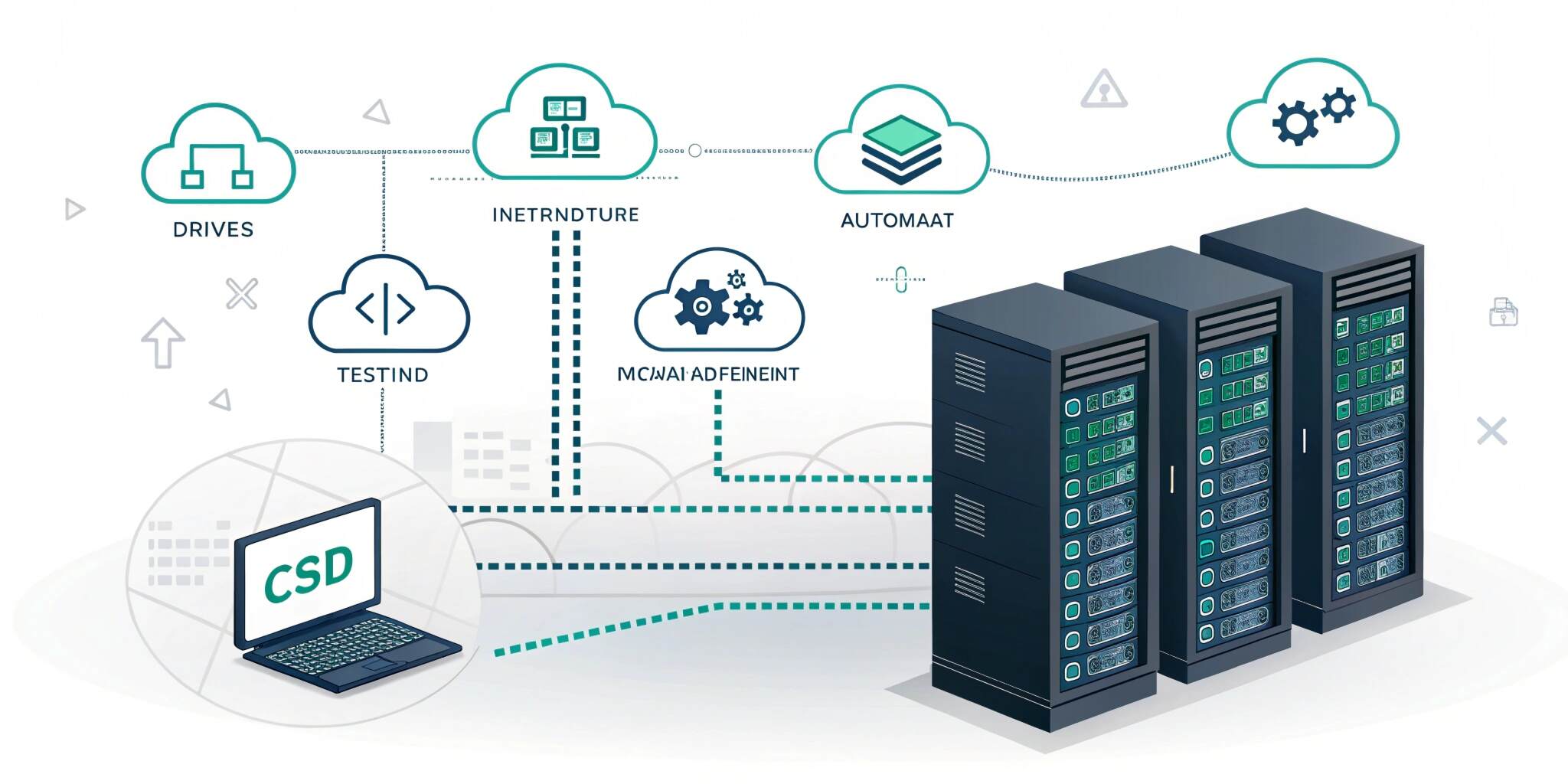
Infrastructure as Code (IaC) with Terraform has transformed the way businesses manage cloud infrastructure. By automating provisioning, deployment, and configuration, organizations can reduce manual errors, improve scalability, and accelerate DevOps workflows. Terraform enables teams to manage infrastructure efficiently across multiple cloud platforms while ensuring consistency, security, and faster development cycles.
Infrastructure as Code (Terraform): The Future of Cloud Automation
Modern businesses rely heavily on cloud platforms and scalable infrastructure to support applications, websites, AI systems, and enterprise software. Managing servers, databases, networking, and cloud resources manually can become complex, time-consuming, and error-prone. This is where Infrastructure as Code (IaC) plays a critical role.
Infrastructure as Code is the process of managing and provisioning infrastructure through machine-readable configuration files instead of manual setup. Among all IaC tools, Terraform has become one of the most popular and powerful solutions for automating infrastructure deployment.
Terraform, developed by HashiCorp, allows developers and DevOps engineers to define infrastructure using simple configuration files. These files can provision resources across major cloud providers like Amazon Web Services, Microsoft, and Google.
What is Terraform?
Terraform is an open-source Infrastructure as Code tool that enables teams to automate cloud infrastructure deployment. Instead of manually creating virtual machines, databases, load balancers, or Kubernetes clusters, Terraform allows developers to define everything in code.
Terraform uses a declarative configuration language called HCL (HashiCorp Configuration Language). Users simply describe the desired infrastructure state, and Terraform automatically creates or updates resources accordingly.
For example, developers can define:
- Virtual servers
- Cloud storage
- Networking infrastructure
- Security groups
- Kubernetes clusters
- DNS configurations
- CI/CD infrastructure
This automation significantly improves efficiency and consistency in software development environments.
Benefits of Infrastructure as Code with Terraform
1. Automation and Speed
Terraform automates repetitive infrastructure tasks, reducing deployment time from hours to minutes. Teams can quickly launch development, staging, and production environments without manual intervention.
Automation also minimizes operational overhead for DevOps teams and system administrators.
2. Consistency Across Environments
Manual configuration often leads to inconsistencies between development and production environments. Terraform ensures every environment follows the same configuration files, reducing bugs and deployment issues.
This consistency improves application stability and reliability.
3. Multi-Cloud Infrastructure Management
One of Terraform’s biggest advantages is multi-cloud support. Organizations can manage infrastructure across different cloud providers using a single tool.
For example, a company may use:
- AWS for compute services
- Azure for enterprise integrations
- Google Cloud for AI and analytics
Terraform helps manage all these platforms together efficiently.
4. Version Control and Collaboration
Terraform configuration files can be stored in Git repositories. This enables development teams to track changes, review updates, and collaborate effectively.
Version-controlled infrastructure improves transparency and rollback capabilities during deployment failures.
5. Scalability
As businesses grow, infrastructure requirements increase. Terraform allows organizations to scale servers, containers, and cloud resources automatically.
This flexibility is essential for startups, SaaS platforms, AI applications, gaming systems, and enterprise-level software.
Terraform Workflow
Terraform follows a simple workflow:
Write
Developers create infrastructure configuration files using HCL.
Plan
Terraform generates an execution plan showing what changes will occur before deployment.
Apply
The infrastructure is created or modified automatically based on the configuration.
Destroy
Unused infrastructure can be safely removed to reduce cloud costs.
This structured workflow improves infrastructure management and reduces human error.
Terraform and DevOps Integration
Terraform integrates seamlessly with DevOps pipelines and automation tools. It works well with:
- Jenkins
- GitHub Actions
- GitLab CI/CD
- Kubernetes
- Docker
- Ansible
This integration enables continuous deployment and automated infrastructure provisioning.
DevOps teams can create fully automated workflows where infrastructure and application deployment happen together.
Security in Terraform
Security is a major concern in cloud infrastructure management. Terraform helps improve security through:
- Role-based access control
- Encrypted state files
- Secure secrets management
- Policy enforcement
- Automated compliance checks
Organizations can implement Infrastructure Security as Code practices to reduce vulnerabilities and maintain compliance standards.
Terraform Modules and Reusability
Terraform modules are reusable infrastructure templates. Teams can create standardized modules for networking, databases, Kubernetes clusters, or virtual machines.
Modules reduce duplicate code and simplify infrastructure maintenance across multiple projects.
Large enterprises often create centralized Terraform module repositories to standardize deployment practices.
Challenges of Terraform
Despite its advantages, Terraform also has some challenges:
State File Management
Terraform stores infrastructure data in state files. Improper state management can create conflicts or security risks.
Learning Curve
Beginners may require time to understand Terraform syntax, cloud architecture, and infrastructure concepts.
Complex Infrastructure Dependencies
Managing large-scale infrastructure with multiple dependencies may become complicated without proper architecture planning.
However, with best practices and proper DevOps workflows, these challenges can be effectively managed.
The Future of Infrastructure as Code
Infrastructure as Code is becoming a standard practice in modern software development. As cloud computing, AI, Kubernetes, and microservices continue to grow, automated infrastructure management will become even more essential.
Terraform is expected to remain a leading IaC tool because of its flexibility, cloud compatibility, and strong DevOps ecosystem support.
Organizations adopting Terraform gain faster deployments, improved scalability, better infrastructure consistency, and reduced operational costs.
Conclusion
Infrastructure as Code with Terraform is revolutionizing cloud infrastructure management. By automating deployment and configuration processes, businesses can build scalable, secure, and efficient cloud environments.
Terraform empowers DevOps teams to manage infrastructure with speed, consistency, and reliability across multiple cloud platforms. As technology evolves, mastering Terraform and Infrastructure as Code will become an essential skill for developers, cloud engineers, and IT organizations worldwide.
We build scalable web, mobile, and game products for clients worldwide — combining modern frameworks, cloud infrastructure, and best engineering practices.