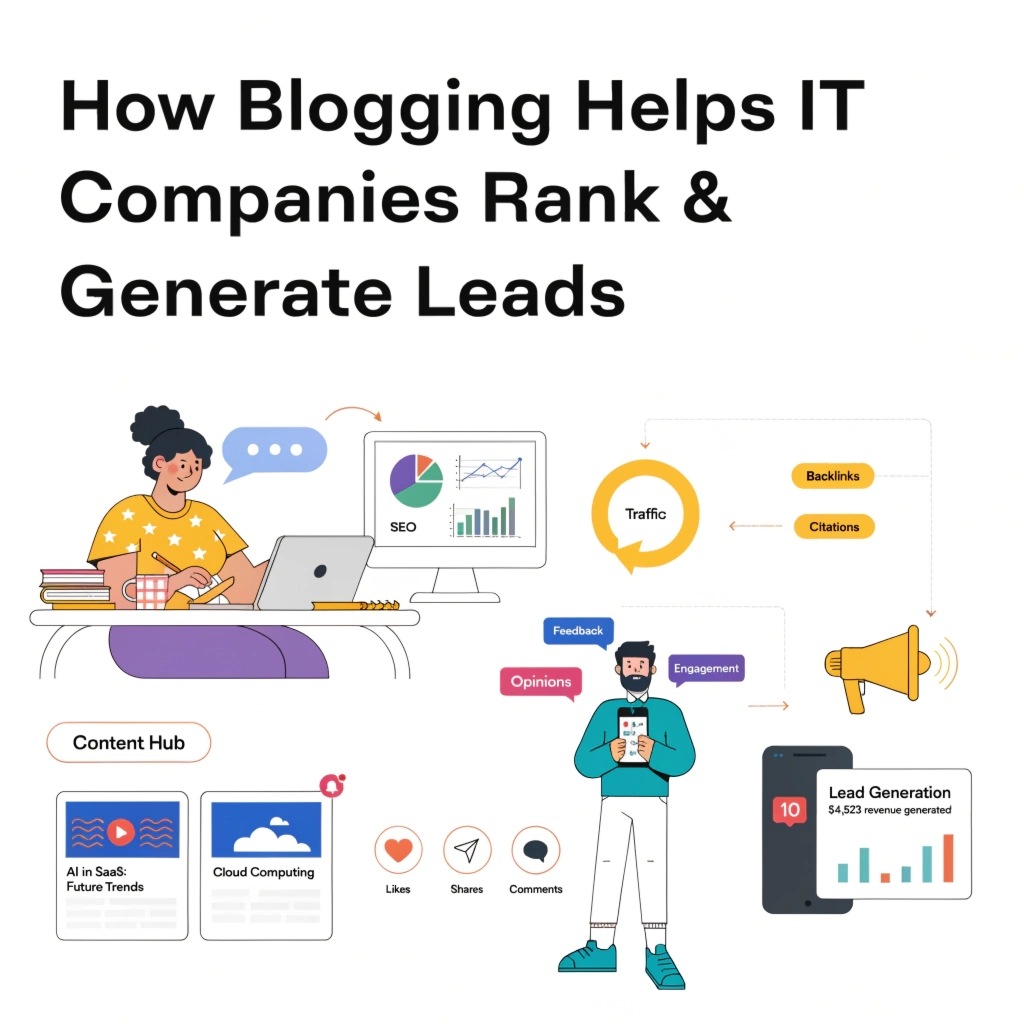
Blogging helps IT companies improve SEO, drive organic traffic, and generate leads. This blog explains how strategic content marketing builds authority and converts visitors into clients.
In today’s digital-first world, IT companies face intense competition when it comes to attracting clients and building a strong online presence. Traditional marketing methods are no longer sufficient on their own. Blogging has emerged as a powerful tool that not only improves search engine rankings but also generates high-quality leads for software and IT businesses.
Why Blogging Matters for IT Companies
Blogging is more than just publishing articles—it’s a strategic approach to content marketing. For IT companies, blogs act as a platform to showcase expertise, educate potential clients, and build trust. When businesses consistently publish valuable and relevant content, they position themselves as industry leaders.
Search engines favor websites that regularly update their content. A well-maintained blog signals that your website is active, relevant, and valuable to users, which directly impacts your search rankings.
Boosting SEO Through Blogging
One of the biggest advantages of blogging is its impact on search engine optimization (SEO). Each blog post creates a new indexed page on your website, increasing your chances of appearing in search results.
By targeting relevant keywords such as “software development services” or “custom web application solutions,” IT companies can attract users actively searching for their services. Blogging also allows you to:
- Optimize on-page SEO elements like headings, meta tags, and internal links
- Earn backlinks from other websites, improving domain authority
- Target long-tail keywords with lower competition but higher intent
Over time, this consistent effort leads to significant organic traffic growth.
Establishing Authority and Trust
Clients prefer working with companies that demonstrate expertise. Blogging provides an opportunity to share insights, case studies, and technical knowledge.
For example, an IT company that publishes blogs on topics like cloud computing, cybersecurity, or AI solutions can position itself as a thought leader. When potential clients find helpful content on your website, they are more likely to trust your services.
Trust is a key factor in converting visitors into leads, especially in B2B industries like IT.
Generating High-Quality Leads
Blogging plays a crucial role in lead generation. Unlike paid ads that target a broad audience, blogs attract users who are already interested in your services.
Here’s how blogging helps generate leads:
- Call-to-Actions (CTAs): Encourage readers to download resources, sign up for newsletters, or request consultations
- Lead Magnets: Offer eBooks, whitepapers, or free tools in exchange for contact information
- Landing Pages: Direct blog traffic to optimized landing pages for conversions
When combined with a strong content strategy, blogging becomes a consistent source of qualified leads.
Supporting the Buyer’s Journey
Every customer goes through different stages before making a purchase decision: awareness, consideration, and decision.
Blogging allows IT companies to create content for each stage:
- Awareness Stage: Educational blogs explaining problems and solutions
- Consideration Stage: Comparison articles and case studies
- Decision Stage: Product-focused content and success stories
By guiding users through this journey, blogs help nurture leads and move them closer to conversion.
Enhancing Content Marketing Strategy
Blogging serves as the foundation of a broader content marketing strategy. A single blog post can be repurposed into:
- Social media posts
- Email newsletters
- Infographics
- Video content
This maximizes the value of your content and ensures consistent messaging across platforms.
Cost-Effective Marketing Approach
Compared to paid advertising, blogging is a cost-effective long-term strategy. While it requires time and effort, the results are sustainable. A well-optimized blog post can continue to generate traffic and leads for months or even years.
This makes blogging an ideal investment for IT companies looking to achieve long-term growth without constantly increasing their marketing budget.
Common Mistakes to Avoid
While blogging offers many benefits, certain mistakes can limit its effectiveness:
- Publishing low-quality or irrelevant content
- Ignoring keyword research
- Inconsistent posting schedule
- Lack of clear CTAs
- Not optimizing for mobile users
Avoiding these pitfalls ensures better results and higher engagement.
Measuring Blogging Success
To understand the impact of your blogging efforts, track key performance indicators (KPIs) such as:
- Website traffic
- Bounce rate
- Time spent on page
- Conversion rate
- Lead generation metrics
Analyzing these metrics helps refine your strategy and improve outcomes over time.
Conclusion
Blogging is a powerful tool that enables IT companies to improve search engine rankings, build authority, and generate high-quality leads. By consistently creating valuable content and aligning it with SEO and marketing goals, businesses can establish a strong digital presence.
In a competitive industry where trust and expertise matter, blogging provides a sustainable way to attract, engage, and convert potential clients. For IT companies aiming for long-term success, investing in a well-planned blogging strategy is no longer optional—it’s essential.
We build scalable web, mobile, and game products for clients worldwide — combining modern frameworks, cloud infrastructure, and best engineering practices.