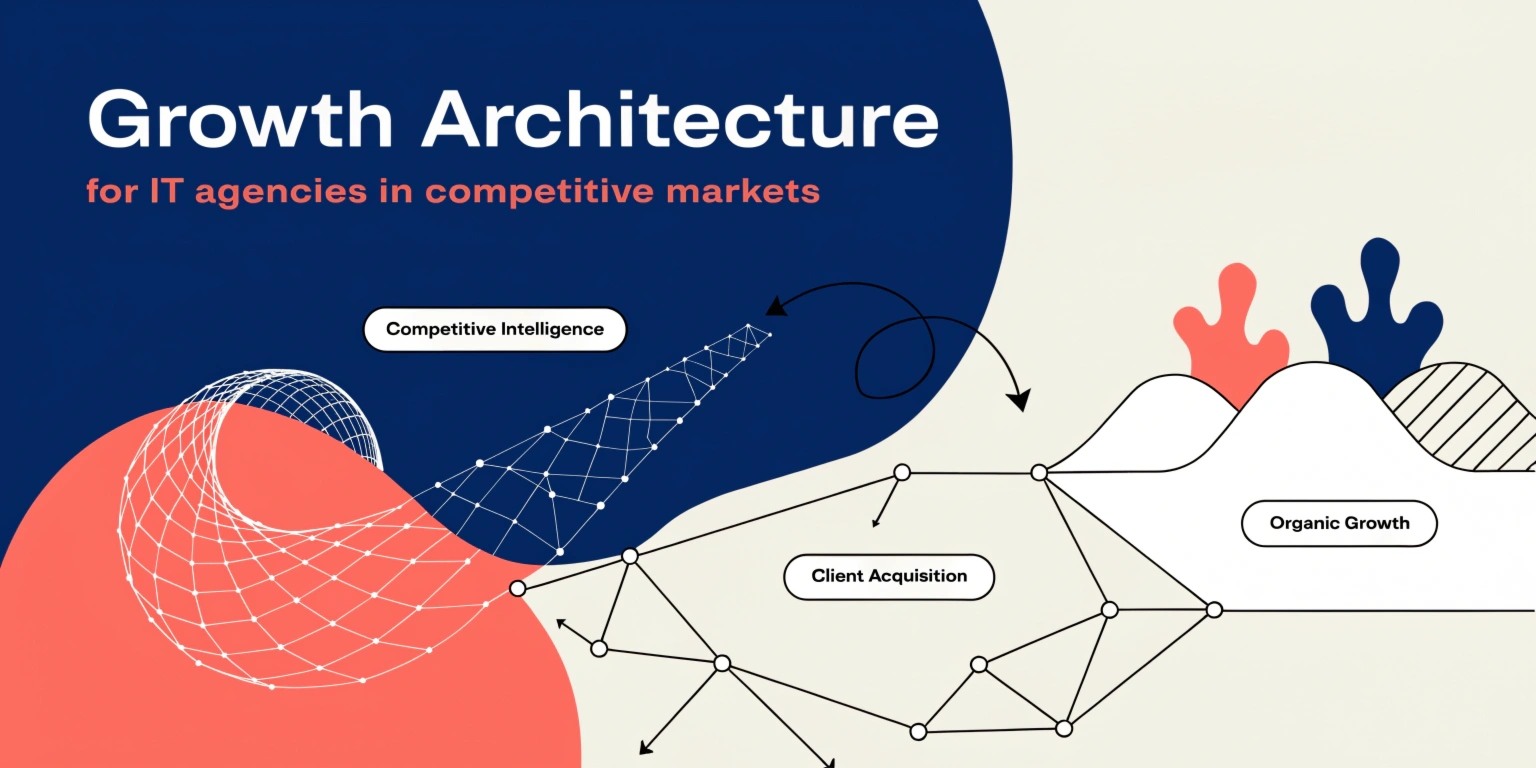
Learn how IT agencies can build a scalable growth architecture to thrive in competitive markets. Discover strategies for positioning, lead generation, sales optimization, client retention, automation, partnerships, and continuous innovation to achieve sustainable business growth.
The global IT services industry is expanding rapidly, but so is the competition. Thousands of software development agencies, digital transformation firms, and technology consultancies compete for the same clients across platforms like LinkedIn, Upwork, Clutch, and Google Search. Simply offering high-quality development services is no longer enough to stand out.
Successful IT agencies adopt a structured growth architecture—a strategic framework that combines branding, marketing, sales, operations, client success, and innovation into a repeatable system. Instead of relying on unpredictable referrals or occasional large projects, they create sustainable processes that consistently attract, convert, and retain clients.
This article explores the essential pillars of growth architecture and how IT agencies can use them to scale successfully in highly competitive markets.
1. Build a Strong Market Position
One of the biggest mistakes IT agencies make is trying to serve every industry and every type of client. A generic agency struggles to differentiate itself in a crowded marketplace.
Instead, focus on specialization. Position your agency around a specific expertise or industry, such as healthcare software, fintech solutions, e-commerce platforms, AI-powered applications, or game development.
A clear positioning statement helps potential clients immediately understand your strengths and increases trust. Agencies known for solving specific business problems often command higher pricing than general service providers.
2. Develop a Multi-Channel Lead Generation Strategy
Relying on a single lead source is risky. Market conditions, platform algorithms, or changing buyer behavior can quickly reduce lead flow.
Diversify your lead generation channels by combining:
- Search Engine Optimization (SEO)
- LinkedIn networking
- Content marketing
- Google Ads
- Email outreach
- Referral programs
- Industry events and webinars
- Freelance marketplaces
- Strategic partnerships
Each channel should support the others, creating a predictable pipeline of qualified prospects throughout the year.
3. Create Authority Through Valuable Content
Modern buyers research extensively before contacting an IT agency. Publishing educational content positions your business as an industry expert.
Develop content such as:
- Technical blogs
- Case studies
- Whitepapers
- Industry reports
- Client success stories
- Video tutorials
- Webinars
- Technology trend analysis
High-quality content improves search rankings while building credibility with decision-makers evaluating potential technology partners.
4. Optimize Your Sales Process
Generating leads is only part of the growth equation. Agencies also need an efficient sales process to convert prospects into long-term clients.
An optimized sales pipeline includes:
- Lead qualification
- Discovery meetings
- Requirement analysis
- Solution presentation
- Proposal submission
- Negotiation
- Contract signing
- Project onboarding
Using Customer Relationship Management (CRM) software ensures that every opportunity is tracked consistently, reducing missed follow-ups and improving conversion rates.
5. Focus on Exceptional Client Experience
Winning a client is expensive. Keeping them is significantly more profitable.
Deliver exceptional customer experiences by:
- Maintaining transparent communication
- Providing regular project updates
- Meeting delivery timelines
- Offering proactive recommendations
- Responding quickly to concerns
- Conducting post-project reviews
Satisfied clients become repeat customers and often generate valuable referrals.
6. Invest in Automation
As agencies grow, manual processes become bottlenecks.
Automation improves efficiency across multiple departments.
Examples include:
- Lead capture automation
- Email marketing workflows
- Proposal generation
- Appointment scheduling
- Project management notifications
- Invoice generation
- Customer support ticketing
- Performance reporting
Automation allows teams to focus more on innovation and client relationships rather than repetitive administrative tasks.
7. Build Long-Term Strategic Partnerships
Partnerships can accelerate agency growth while reducing customer acquisition costs.
Potential partners include:
- Digital marketing agencies
- UI/UX design studios
- Cloud service providers
- Technology consultants
- Startup incubators
- Software vendors
Cross-referrals and collaborative projects create new revenue opportunities while expanding market reach.
8. Monitor Business Performance with KPIs
Growth should be measured using meaningful metrics rather than assumptions.
Key Performance Indicators (KPIs) for IT agencies include:
- Monthly recurring revenue (MRR)
- Customer acquisition cost (CAC)
- Customer lifetime value (CLV)
- Proposal acceptance rate
- Lead conversion rate
- Average project value
- Client retention rate
- Employee utilization rate
- Net profit margin
Regular performance analysis enables agencies to identify strengths, address weaknesses, and make informed strategic decisions.
9. Continuously Upgrade Skills and Services
Technology evolves rapidly, and agencies that fail to adapt risk losing relevance.
Invest in continuous learning by:
- Training development teams
- Encouraging technical certifications
- Exploring emerging technologies
- Building internal knowledge-sharing programs
- Experimenting with AI, cloud computing, blockchain, and cybersecurity solutions
Offering modern technology stacks ensures your agency remains competitive and capable of meeting changing client expectations.
10. Build a Scalable Growth Culture
Growth architecture is not only about systems—it also depends on people.
Encourage a culture focused on:
- Innovation
- Collaboration
- Accountability
- Continuous improvement
- Customer-centric thinking
- Data-driven decision-making
Empowered teams consistently deliver better results, improve operational efficiency, and contribute to long-term business success.
Common Challenges IT Agencies Face
Even well-established agencies encounter growth obstacles, including:
- Increasing competition
- Price-sensitive clients
- Talent acquisition challenges
- Scope creep
- Inconsistent lead generation
- Long sales cycles
- Rapid technological changes
A well-designed growth architecture helps agencies overcome these challenges through structured planning, diversified revenue streams, and operational excellence.
Best Practices for Sustainable Growth
To build a resilient IT agency, consider these proven practices:
- Define a clear niche and value proposition.
- Build a recognizable brand identity.
- Diversify marketing and sales channels.
- Publish valuable educational content regularly.
- Standardize your sales and onboarding processes.
- Prioritize client satisfaction and retention.
- Automate repetitive business operations.
- Track business metrics consistently.
- Invest in employee development.
- Continuously adapt to new technologies and market trends.
Conclusion
Growing an IT agency in today's competitive environment requires much more than technical expertise. Sustainable success comes from designing a comprehensive growth architecture that integrates strategic positioning, marketing, sales, client success, operational efficiency, and continuous innovation.
Rather than chasing every opportunity, successful agencies focus on building repeatable systems that generate predictable results. By specializing in the right markets, delivering exceptional customer experiences, leveraging automation, and making data-driven decisions, IT agencies can strengthen their competitive advantage and achieve long-term, scalable growth.
Growth is not the result of a single marketing campaign or one successful project—it is the outcome of a well-planned architecture that aligns every part of the business toward a common objective: creating lasting value for clients while building a profitable and future-ready organization.
We build scalable web, mobile, and game products for clients worldwide — combining modern frameworks, cloud infrastructure, and best engineering practices.