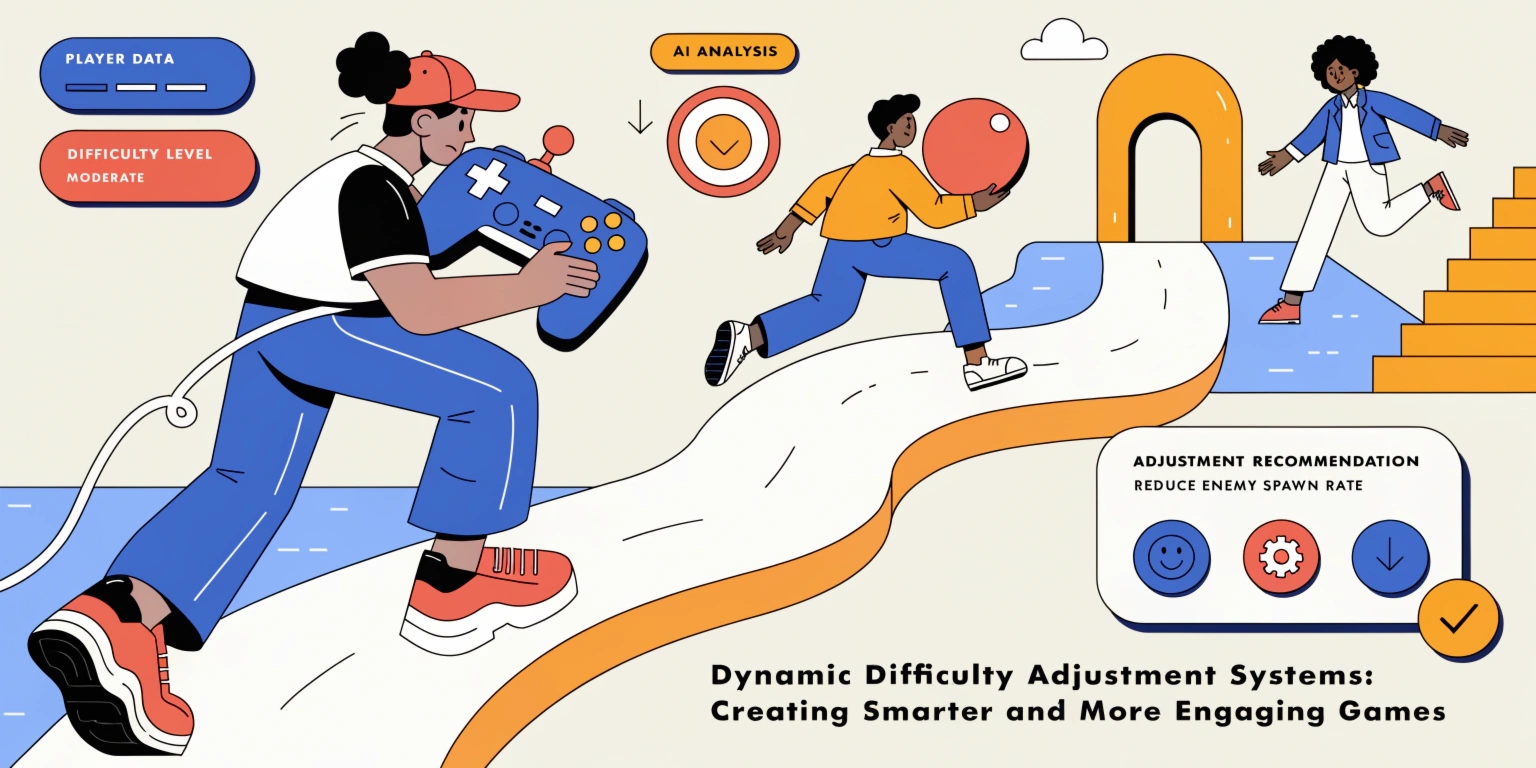
Dynamic Difficulty Adjustment (DDA) systems intelligently adapt game difficulty based on player performance. Explore how AI, analytics, and adaptive mechanics improve engagement, player retention, and overall gaming experiences.
One of the biggest challenges in game development is creating an experience that is both engaging and accessible for players with different skill levels. A game that is too easy quickly becomes boring, while one that is excessively difficult can frustrate players and lead them to abandon it. Traditionally, developers addressed this by offering fixed difficulty modes such as Easy, Normal, Hard, or Expert. While these options provide some flexibility, they often fail to adapt to individual player abilities.
Dynamic Difficulty Adjustment (DDA) systems solve this problem by automatically modifying gameplay based on a player's performance. Instead of forcing players to manually select a difficulty level, DDA continuously evaluates gameplay and adjusts challenges in real time. The result is a more personalized, balanced, and enjoyable gaming experience that keeps players motivated.
What Is Dynamic Difficulty Adjustment?
Dynamic Difficulty Adjustment is a game design technique that changes the difficulty level during gameplay by analyzing player behavior and performance.
Unlike static difficulty settings, DDA continuously monitors gameplay metrics and modifies game elements accordingly.
These adjustments may include:
- Enemy strength
- Enemy AI behavior
- Resource availability
- Puzzle complexity
- Spawn rates
- Damage values
- Time limits
- Reward frequency
The objective is to maintain an optimal level of challenge without making changes feel obvious or unfair.
Why DDA Matters in Modern Games
Modern games attract players with widely varying experience levels.
Some players seek challenging gameplay, while others prefer a more relaxed experience.
DDA helps developers:
- Improve player satisfaction
- Reduce frustration
- Increase accessibility
- Enhance player retention
- Extend gameplay sessions
By keeping players within an ideal challenge range, games remain enjoyable for both beginners and experienced players.
How Dynamic Difficulty Adjustment Works
A DDA system generally follows four steps:
1. Data Collection
The game gathers information about player performance, such as:
- Win/loss ratio
- Accuracy
- Completion time
- Health remaining
- Number of deaths
- Resource usage
- Reaction speed
2. Performance Analysis
Algorithms evaluate whether the player is struggling, progressing normally, or outperforming expectations.
3. Decision Making
Based on predefined rules or AI models, the game determines whether adjustments are necessary.
4. Difficulty Adaptation
Gameplay parameters are modified to better match the player's skill level while preserving immersion.
This continuous feedback loop enables the game to adapt naturally over time.
Types of Dynamic Difficulty Adjustment
Performance-Based DDA
Difficulty changes based on measurable gameplay statistics.
For example:
- Stronger enemies for skilled players
- Additional health pickups for struggling players
AI-Based DDA
Artificial Intelligence predicts player behavior and dynamically adjusts encounters.
Machine learning models can identify patterns that traditional rule-based systems may overlook.
Procedural Difficulty Scaling
Procedurally generated levels, enemy layouts, or missions are adjusted based on player skill.
This approach is common in roguelike and survival games.
Player Preference Adaptation
Some systems analyze player preferences rather than raw performance.
For example, a player who enjoys exploration may encounter fewer combat challenges, while action-focused players experience more intense battles.
Benefits of Dynamic Difficulty Adjustment
Improved Player Retention
Balanced gameplay encourages players to continue playing rather than quitting due to boredom or frustration.
Personalized Experiences
Every player receives a unique experience tailored to their abilities.
Increased Accessibility
New players can enjoy games without being overwhelmed, while experienced players remain challenged.
Better Engagement
Maintaining an optimal challenge level creates a satisfying "flow state," where players remain fully immersed.
Reduced Need for Manual Difficulty Selection
Players no longer need to guess which difficulty level best suits their abilities.
Real-World Applications
Many popular games use adaptive difficulty systems.
Examples include:
- Racing games that adjust opponent speed
- Action games that alter enemy aggression
- Puzzle games that provide additional hints
- Survival games that change resource availability
- Sports games that modify AI strategies
Although implementations differ, the objective remains the same: create a balanced and enjoyable experience.
AI and Machine Learning in DDA
Artificial Intelligence is transforming adaptive gameplay.
Modern AI systems can:
- Predict player frustration
- Detect skill progression
- Personalize challenges
- Optimize reward systems
- Improve matchmaking
Machine learning enables DDA systems to become increasingly accurate over time by learning from large volumes of gameplay data.
Future games may use reinforcement learning to create opponents that evolve alongside players.
Challenges of Dynamic Difficulty Adjustment
Despite its advantages, implementing DDA presents several challenges.
Maintaining Fairness
Players should never feel punished for performing well or rewarded simply for struggling.
Avoiding Noticeable Adjustments
Difficulty changes should feel natural rather than artificial.
Balancing Competitive Integrity
In multiplayer games, adaptive difficulty must avoid creating unfair advantages.
Development Complexity
Designing effective DDA systems requires extensive testing, balancing, and data analysis.
Poorly implemented systems may negatively affect gameplay.
Best Practices for Implementing DDA
Game developers should follow these principles:
- Collect meaningful player data
- Make gradual adjustments
- Preserve player agency
- Test across multiple skill levels
- Monitor player feedback
- Allow optional manual difficulty settings when appropriate
These practices help ensure adaptive systems enhance rather than disrupt gameplay.
Future Trends
Several emerging technologies will influence DDA systems in the coming years:
- AI-powered behavioral analysis
- Reinforcement learning opponents
- Emotion recognition
- Cloud-based player analytics
- Personalized procedural generation
- Adaptive narrative systems
- Cross-platform player profiling
These innovations will create increasingly intelligent and personalized gaming experiences.
Conclusion
Dynamic Difficulty Adjustment systems represent one of the most significant advancements in modern game design. By continuously adapting gameplay to match player skill, DDA creates experiences that are more engaging, accessible, and enjoyable.
As artificial intelligence, machine learning, and player analytics continue to evolve, adaptive difficulty systems will become even more sophisticated. Developers who effectively implement DDA can improve player retention, increase satisfaction, and deliver games that remain challenging without becoming frustrating. In the future of game development, intelligent difficulty adjustment will play a key role in creating immersive experiences for players of all skill levels.
We build scalable web, mobile, and game products for clients worldwide — combining modern frameworks, cloud infrastructure, and best engineering practices.
.jpg)