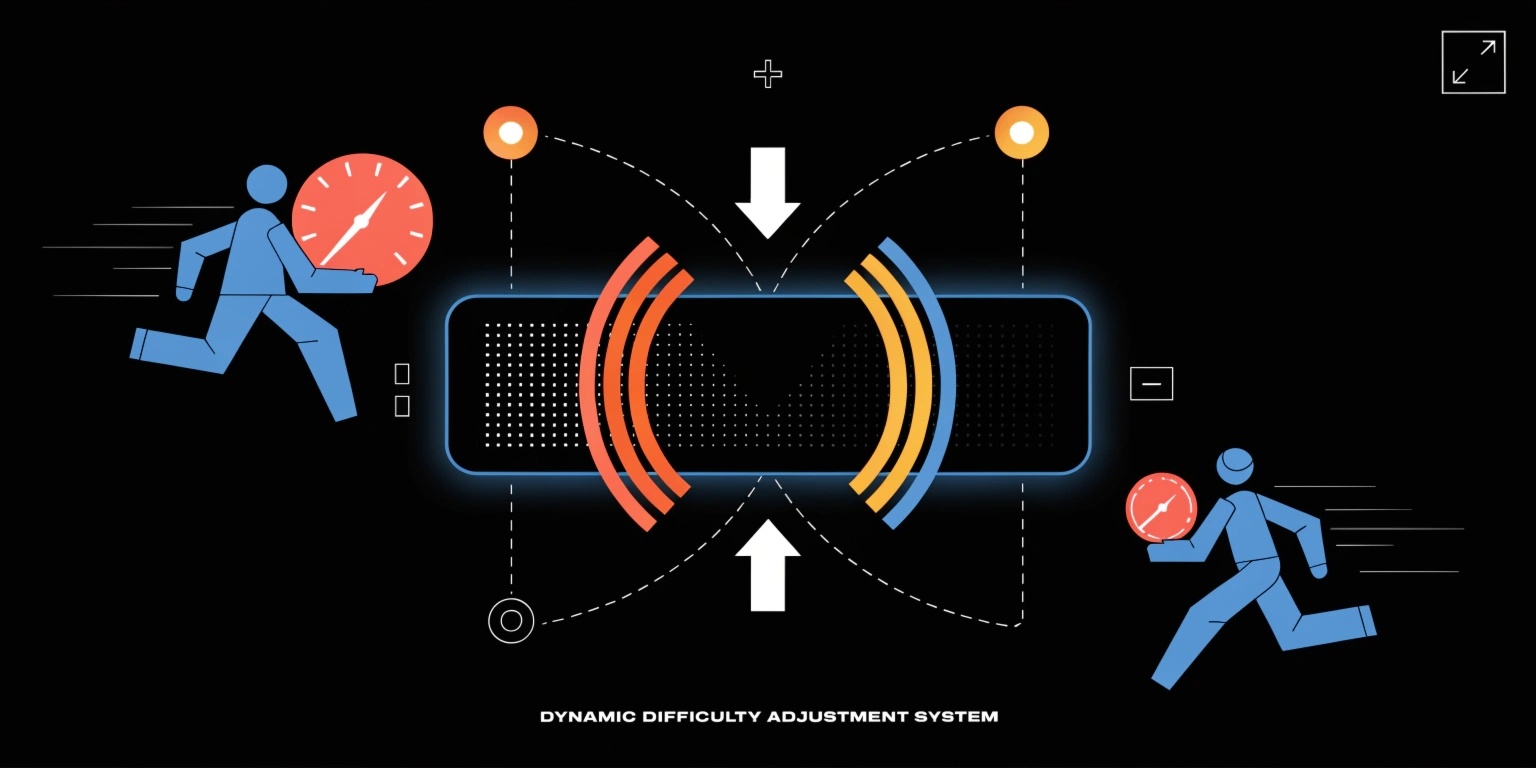
Discover how Dynamic Difficulty Adjustment (DDA) systems personalize gameplay by adapting challenges to player skill. Learn implementation techniques, AI integration, benefits, challenges, and best practices for improving engagement and retention.
Designing a game that appeals to players of varying skill levels is one of the biggest challenges in modern game development. If a game is too easy, players may lose interest due to a lack of challenge. Conversely, if it is too difficult, frustration can lead to abandonment. Dynamic Difficulty Adjustment (DDA) addresses this challenge by automatically adapting gameplay difficulty based on a player's performance, ensuring an engaging and balanced experience.
Unlike traditional difficulty settings selected at the beginning of a game, DDA continuously analyzes player behavior and adjusts gameplay in real time. Modern games increasingly use AI, analytics, and adaptive algorithms to personalize challenges while maintaining fairness and immersion.
This article explores how Dynamic Difficulty Adjustment systems work, their benefits, implementation techniques, challenges, and their growing role in the future of game development.
What Is Dynamic Difficulty Adjustment?
Dynamic Difficulty Adjustment is a game design technique that modifies gameplay difficulty automatically according to player performance, skill level, and behavior.
Instead of forcing players to manually choose between "Easy," "Normal," or "Hard," DDA continuously evaluates gameplay metrics and fine-tunes challenges to keep players in an optimal engagement zone.
Difficulty adjustments may include:
- Enemy intelligence
- Enemy health and damage
- Spawn frequency
- Resource availability
- Puzzle complexity
- Time limits
- Reward frequency
- AI aggression
The goal is to maintain an enjoyable balance between challenge and achievement.
Why Dynamic Difficulty Matters
Modern players have diverse experience levels and expectations. Static difficulty settings often fail to satisfy everyone.
Benefits of DDA include:
- Higher player retention
- Reduced frustration
- Increased accessibility
- Better gameplay balance
- Improved learning curve
- Personalized experiences
- Longer play sessions
- Enhanced replay value
A well-designed DDA system keeps players engaged without making adjustments feel obvious or unfair.
How Dynamic Difficulty Adjustment Works
DDA systems collect gameplay data and make intelligent adjustments based on predefined rules or machine learning models.
Common player metrics include:
- Success and failure rates
- Completion times
- Accuracy
- Damage dealt and received
- Resource usage
- Number of retries
- Player movement patterns
- Progression speed
Based on this information, the system estimates player skill and adjusts future gameplay accordingly.
Types of Dynamic Difficulty Systems
Rule-Based Systems
These systems rely on predefined conditions.
For example:
- Increase enemy health if the player wins several encounters easily.
- Reduce enemy damage after repeated failures.
- Provide additional resources when players struggle.
Rule-based approaches are simple to implement and widely used.
AI-Driven Systems
Artificial Intelligence can analyze complex gameplay patterns to create more personalized adjustments.
AI models may predict:
- Player skill progression
- Preferred play styles
- Likelihood of quitting
- Optimal challenge levels
These systems continuously improve as more gameplay data becomes available.
Real-World Applications
Dynamic difficulty is used across many game genres.
Action Games
Enemy aggression and attack frequency adapt to player performance.
Racing Games
AI-controlled opponents adjust speed to keep races competitive.
Role-Playing Games (RPGs)
Enemy levels, loot quality, and encounter difficulty scale with player progression.
Puzzle Games
Hint frequency and puzzle complexity adapt based on solving performance.
Mobile Games
Reward systems and progression pacing are often personalized to improve long-term engagement.
AI and Machine Learning in DDA
Machine learning enables more sophisticated difficulty adjustment by recognizing patterns that traditional rule-based systems may miss.
AI can:
- Classify player skill levels
- Predict future performance
- Personalize challenges
- Detect frustration
- Recommend gameplay adjustments
- Optimize reward distribution
These capabilities create highly individualized gaming experiences while preserving game balance.
Challenges of Dynamic Difficulty
Despite its advantages, implementing DDA presents several challenges.
Maintaining Fairness
Players should feel challenged, not manipulated. Sudden or excessive adjustments may reduce satisfaction.
Preserving Immersion
Difficulty changes should occur naturally without becoming noticeable.
Balancing Competitive Modes
In multiplayer games, adaptive difficulty must not create unfair advantages or disadvantages.
Complex Testing
Developers must validate DDA systems across different player types and gameplay scenarios to avoid unintended behavior.
Careful design and extensive playtesting are essential for success.
Best Practices
To build effective DDA systems:
- Monitor meaningful gameplay metrics.
- Make gradual rather than abrupt adjustments.
- Preserve player agency whenever possible.
- Test with players of varying skill levels.
- Use analytics to refine balancing rules.
- Avoid rewarding poor performance excessively.
- Provide consistent progression.
- Continuously monitor player feedback after release.
These practices help maintain engagement while ensuring gameplay remains fair and rewarding.
Future Trends
Dynamic Difficulty Adjustment continues to evolve alongside advances in AI and analytics.
Emerging trends include:
- Reinforcement learning for adaptive AI
- Emotion-aware gameplay using biometric sensors
- Personalized game narratives
- Cloud-based player behavior analysis
- Cross-platform skill profiling
- AI-generated encounters
- Procedural content generation linked to player performance
- Predictive retention optimization
These innovations will allow games to deliver increasingly personalized experiences without sacrificing balance or immersion.
Conclusion
Dynamic Difficulty Adjustment has become an essential tool for creating engaging, accessible, and personalized gaming experiences. By continuously analyzing player performance and adapting challenges in real time, DDA systems help maintain the ideal balance between difficulty and enjoyment.
Whether implemented through simple rule-based logic or advanced AI models, adaptive difficulty improves player retention, accessibility, and overall satisfaction. As artificial intelligence and gameplay analytics continue to advance, Dynamic Difficulty Adjustment will play an even greater role in shaping the next generation of intelligent and immersive games.
We build scalable web, mobile, and game products for clients worldwide — combining modern frameworks, cloud infrastructure, and best engineering practices.
.jpg)