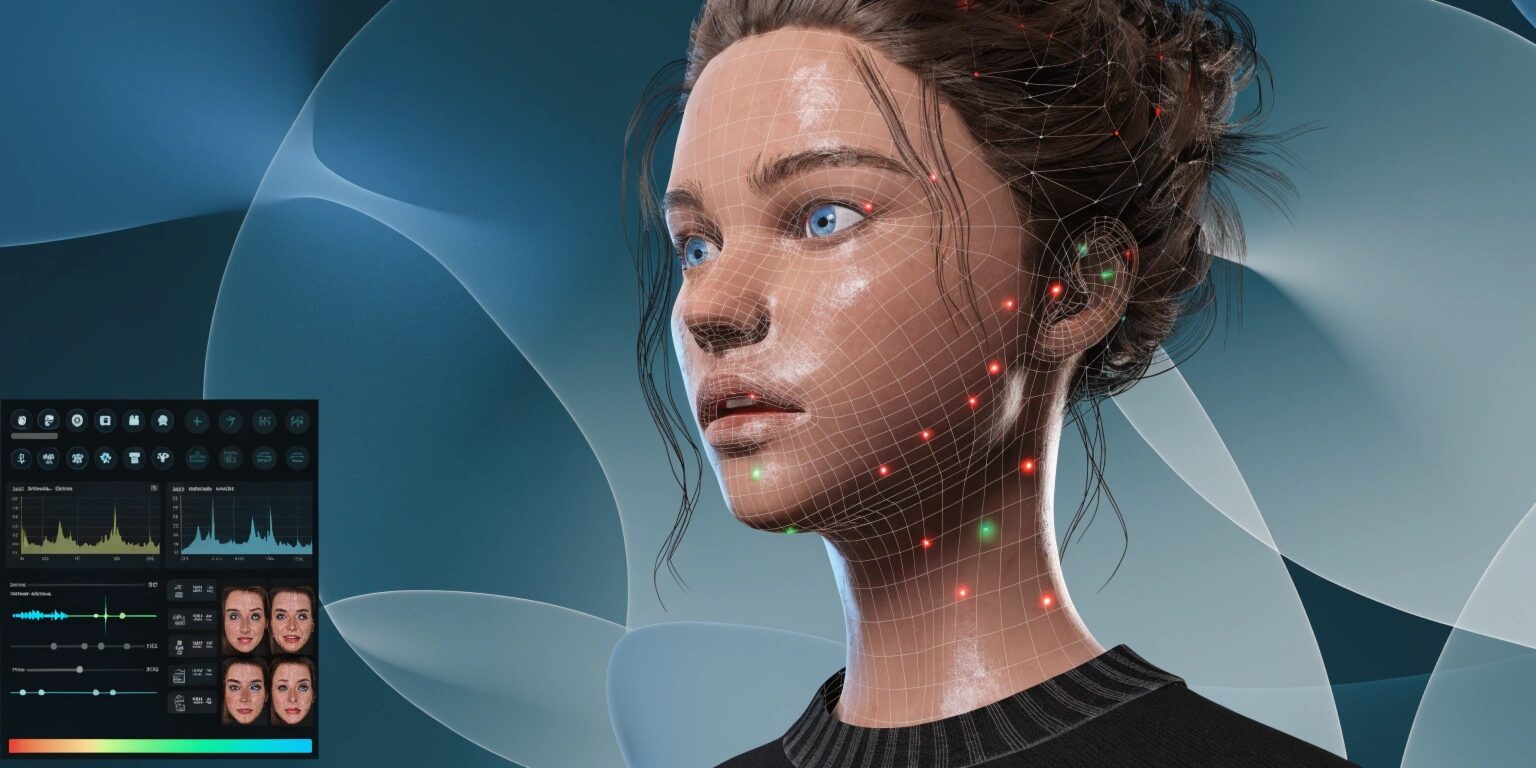
Discover how digital humans and real-time facial animation technologies are transforming gaming, entertainment, virtual assistants, customer engagement, and immersive digital experiences.
The digital world is rapidly evolving beyond static interfaces and traditional user experiences. One of the most exciting innovations in modern technology is the rise of digital humans combined with real-time facial animation systems.
Digital humans are AI-powered virtual characters designed to look, behave, and communicate like real people. When combined with advanced facial animation technologies, these virtual entities can deliver highly realistic expressions, lip synchronization, emotions, and conversational interactions in real time.
From gaming and movies to virtual customer support and metaverse applications, digital humans are becoming increasingly important across industries.
Powered by:
- Artificial intelligence
- Machine learning
- Motion capture systems
- Real-time rendering engines
- Facial tracking technology
- Natural language processing
digital humans are transforming how humans interact with machines and digital environments.
As immersive experiences continue expanding, real-time facial animation is becoming a core technology behind next-generation digital communication.
What Are Digital Humans?
Digital humans are realistic virtual characters designed to simulate human appearance, speech, expressions, and behavior.
Unlike traditional animated characters, digital humans can:
- Interact conversationally
- Display emotional responses
- Mimic facial expressions
- Respond dynamically in real time
- Learn from interactions using AI systems
Digital humans are increasingly used in:
- Video games
- Virtual reality
- Customer service
- Healthcare
- Education
- Entertainment
- Corporate training
- Virtual influencers
Their realism creates more immersive and emotionally engaging experiences.
Understanding Real-Time Facial Animation
Real-time facial animation refers to the process of instantly capturing and rendering facial movements on digital characters.
The technology tracks:
- Eye movement
- Lip synchronization
- Facial muscle movement
- Expressions
- Head movement
- Emotional cues
These movements are then mapped onto 3D digital avatars in real time.
Modern systems use:
- AI-based facial tracking
- Motion capture cameras
- Smartphone depth sensors
- Neural rendering systems
to create highly realistic digital expressions.
Real-time rendering enables digital humans to interact naturally during live conversations, gaming sessions, or virtual meetings.
Technologies Behind Digital Humans
Several advanced technologies work together to create realistic digital humans.
Artificial Intelligence
AI enables digital humans to:
- Understand conversations
- Generate responses
- Analyze emotions
- Improve interactions over time
Conversational AI systems powered by large language models are becoming central to virtual human interactions.
Motion Capture Technology
Motion capture records human movement and facial expressions using sensors or cameras.
Actors’ facial performances can be transferred directly to digital characters with high accuracy.
This technology is widely used in:
- Video games
- Hollywood films
- Virtual production systems
Real-Time Rendering Engines
Game engines such as:
- Epic Games Unreal Engine
- Unity Technologies Unity
enable photorealistic character rendering in real time.
Advanced rendering systems improve:
- Skin textures
- Eye movement realism
- Lighting simulation
- Hair rendering
- Facial detail accuracy
Facial Tracking Systems
Modern facial tracking systems use:
- Computer vision
- Depth cameras
- AI-powered landmark detection
to analyze facial movement instantly.
Some systems can operate using standard smartphone cameras.
Applications in Gaming
Gaming is one of the biggest adopters of digital humans and facial animation technologies.
Modern games increasingly feature:
- Realistic NPCs
- Emotionally expressive characters
- Dynamic facial interactions
- Real-time dialogue systems
Facial realism improves storytelling and player immersion significantly.
Games with cinematic experiences rely heavily on:
- Motion capture
- Facial performance capture
- AI-driven animation blending
to create lifelike characters.
Digital Humans in Virtual Customer Support
Businesses are increasingly using AI-powered digital humans for customer engagement.
Virtual customer assistants can:
- Answer questions
- Provide product guidance
- Handle onboarding
- Offer multilingual support
- Simulate face-to-face communication
Compared to traditional chatbots, digital humans create more natural and engaging customer experiences.
Industries adopting virtual assistants include:
- Banking
- Healthcare
- Ecommerce
- Hospitality
- Education
Virtual Influencers and Digital Personalities
Digital influencers are becoming a major trend on social media platforms.
These AI-generated personalities can:
- Promote brands
- Interact with audiences
- Produce content
- Appear in virtual campaigns
Unlike human influencers, digital personalities can operate continuously without physical limitations.
Brands increasingly use digital humans for:
- Marketing campaigns
- Brand storytelling
- Interactive advertising
- Personalized engagement
Role in the Metaverse
Digital humans are expected to play a major role in metaverse ecosystems.
In virtual worlds, users may interact through:
- Realistic avatars
- AI companions
- Virtual employees
- Digital entertainers
Real-time facial animation enhances immersion by enabling avatars to reflect human emotions and expressions naturally.
As virtual spaces become more sophisticated, digital identity realism will become increasingly important.
AI and Emotion Simulation
One of the biggest advancements in digital humans is emotion-aware interaction.
AI systems can increasingly detect:
- Tone of voice
- Facial emotion
- Behavioral patterns
- Conversational intent
This allows digital humans to generate more empathetic and context-aware responses.
Emotion simulation is especially important for:
- Mental health support
- Customer experience
- Education
- Interactive entertainment
Challenges of Digital Humans
Despite rapid advancements, digital humans still face several challenges.
The Uncanny Valley Effect
Highly realistic characters that appear almost human but not perfectly natural can create discomfort for users.
Balancing realism and natural expression remains difficult.
Computational Requirements
Real-time facial animation requires:
- High-performance GPUs
- Advanced rendering pipelines
- Low-latency processing
Large-scale deployment can become computationally expensive.
Ethical Concerns
Digital humans raise concerns related to:
- Identity misuse
- Deepfakes
- Misinformation
- Privacy
- AI impersonation
Responsible AI governance is becoming increasingly important.
Data Privacy
Facial tracking systems collect sensitive biometric data, creating security and privacy concerns.
Future of Digital Humans
The future of digital humans will likely include:
- Hyper-realistic AI avatars
- Fully conversational virtual assistants
- Emotionally intelligent AI characters
- Real-time multilingual communication
- Personalized AI companions
- Virtual workplace collaboration
Advancements in generative AI, neural rendering, and spatial computing will accelerate adoption across industries.
Enterprise Adoption Opportunities
Businesses may increasingly use digital humans for:
- Employee onboarding
- Corporate training
- Virtual sales assistants
- Interactive product demonstrations
- AI-powered support systems
These technologies can improve scalability and customer engagement while reducing operational costs.
Conclusion
Digital humans and real-time facial animation are reshaping the future of human-computer interaction. By combining artificial intelligence, motion capture, facial tracking, and real-time rendering technologies, organizations can create highly immersive and emotionally engaging digital experiences.
From gaming and entertainment to enterprise AI assistants and metaverse environments, digital humans are becoming increasingly important across multiple industries.
Although challenges related to realism, ethics, privacy, and computational complexity still exist, continued advancements in AI and graphics technology are rapidly improving the capabilities of virtual humans.
As digital interaction becomes more immersive and conversational, digital humans may eventually become a standard part of everyday communication, commerce, entertainment, and online collaboration.
We build scalable web, mobile, and game products for clients worldwide — combining modern frameworks, cloud infrastructure, and best engineering practices.
.jpg)