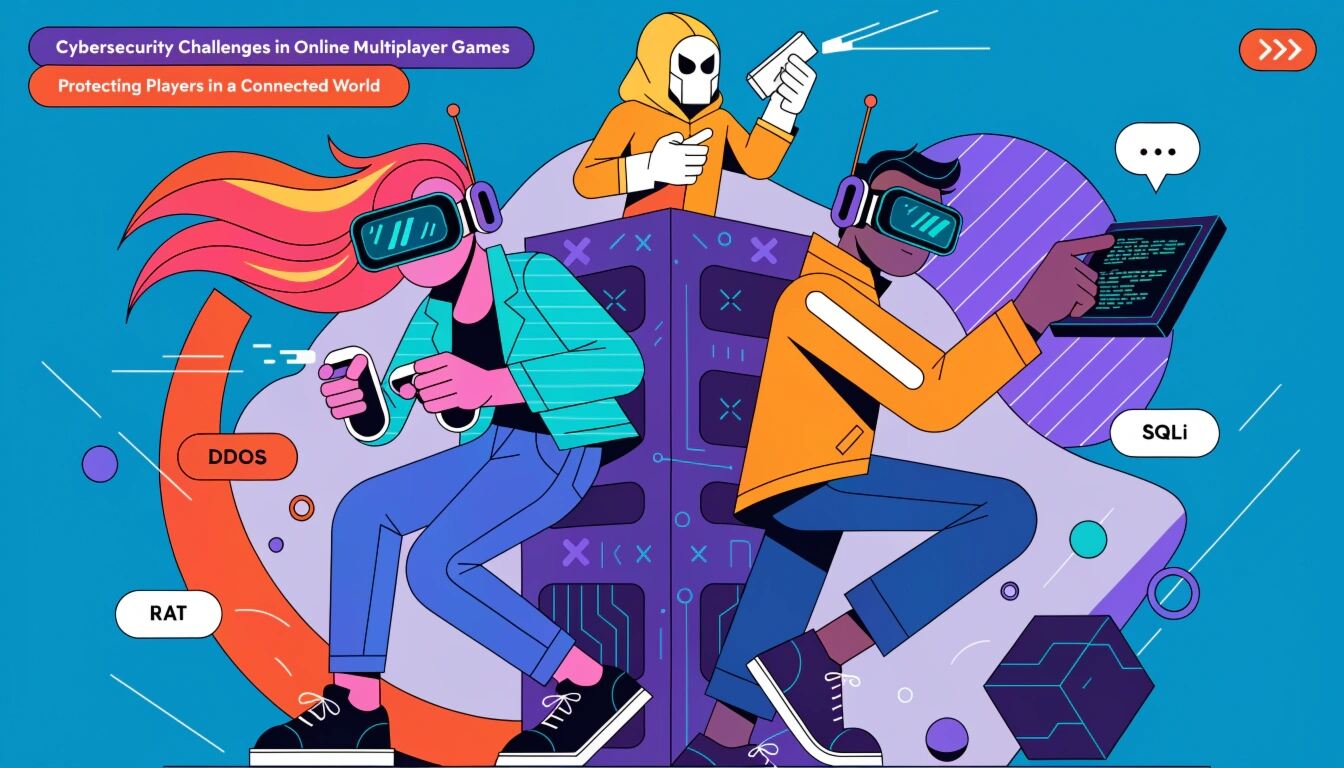
Introduction
The online gaming industry has experienced tremendous growth over the past decade, with multiplayer games attracting millions of active players daily. From competitive esports titles to massive multiplayer online role-playing games (MMORPGs), online gaming has become a global phenomenon. However, as gaming platforms continue to expand, they also become attractive targets for cybercriminals seeking financial gain, personal data, or disruption of services.
Cybersecurity has emerged as one of the most critical concerns in modern game development. Developers must balance engaging gameplay experiences with robust security measures to protect both players and gaming infrastructure.
Common Cybersecurity Challenges in Online Multiplayer Games
1. Account Hacking and Credential Theft
One of the most common cybersecurity threats in multiplayer games is account compromise. Cybercriminals often target gaming accounts containing valuable in-game items, virtual currencies, or premium subscriptions.
Attackers use techniques such as:
- Phishing scams
- Credential stuffing attacks
- Password guessing
- Social engineering
Compromised accounts can lead to financial losses and damage player trust in the gaming platform.
2. Distributed Denial-of-Service (DDoS) Attacks
DDoS attacks flood game servers with excessive traffic, making them inaccessible to legitimate players. These attacks can disrupt gameplay, cause server outages, and negatively impact player experiences.
Competitive gaming tournaments and esports events are particularly vulnerable because downtime can result in significant financial and reputational damage.
3. Cheating and Exploitation
Cheating remains a major concern in multiplayer gaming. Players often use unauthorized software, scripts, or exploits to gain unfair advantages over others.
Common cheating methods include:
- Aimbots
- Wall hacks
- Speed hacks
- Modified game clients
Cheating not only damages game integrity but can also introduce security vulnerabilities if malicious software is involved.
4. Malware Distribution Through Gaming Platforms
Cybercriminals frequently disguise malware as:
- Game modifications (mods)
- Cheat software
- Fake game updates
- Pirated game downloads
Unsuspecting players may download infected files, leading to device compromise, data theft, or ransomware infections.
5. Data Breaches and Privacy Risks
Gaming companies collect substantial amounts of user information, including:
- Email addresses
- Payment details
- Personal information
- Gameplay data
A successful data breach can expose millions of user records, resulting in legal consequences, financial losses, and reputational damage for developers.
Security Challenges for Game Developers
Securing Real-Time Communication
Many multiplayer games rely on real-time communication systems such as voice chat and messaging. These features can be exploited for:
- Harassment
- Phishing attempts
- Malware distribution
- Social engineering attacks
Developers must implement monitoring and moderation tools to reduce abuse.
Protecting APIs and Backend Services
Modern multiplayer games depend heavily on APIs and cloud-based services. Poorly secured APIs can expose sensitive information or allow attackers to manipulate game mechanics.
Implementing API authentication, rate limiting, and encryption is essential for securing backend infrastructure.
Managing Third-Party Integrations
Many games integrate payment gateways, social media platforms, and analytics tools. Each third-party connection introduces additional security risks that require ongoing monitoring and assessment.
Best Practices for Enhancing Game Security
Implement Multi-Factor Authentication (MFA)
MFA significantly reduces the risk of account compromise by requiring additional verification beyond passwords.
Use End-to-End Encryption
Encryption helps protect sensitive player data during transmission and storage, making it more difficult for attackers to intercept information.
Deploy Advanced Anti-Cheat Systems
Modern anti-cheat solutions use machine learning and behavioral analysis to detect suspicious player activities and maintain fair gameplay environments.
Conduct Regular Security Audits
Frequent penetration testing and vulnerability assessments help identify weaknesses before attackers can exploit them.
Educate Players About Cybersecurity
Developers should provide security awareness resources that teach players how to:
- Create strong passwords
- Recognize phishing attempts
- Avoid suspicious downloads
- Enable account security features
The Future of Gaming Cybersecurity
As technologies such as cloud gaming, virtual reality, artificial intelligence, and blockchain become more prevalent, cybersecurity requirements will continue to evolve. Developers must adopt proactive security strategies and invest in advanced threat detection systems to stay ahead of increasingly sophisticated cyber threats.
Artificial intelligence is expected to play a significant role in identifying suspicious behaviors, detecting cheating attempts, and responding to security incidents in real time.
Conclusion
Cybersecurity is no longer an optional consideration in online multiplayer game development. With growing player bases, increasing digital transactions, and evolving cyber threats, gaming companies must prioritize security at every stage of development. By implementing strong authentication systems, protecting player data, deploying anti-cheat technologies, and conducting regular security assessments, developers can create safer gaming experiences that foster trust, fairness, and long-term success.