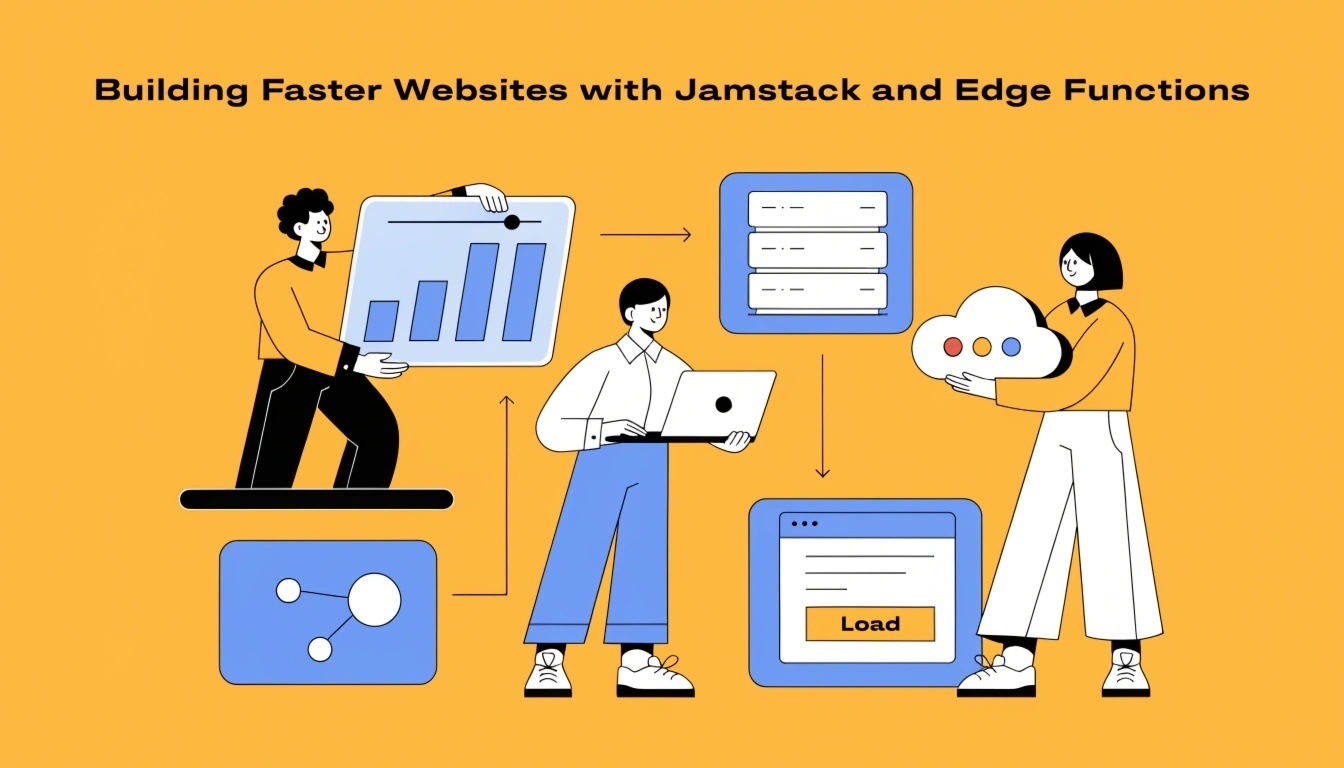
Jamstack and Edge Functions are redefining website performance by combining static content delivery with dynamic edge processing. Explore how these technologies improve speed, scalability, security, and user experiences while reducing infrastructure complexity.
Website performance has become one of the most important factors influencing user experience, search engine rankings, and business success. Users expect web pages to load instantly, regardless of their location or device. Even a few seconds of delay can result in higher bounce rates, lower conversions, and reduced customer satisfaction.
To meet these expectations, developers are increasingly adopting modern architectures such as Jamstack and Edge Functions. Together, these technologies provide a powerful approach to building websites that are faster, more secure, scalable, and easier to maintain.
As organizations prioritize performance and digital experiences, Jamstack and edge computing are emerging as key components of the future web.
What is Jamstack?
Jamstack stands for:
- JavaScript
- APIs
- Markup
It is a modern web development architecture that separates the frontend from backend services and focuses on delivering pre-rendered content through content delivery networks (CDNs).
Unlike traditional web applications that generate pages dynamically on a server for every request, Jamstack sites generate pages ahead of time and serve them directly from edge locations.
This approach offers several advantages:
- Faster page loading
- Improved scalability
- Better security
- Simplified deployments
- Reduced server dependency
Jamstack has become increasingly popular among developers building blogs, e-commerce platforms, corporate websites, and web applications.
Understanding Edge Functions
Edge Functions are lightweight server-side functions executed at network edge locations close to users.
Instead of processing requests in centralized data centers, edge functions run geographically closer to visitors.
This reduces:
- Network latency
- Response times
- Server load
Common use cases include:
- Personalization
- Authentication
- A/B testing
- Geolocation-based content
- URL rewriting
- API transformations
By moving computation closer to users, websites become significantly faster and more responsive.
Why Website Speed Matters
Performance directly impacts business outcomes.
Studies consistently show that faster websites lead to:
- Higher engagement
- Better conversion rates
- Increased customer retention
- Improved SEO rankings
- Enhanced user satisfaction
Modern search engines also prioritize page speed as a ranking factor.
Slow websites can negatively affect:
- Organic traffic
- User trust
- Revenue generation
Jamstack and Edge Functions help address these challenges by minimizing delays and improving content delivery efficiency.
How Jamstack Improves Performance
Traditional web architectures often require multiple server interactions before delivering content.
Jamstack eliminates many of these bottlenecks.
Pre-Rendered Pages
Pages are generated during build time rather than request time.
Benefits include:
- Instant page delivery
- Reduced server processing
- Improved reliability
Global CDN Distribution
Content is distributed across global CDN networks.
Users receive content from the nearest server location, reducing latency.
Reduced Backend Dependencies
Since pages are pre-built, websites are less affected by backend bottlenecks and traffic spikes.
This contributes to consistent performance even during periods of high demand.
Enhancing Dynamic Experiences with Edge Functions
While static websites are fast, modern applications often require dynamic behavior.
Edge Functions bridge this gap.
They allow developers to introduce dynamic features without sacrificing performance.
Examples include:
Personalized Content
Display content based on user location, language, or preferences.
Authentication
Verify user identities before serving protected resources.
Feature Testing
Run experiments and A/B tests closer to users for faster execution.
Request Processing
Modify requests and responses before reaching the application.
These capabilities make it possible to combine static speed with dynamic functionality.
Scalability Benefits
One of the strongest advantages of Jamstack is scalability.
Traditional applications may require:
- Additional servers
- Load balancers
- Complex infrastructure management
Jamstack sites rely heavily on CDNs, which naturally scale to handle large volumes of traffic.
Benefits include:
- High availability
- Traffic spike resilience
- Reduced infrastructure costs
- Global reach
Edge Functions further enhance scalability by distributing processing workloads across multiple locations.
Security Advantages
Security is another major reason organizations adopt Jamstack architectures.
Benefits include:
Reduced Attack Surface
Since there are fewer active servers and databases exposed to the public internet, security risks are lower.
Serverless Execution
Edge Functions execute in isolated environments, reducing potential vulnerabilities.
Secure API Integrations
Sensitive operations can be managed through secured APIs instead of exposing backend systems directly.
Together, these measures improve the overall security posture of web applications.
Developer Experience and Productivity
Modern development teams value workflows that improve efficiency.
Jamstack offers:
- Simplified deployments
- Git-based workflows
- Easy version control
- Continuous integration support
- Faster development cycles
Edge Functions integrate seamlessly into these workflows, allowing developers to add advanced functionality without managing complex server infrastructure.
This improves productivity while reducing operational overhead.
Real-World Applications
Many industries are adopting Jamstack and Edge Functions.
E-Commerce
- Personalized shopping experiences
- Fast product pages
- Dynamic promotions
Media and Publishing
- High-performance content delivery
- Global audience reach
- Improved SEO
SaaS Platforms
- Authentication systems
- User-specific content
- Dynamic dashboards
Enterprise Websites
- Scalable marketing sites
- Regional personalization
- Enhanced performance
These use cases demonstrate the versatility of modern edge-driven architectures.
Future Trends
The future of web development is increasingly focused on edge computing.
Emerging trends include:
- Edge-native applications
- Real-time personalization
- AI-powered edge processing
- Distributed application architectures
- Advanced serverless platforms
- Edge-based security solutions
As infrastructure providers continue investing in global networks, edge technologies will become even more powerful and accessible.
Conclusion
Jamstack and Edge Functions are transforming how modern websites are built and delivered. By combining static site generation with distributed edge computing, developers can create websites that are exceptionally fast, scalable, secure, and user-friendly.
Organizations adopting these technologies benefit from improved performance, lower infrastructure costs, stronger security, and enhanced customer experiences. As web technologies continue to evolve, Jamstack and Edge Functions will play an increasingly important role in shaping the future of high-performance web development.
We build scalable web, mobile, and game products for clients worldwide — combining modern frameworks, cloud infrastructure, and best engineering practices.