Discover practical strategies to prevent scope creep in projects through clear planning, requirement management, communication, and structured development processes for successful project execution.
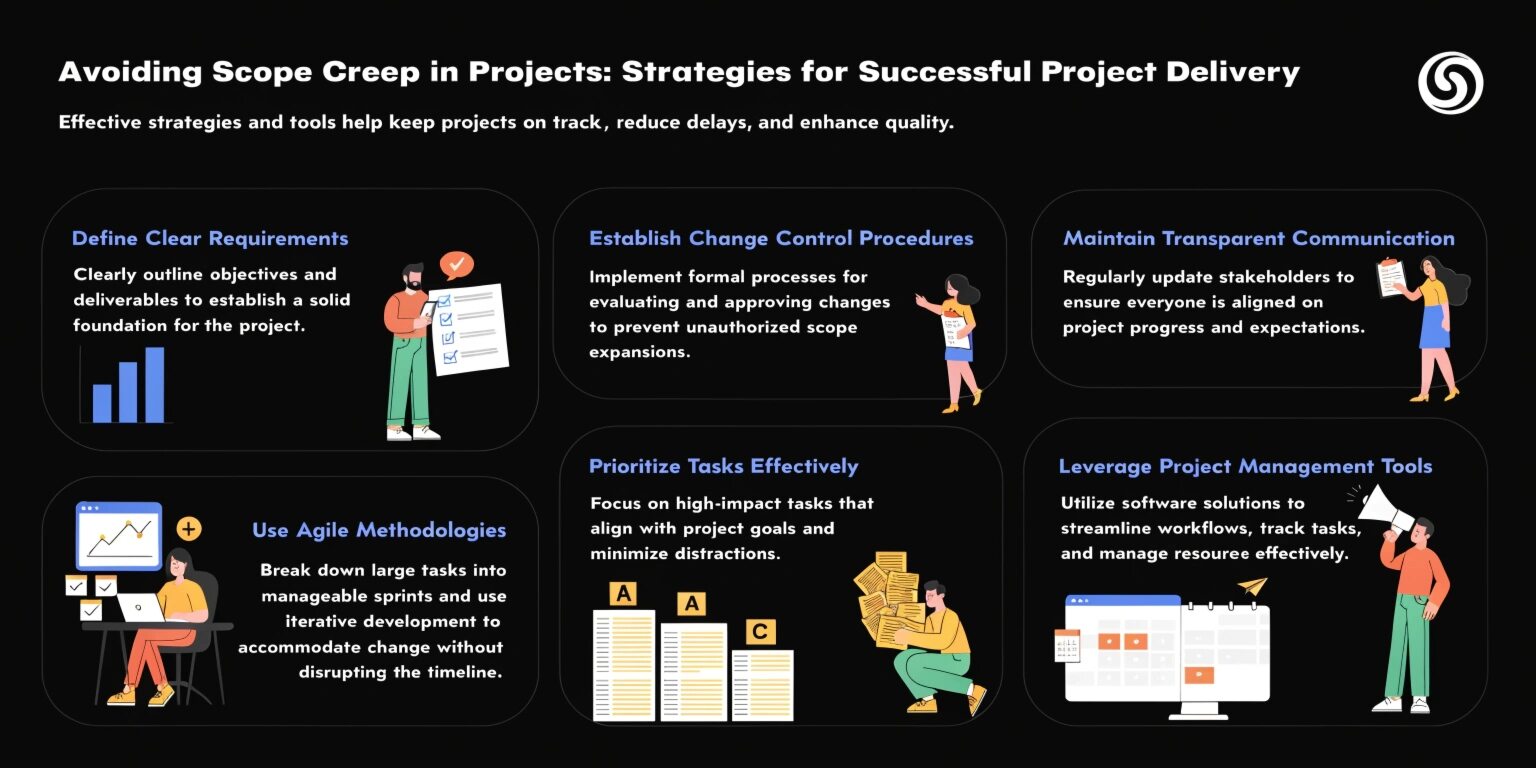
Avoiding Scope Creep in Projects: Strategies for Successful Project Delivery
Scope creep is one of the most common reasons software projects fail, exceed budgets, or miss deadlines. It occurs when additional features, requirements, or changes are introduced during development without proper planning, approval, or resource adjustments.
In many cases, scope creep starts with small requests:
- “Can we add one more feature?”
- “This change should be quick.”
- “Can we slightly modify the workflow?”
Over time, these seemingly minor additions accumulate and significantly impact project timelines, budgets, team productivity, and client relationships.
For software companies, agencies, and startups, managing scope effectively is essential for maintaining profitability, ensuring project success, and delivering quality results.
In this blog, we will explore what scope creep is, why it happens, its impact on projects, and the best strategies to avoid it.
What Is Scope Creep?
Scope creep refers to uncontrolled expansion of project requirements beyond the originally agreed scope.
This can include:
- Additional features
- Design modifications
- Workflow changes
- Integration requests
- Extra testing requirements
- New business logic
Scope changes are not always bad. In fact, some changes are necessary during development. The real problem occurs when changes are introduced without:
- Proper evaluation
- Timeline adjustments
- Budget modifications
- Team capacity planning
Unmanaged scope growth creates operational chaos.
Why Scope Creep Happens
Unclear Initial Requirements
One of the biggest causes of scope creep is incomplete project planning.
When requirements are vague:
- Clients may change expectations later.
- Developers may interpret features differently.
- Business goals become unclear.
Poor requirement gathering often leads to continuous revisions.
Overpromising During Sales
Sometimes sales teams promise features or flexibility without consulting technical teams.
This creates unrealistic client expectations from the beginning.
Once development starts, teams struggle to maintain timelines while handling additional requests.
Lack of Proper Documentation
Without documented scope definitions:
- Feature boundaries become unclear.
- Clients assume extra functionality is included.
- Miscommunication increases.
Clear documentation protects both clients and development teams.
Frequent Client Changes
As clients see project progress, they often request:
- New ideas
- Improved designs
- Additional workflows
- Expanded functionality
While feedback is valuable, uncontrolled changes disrupt project planning significantly.
The Impact of Scope Creep
Scope creep affects projects in multiple ways.
Delayed Timelines
Additional work increases development time, often pushing deadlines repeatedly.
Budget Overruns
Extra features require:
- More developer hours
- Additional testing
- Increased infrastructure usage
Without revised budgets, profitability decreases.
Reduced Team Productivity
Constant requirement changes create:
- Context switching
- Developer frustration
- Workflow interruptions
This negatively impacts productivity and morale.
Lower Software Quality
Rushed deadlines caused by scope expansion often reduce:
- Testing quality
- Code stability
- Documentation standards
This increases technical debt and future maintenance costs.
Client Dissatisfaction
Ironically, uncontrolled flexibility often leads to unhappy clients because:
- Deadlines shift
- Communication becomes confusing
- Expectations become unclear
Proper scope control actually improves client satisfaction.
Strategies to Avoid Scope Creep
1. Define Clear Project Requirements
Every successful project begins with detailed requirement analysis.
The project scope should clearly define:
- Features included
- Deliverables
- Timelines
- Technical limitations
- Third-party dependencies
Requirements should be documented and approved before development starts.
Detailed planning reduces ambiguity significantly.
2. Create a Scope Document
A formal scope document acts as the project reference point.
It should include:
- Functional requirements
- Non-functional requirements
- User flows
- Exclusions
- Milestones
Most importantly, define what is NOT included.
Clear exclusions prevent future misunderstandings.
3. Implement Change Request Processes
Changes are inevitable in software development, but they must follow structured workflows.
A change request process should include:
- Request submission
- Technical evaluation
- Timeline estimation
- Cost analysis
- Approval steps
This helps clients understand the real impact of changes before implementation.
Structured change management protects project stability.
4. Maintain Strong Communication
Poor communication increases misunderstandings and hidden expectations.
Regular communication should include:
- Progress updates
- Demo sessions
- Requirement reviews
- Risk discussions
Transparent communication helps identify issues early before they become major problems.
5. Use Agile Methodologies Carefully
Agile development supports flexibility, but without discipline, it can increase scope creep risks.
Agile teams should:
- Prioritize features clearly
- Maintain sprint boundaries
- Control backlog growth
- Define sprint goals carefully
Agile does not mean unlimited changes without planning.
Proper agile management balances flexibility with project control.
6. Set Realistic Expectations
Clients often assume changes are easier than they actually are.
Development teams should educate clients about:
- Technical complexity
- Testing impact
- Infrastructure implications
- Timeline dependencies
Honest communication prevents unrealistic assumptions.
7. Prioritize Features
Not every requested feature is equally important.
Use prioritization frameworks such as:
- Must-have
- Should-have
- Nice-to-have
This helps teams focus on core business value first.
Lower-priority features can be scheduled for future phases instead of disrupting current development.
8. Track Project Metrics
Monitoring project metrics helps detect scope issues early.
Useful metrics include:
- Feature growth rate
- Change request frequency
- Sprint completion rates
- Resource utilization
- Timeline variance
Data-driven monitoring improves project visibility and decision-making.
The Role of Project Managers
Project managers play a critical role in scope control.
Their responsibilities include:
- Managing expectations
- Coordinating communication
- Approving changes
- Protecting timelines
- Balancing resources
Strong project management significantly reduces the likelihood of uncontrolled scope expansion.
Scope Creep vs Product Evolution
It is important to distinguish between:
- Harmful scope creep
- Strategic product evolution
Some feature changes genuinely improve business value and user experience.
The key difference is whether changes are:
- Planned
- Evaluated
- Approved
- Properly resourced
Controlled evolution supports innovation, while uncontrolled scope creep damages project stability.
Conclusion
Scope creep is one of the biggest challenges in software development and project management. Without proper planning, communication, and change control processes, even small requirement changes can grow into major operational problems.
By defining clear requirements, maintaining documentation, implementing structured change management, and communicating transparently with clients, businesses can reduce project risks and improve delivery success.
In modern software development, successful project execution depends not only on technical expertise but also on the ability to manage scope strategically and maintain operational discipline throughout the project lifecycle.
We build scalable web, mobile, and game products for clients worldwide — combining modern frameworks, cloud infrastructure, and best engineering practices.