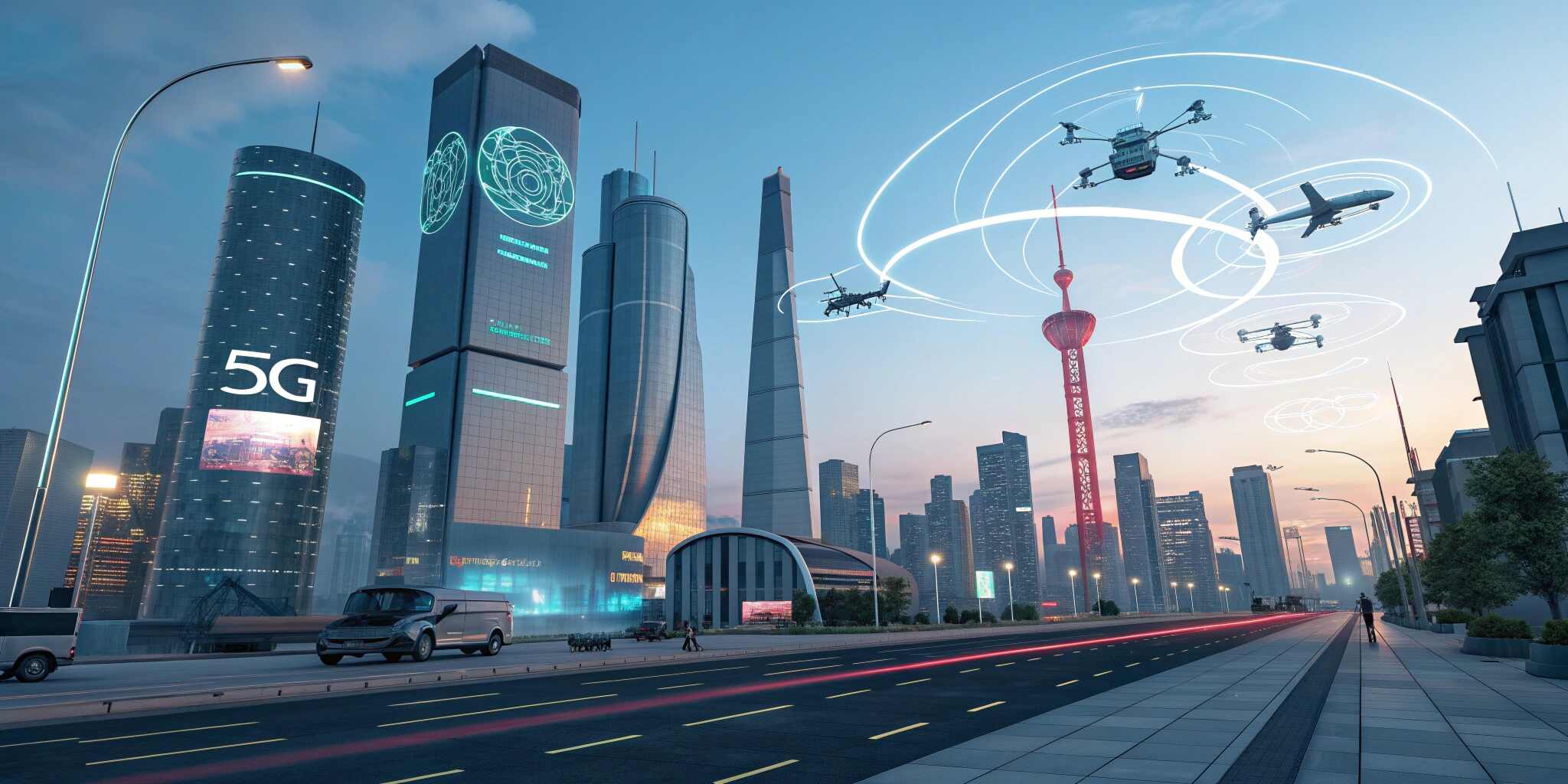
5G is revolutionizing distributed application architecture by enabling ultra-fast communication, edge computing, and real-time data processing. This blog explores how developers and enterprises are leveraging 5G networks to build scalable, low-latency applications across industries such as IoT, gaming, healthcare, and smart cities.
Introduction
The introduction of 5G technology is transforming the way distributed applications are designed and deployed. Compared to previous generations of mobile networks, 5G offers dramatically improved bandwidth, ultra-low latency, and the ability to connect millions of devices simultaneously. These improvements make it possible to build highly responsive distributed applications that can process and exchange data in real time.
Distributed applications rely on multiple services, servers, and devices communicating over a network. Traditionally, latency and bandwidth limitations restricted the performance of such systems. With 5G networks, these limitations are significantly reduced, enabling developers to build next-generation applications that operate faster and more efficiently.
From autonomous vehicles and smart cities to cloud gaming and industrial IoT, 5G-enabled distributed applications are becoming a key component of modern digital infrastructure.
Key Features of 5G for Distributed Applications
1. Ultra-Low Latency
One of the most significant advantages of 5G is its latency as low as 1 millisecond. This allows applications to exchange data almost instantly. For distributed systems that require real-time decision-making, such as remote surgery or autonomous driving, low latency is critical.
2. High Bandwidth and Speed
5G networks provide speeds up to 10 Gbps, which is significantly faster than 4G. High bandwidth allows distributed applications to transfer large amounts of data quickly, improving the performance of applications such as video streaming, AR/VR experiences, and real-time analytics.
3. Massive Device Connectivity
5G supports massive machine-type communication (mMTC), enabling millions of devices to connect simultaneously. This capability is essential for distributed IoT systems where sensors, devices, and cloud services continuously exchange data.
4. Network Slicing
Network slicing allows telecom providers to create virtual networks optimized for specific applications. For example, a slice can be dedicated to healthcare systems requiring high reliability, while another slice may be optimized for high-bandwidth gaming applications.
Architecture of 5G-Enabled Distributed Applications
A modern 5G distributed architecture often includes several key components:
1. Edge Computing Nodes
Edge computing brings processing closer to the data source. Instead of sending data to distant cloud servers, edge nodes process information locally, reducing latency and improving performance.
2. Microservices Architecture
Distributed applications commonly use microservices to break large systems into smaller independent services. Each service can scale independently and communicate through APIs.
3. Cloud Infrastructure
Cloud platforms provide scalability, storage, and computing power for distributed applications. Combined with 5G connectivity, cloud services can process massive datasets in real time.
4. AI and Data Analytics
AI systems can analyze large streams of data generated by distributed devices. This enables predictive maintenance, automated decision-making, and real-time insights.
Real-World Use Cases
Smart Cities
5G networks allow smart city systems to connect traffic sensors, cameras, and public infrastructure. Distributed applications analyze this data to optimize traffic flow, monitor pollution levels, and improve public safety.
Autonomous Vehicles
Self-driving cars rely on real-time data communication with nearby vehicles, sensors, and infrastructure. 5G ensures ultra-fast communication necessary for safe navigation.
Cloud Gaming
Cloud gaming platforms require high bandwidth and minimal latency. With 5G, gamers can stream high-quality games without expensive hardware.
Healthcare Systems
Remote surgeries, telemedicine, and real-time patient monitoring rely on secure and fast networks. 5G enables healthcare systems to operate distributed applications safely and efficiently.
Challenges in 5G Distributed Systems
While 5G provides many advantages, there are still challenges to consider.
Infrastructure Cost
Deploying 5G infrastructure requires significant investment in towers, edge servers, and network equipment.
Security Risks
Distributed systems increase the number of connected endpoints, making security more complex. Proper encryption and authentication mechanisms are essential.
Data Management
Handling massive volumes of real-time data requires advanced data processing and storage strategies.
Future of 5G Distributed Applications
The future of distributed applications will be heavily influenced by 5G and emerging technologies such as edge AI, IoT, and blockchain. As 5G networks become more widespread, developers will have new opportunities to build innovative applications that were previously impossible due to network limitations.
Industries including manufacturing, logistics, entertainment, healthcare, and transportation will continue to adopt 5G-powered distributed architectures. These systems will support intelligent automation, real-time analytics, and immersive digital experiences.
Conclusion
5G is not just an upgrade in network speed; it is a foundation for a new generation of distributed applications. By combining ultra-low latency, massive device connectivity, and high bandwidth, 5G enables developers to build powerful, scalable, and real-time systems.
Organizations that adopt 5G-enabled distributed architectures will gain a competitive advantage by delivering faster services, improved user experiences, and innovative digital solutions across industries.
We build scalable web, mobile, and game products for clients worldwide — combining modern frameworks, cloud infrastructure, and best engineering practices.