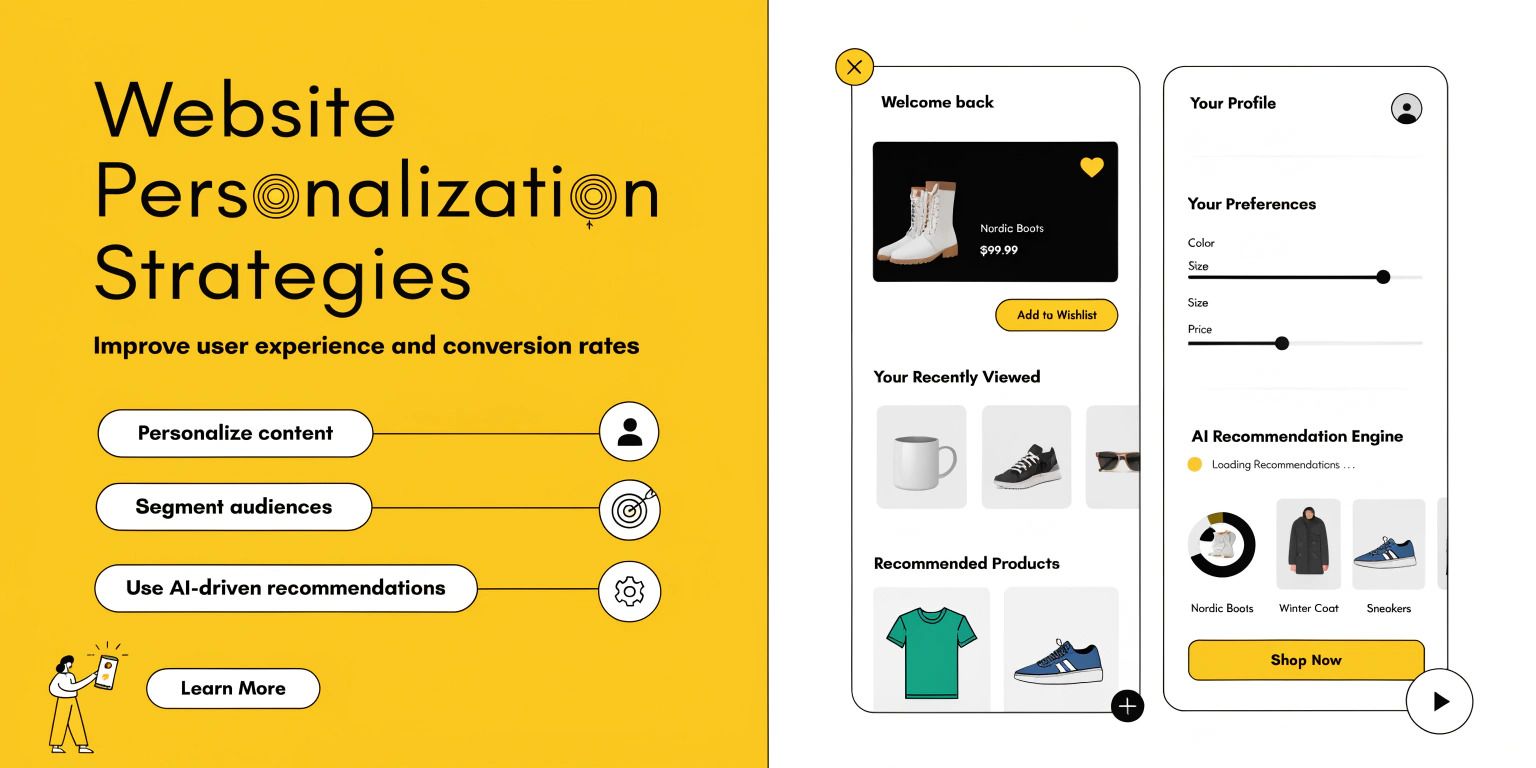
Website personalization helps businesses create relevant digital experiences based on user behavior, preferences, location, and journey stage. From dynamic content and personalized CTAs to AI-powered recommendations, effective personalization can improve engagement, conversions, and customer loyalty.
A modern website should do more than display the same content to every visitor. Users expect digital experiences that understand their needs, interests, and intent. Website personalization enables businesses to adapt website content, recommendations, offers, and interactions according to individual visitor characteristics and behavior.
When implemented strategically, personalization can make websites more relevant while improving engagement, conversions, customer satisfaction, and retention. However, successful personalization requires more than simply adding a visitor's name to a webpage. Businesses need to combine audience data, behavioral insights, segmentation, technology, and continuous optimization.
1. Segment Visitors Based on Behavior
One of the most effective personalization strategies is behavioral segmentation. Instead of treating every visitor equally, businesses can group users according to actions such as pages viewed, products explored, downloads, searches, previous purchases, or time spent on specific sections.
For example, a software company can show different content to visitors who have only read introductory articles compared with users who have visited pricing and product comparison pages. The first group may need educational content, while the second may be closer to making a purchase decision.
2. Create Personalized Landing Pages
Landing pages can be customized according to traffic sources, campaigns, industries, customer segments, or user intent.
For example, an IT services company targeting healthcare businesses can direct healthcare visitors to a landing page featuring relevant services, case studies, security capabilities, and industry-specific solutions. Visitors from another industry can receive a different experience.
This approach reduces irrelevant information and allows users to quickly find content related to their needs.
3. Use Dynamic Content
Dynamic content allows specific website elements to change based on visitor characteristics or behavior. Headlines, banners, product recommendations, promotional messages, testimonials, and calls to action can all be personalized.
For example, a returning visitor could see a message promoting a product they previously explored, while a first-time visitor could receive an introductory offer or educational resource.
Dynamic content makes personalization visible without requiring the entire website to be redesigned for every audience.
4. Personalize Calls to Action
A single CTA may not be appropriate for every visitor. Someone discovering a brand for the first time may respond better to "Explore Our Solutions," while a returning visitor who has already reviewed the product may be more likely to click "Request a Demo."
Personalized CTAs can be aligned with the user's position in the customer journey. This can make conversion paths more relevant and reduce friction.
5. Implement AI-Powered Recommendations
Artificial intelligence can analyze large amounts of behavioral data to identify patterns and generate personalized recommendations.
E-commerce websites can recommend products based on browsing and purchasing behavior. Streaming platforms can suggest content based on viewing history, while SaaS websites can recommend relevant features, resources, or solutions.
AI-powered personalization can become increasingly effective as more interaction data becomes available.
6. Personalize Based on Location
Location-based personalization can help businesses provide geographically relevant experiences. Websites can display regional offers, local services, currency, language options, delivery information, or nearby locations.
For example, a global software company can automatically highlight region-specific compliance information or support options. However, businesses should use location data responsibly and provide appropriate privacy controls.
7. Personalize the Returning Visitor Experience
Returning visitors already have some familiarity with a brand, so showing the same introductory experience repeatedly can waste valuable opportunities.
Businesses can recognize returning visitors and highlight recently viewed products, unfinished actions, new content, personalized recommendations, or relevant next steps.
For example, an online course platform could remind users about an incomplete course rather than displaying a generic homepage.
8. Use Personalization Throughout the Customer Journey
Personalization should not be limited to the homepage. It can be applied across product pages, blogs, pricing pages, checkout experiences, dashboards, and post-purchase interactions.
A visitor who downloads an industry-specific whitepaper could later receive related case studies or service recommendations. This creates a connected experience across multiple interactions.
9. Protect User Privacy
Personalization must be balanced with privacy. Businesses should clearly communicate how customer information is collected and used, minimize unnecessary data collection, secure personal information, and provide appropriate choices and controls.
Privacy-focused personalization builds trust while helping businesses create relevant experiences responsibly.
10. Measure and Optimize Personalization
Personalization should be treated as an ongoing optimization process. Businesses can measure metrics such as engagement rate, conversion rate, average order value, returning visitors, bounce rate, and customer retention.
A/B testing can help determine whether personalized experiences actually outperform generic versions. Different audience segments may also respond differently, so personalization strategies should be continuously tested and refined.
Conclusion
Website personalization has evolved from a marketing trend into an important component of modern digital experiences. By combining behavioral segmentation, dynamic content, personalized CTAs, AI recommendations, location-based experiences, and customer journey insights, businesses can make websites more relevant to individual users.
The goal is not to personalize everything. Instead, businesses should identify the moments where relevance can create meaningful value for users. When personalization is supported by quality data, thoughtful design, privacy practices, and continuous testing, it can strengthen user engagement, improve conversions, and create more valuable long-term customer relationships.
We build scalable web, mobile, and game products for clients worldwide — combining modern frameworks, cloud infrastructure, and best engineering practices.
.jpg)