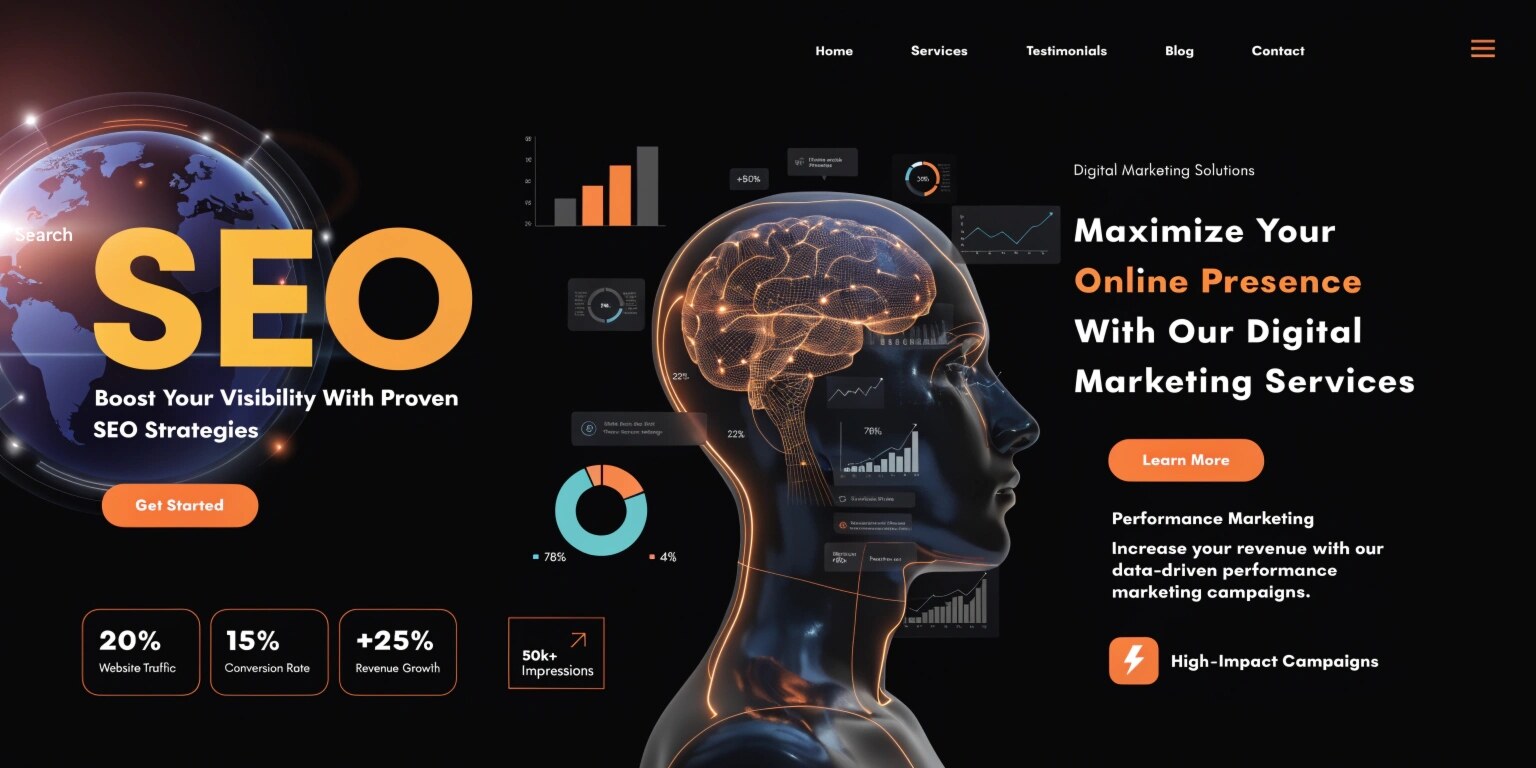
Discover how SEO, digital marketing, and performance marketing services work together to boost visibility, drive leads, and maximize ROI with data-driven strategies.
In today’s competitive digital landscape, businesses must go beyond traditional marketing to stay relevant and profitable. SEO, digital marketing, and performance marketing services have become essential tools for building brand visibility, attracting the right audience, and generating measurable results. These strategies work together to create a strong online presence while ensuring every marketing effort contributes to business growth.
Understanding SEO Services
Search Engine Optimization (SEO) is the foundation of digital visibility. It focuses on improving a website’s ranking on search engines, helping businesses appear when potential customers search for relevant products or services.
From a theoretical perspective, SEO revolves around three key pillars:
- On-page optimization: Structuring content, keywords, and metadata to align with search intent
- Off-page optimization: Building authority through backlinks and external signals
- Technical SEO: Enhancing website performance, crawlability, and user experience
SEO is a long-term strategy that builds organic traffic, credibility, and trust over time.
What is Digital Marketing?
Digital marketing is a broader concept that includes all online marketing efforts. It leverages multiple channels to reach and engage audiences across the internet.
Key components include:
- Content marketing
- Social media marketing
- Email marketing
- Search engine marketing (SEM)
- Influencer and affiliate marketing
Theoretically, digital marketing focuses on creating a multi-channel presence where brands interact with users at different stages of the customer journey—from awareness to conversion.
Performance Marketing Explained
Performance marketing is a results-driven approach where advertisers pay based on measurable outcomes such as clicks, leads, or conversions.
Unlike traditional marketing, performance marketing emphasizes:
- Data-driven decision-making
- Real-time optimization
- ROI-focused campaigns
Common channels include pay-per-click (PPC) advertising, display ads, and social media ads.
The key idea is accountability—every rupee spent is tied to a specific result.
How These Services Work Together
Although SEO, digital marketing, and performance marketing are distinct, they are most effective when integrated.
- SEO builds long-term organic growth
- Digital marketing ensures consistent brand presence
- Performance marketing delivers immediate results and measurable ROI
From a theoretical standpoint, this integration creates a balanced strategy that combines sustainability with speed.
The Role of Data and Analytics
Modern marketing strategies rely heavily on data. Analytics tools help track user behavior, campaign performance, and conversion rates.
Important concepts include:
- User journey analysis: Understanding how customers interact with a brand
- Conversion tracking: Measuring actions like sign-ups or purchases
- A/B testing: Comparing variations to optimize performance
Data enables marketers to refine strategies and improve efficiency continuously.
Targeting and Personalization
One of the biggest advantages of digital and performance marketing is precise audience targeting. Businesses can segment users based on demographics, interests, behavior, and location.
Personalization enhances user experience by delivering relevant content and offers. Theoretically, this increases engagement, improves conversion rates, and builds stronger customer relationships.
Benefits of Combined Marketing Strategies
- Increased Visibility
- SEO ensures presence on search engines, while digital marketing expands reach across platforms.
- Better Lead Generation
- Targeted campaigns attract high-quality leads more likely to convert.
- Improved ROI
- Performance marketing ensures budget efficiency by focusing on measurable results.
- Brand Authority
- Consistent online presence builds trust and credibility.
- Scalability
- Strategies can be adjusted and scaled based on business growth and market demand.
Challenges in Digital and Performance Marketing
- High competition in search rankings
- Constant algorithm changes
- Ad fatigue and rising costs
- Data privacy regulations
- Need for continuous optimization
Understanding these challenges helps businesses prepare and adapt their strategies effectively.
Future Trends
The future of marketing is increasingly driven by technology and automation. Key trends include:
- AI-powered marketing tools
- Voice and visual search optimization
- Advanced audience targeting
- Marketing automation platforms
- Omnichannel strategies
These trends emphasize the need for businesses to stay agile and data-focused.
Conclusion
SEO, digital marketing, and performance marketing services are essential components of modern business growth. While SEO builds a strong foundation, digital marketing expands reach, and performance marketing ensures measurable success.
By understanding the theoretical concepts behind these strategies, businesses can create a cohesive marketing approach that drives traffic, generates leads, and maximizes return on investment in a competitive digital world.
We build scalable web, mobile, and game products for clients worldwide — combining modern frameworks, cloud infrastructure, and best engineering practices.
.jpg)