Retargeting helps software companies reconnect with prospects who visited their website, tested a product, or abandoned a conversion journey. With segmentation, personalized messaging, and funnel-based campaigns, businesses can turn previously engaged visitors into qualified leads and customers.
Software products often have longer and more complex buying journeys than traditional consumer products. A potential customer may visit a product website, explore features, read case studies, compare alternatives, or start a free trial without immediately making a purchase. Losing contact with these prospects can result in significant missed opportunities.
Retargeting provides a way to reconnect with people who have already interacted with a software brand. Instead of advertising to completely new audiences, retargeting focuses marketing efforts on users who have demonstrated some level of interest.
When implemented strategically, retargeting can strengthen brand recall, nurture prospects, increase conversions, and improve the efficiency of paid marketing campaigns.
1. Segment Audiences Based on Behavior
One of the most important retargeting practices is audience segmentation.
Not every visitor has the same level of intent. Someone who viewed the homepage for a few seconds should not receive the same advertisement as someone who visited the pricing page or started a free trial.
Software companies can create segments such as:
- Homepage visitors
- Product or feature page visitors
- Pricing page visitors
- Blog readers
- Demo page visitors
- Free-trial users
- Abandoned sign-ups
- Existing customers
- Users who downloaded resources
Each audience can receive messaging relevant to its position in the customer journey.
2. Retarget High-Intent Visitors
Visitors who interact with pricing, plans, demos, or product comparison pages often demonstrate stronger purchase intent.
Retargeting campaigns should prioritize these users because they are closer to conversion.
For example, a visitor who viewed a pricing page could receive an advertisement highlighting product benefits, customer success stories, or an invitation to schedule a personalized demo.
The objective should not simply be to show the same advertisement repeatedly. The goal is to provide the information needed to move the prospect toward the next stage.
3. Use Funnel-Based Retargeting
Retargeting becomes more effective when campaigns are connected to the marketing funnel.
Top-of-funnel audiences may need educational content such as guides, industry insights, or product explainers.
Middle-of-funnel prospects can receive case studies, feature comparisons, webinars, or customer testimonials.
Bottom-of-funnel prospects may respond better to free trials, product demos, pricing information, or consultation offers.
This approach prevents marketers from presenting aggressive sales messages to prospects who are still learning about the product.
4. Personalize Advertising Messages
Generic advertising can quickly become repetitive. Personalization makes retargeting campaigns more relevant.
For example, users who viewed a specific product feature can receive an advertisement highlighting that feature. A visitor who explored enterprise plans could see messaging focused on scalability, security, integrations, and support.
Personalization can be based on page visits, product interactions, content downloads, trial activity, or other permitted behavioral signals.
5. Retarget Free-Trial Users
Free trials are particularly valuable for SaaS businesses because trial users have already demonstrated significant interest.
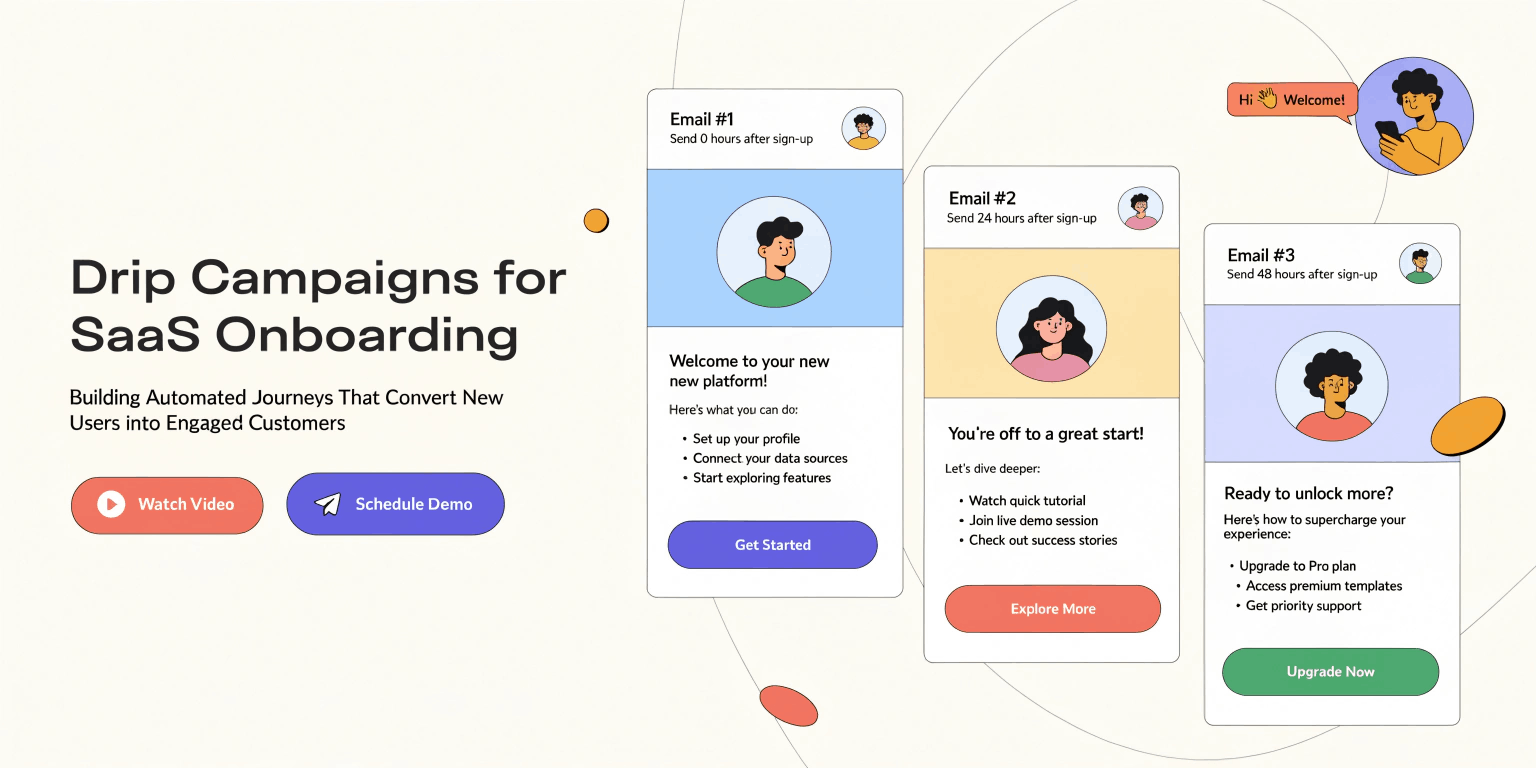
Retargeting can help encourage users to complete onboarding, explore important features, or upgrade to a paid plan.
For example, campaigns can highlight useful features that the user has not yet explored or showcase how other customers achieved results with the software.
However, advertising should complement product onboarding rather than replace it. Email, in-product notifications, customer support, and retargeting can work together as part of a broader conversion strategy.
6. Address Abandoned Sign-Ups
Some prospects begin the registration process but leave before completing it.
These users represent an important retargeting audience because they have already shown strong intent.
Campaigns can remind them about the product and direct them back to the registration page. Marketers should also investigate why users abandon the process.
If registration requires too many fields, has technical problems, or lacks sufficient information about pricing and privacy, improving the conversion experience may be more effective than simply increasing advertising.
7. Use Social Proof
Software buyers often want evidence that a product works before committing.
Retargeting campaigns can incorporate customer testimonials, case studies, ratings, industry recognition, or measurable outcomes.
For B2B software especially, social proof can reduce perceived risk and help prospects understand how similar organizations use the product.
8. Control Ad Frequency
Retargeting can become counterproductive when users see the same advertisement too frequently.
Excessive exposure can create advertising fatigue and negatively affect the perception of the brand.
Frequency caps, audience exclusions, creative rotation, and campaign duration limits can help maintain a better experience.
Existing customers should also be excluded from acquisition campaigns when the objective is to generate new customers.
9. Use Multiple Channels
Software marketers should not depend on a single advertising platform.
Depending on the audience and campaign objectives, retargeting can span search advertising, social platforms, display networks, video advertising, and other digital channels.
A prospect may discover a product through search, read a case study on the website, and later encounter a relevant social advertisement.
A coordinated multi-channel strategy keeps the brand visible throughout the buying journey.
10. Measure Meaningful Conversion Metrics
Clicks and impressions are useful, but they do not tell the entire story.
Software companies should evaluate metrics such as:
- Conversion rate
- Cost per acquisition
- Cost per qualified lead
- Demo bookings
- Trial registrations
- Trial-to-paid conversion
- Customer acquisition cost
- Return on advertising spend
- Revenue generated
Attribution should also be considered carefully because retargeting frequently interacts with other marketing channels before a customer converts.
Conclusion
Retargeting is particularly valuable for software product marketing because software purchases often involve research, comparison, evaluation, and multiple interactions before conversion.
The strongest retargeting strategies focus on relevance rather than repetition. By segmenting audiences, understanding intent, personalizing messages, supporting different funnel stages, controlling frequency, and measuring business outcomes, software companies can make better use of existing traffic and marketing investments.
Retargeting should ultimately be viewed as part of a broader customer journey rather than an isolated advertising tactic. When combined with strong content, product experiences, sales processes, and conversion optimization, it can help transform previously interested visitors into qualified leads and long-term customers.
We build scalable web, mobile, and game products for clients worldwide — combining modern frameworks, cloud infrastructure, and best engineering practices.
.jpg)