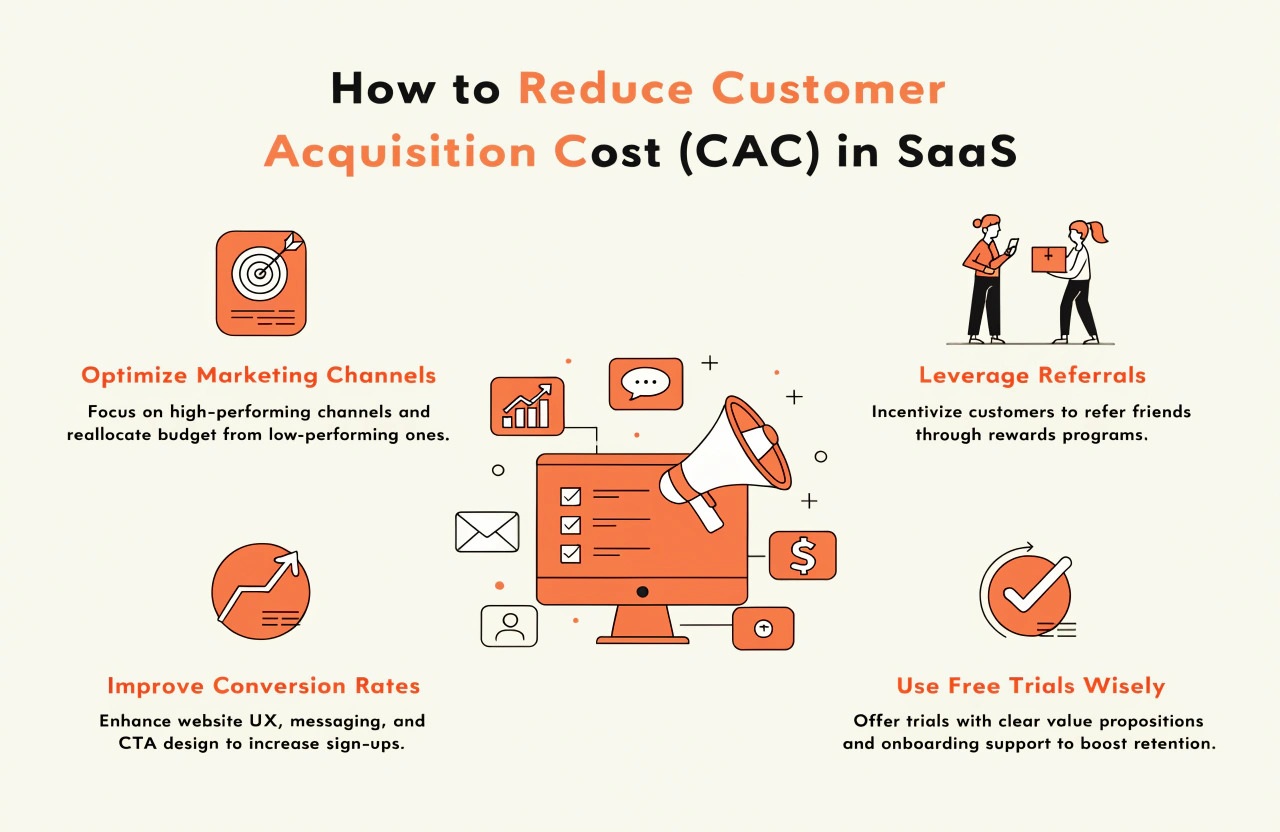
Reducing Customer Acquisition Cost (CAC) is essential for building a profitable and scalable SaaS business. Companies can lower CAC by improving targeting, increasing organic traffic, optimizing conversion rates, strengthening customer onboarding and retention, using automation, developing referral programs, and focusing on high-performing marketing channels. A balanced strategy helps SaaS companies acquire better customers while spending less on sales and marketing.
Main Content
Customer Acquisition Cost (CAC) is one of the most important metrics for any SaaS business. It measures how much a company spends on sales and marketing to acquire a new customer. When CAC becomes too high, even strong revenue growth may not translate into profitability.
For SaaS companies, reducing CAC is not simply about spending less. The goal is to acquire the right customers more efficiently while maintaining a strong customer experience. Here are several practical strategies that can help reduce CAC and create sustainable SaaS growth.
1. Identify and Target the Right Customers
One of the most effective ways to reduce CAC is to understand your ideal customer profile (ICP). Marketing to a broad audience can result in wasted advertising budgets, low-quality leads, and poor conversion rates.
Analyze your existing customers to identify common characteristics such as industry, company size, location, problems, buying behavior, and product usage. Build detailed buyer personas and focus your marketing campaigns on audiences that are most likely to become paying customers.
Better targeting means fewer wasted leads and a higher return on marketing investment.
2. Invest in Organic Content Marketing
Paid advertising can generate quick results, but continuously depending on paid channels can make customer acquisition expensive. Content marketing and SEO can create a sustainable source of organic traffic.
Publish useful content that answers your target audience's questions. SaaS businesses can create tutorials, industry guides, comparison articles, case studies, product documentation, and educational blog posts.
Over time, high-quality content can rank in search engines and generate traffic without requiring payment for every visitor. This can significantly reduce the average acquisition cost.
3. Improve Your Website Conversion Rate
Getting visitors to your website is only part of the process. If visitors do not sign up, request a demo, or start a free trial, acquisition costs remain high.
Optimize landing pages by using clear messaging, strong calls to action, customer testimonials, simple navigation, and benefit-focused content. Make it easy for visitors to understand what your product does and how it solves their problems.
A higher conversion rate means you can generate more customers from the same amount of traffic, effectively lowering CAC.
4. Use Product-Led Growth
Product-led growth (PLG) allows the product itself to become an important part of the acquisition and conversion process. Free trials, freemium plans, interactive demos, and self-service onboarding can allow potential customers to experience the product before making a purchase.
When users can quickly understand the product's value, businesses may need fewer sales resources to convert them. This can reduce sales costs while improving customer acquisition efficiency.
5. Strengthen Customer Onboarding
Customer acquisition does not end when someone signs up. A poor onboarding experience can result in users abandoning the product before becoming paying customers.
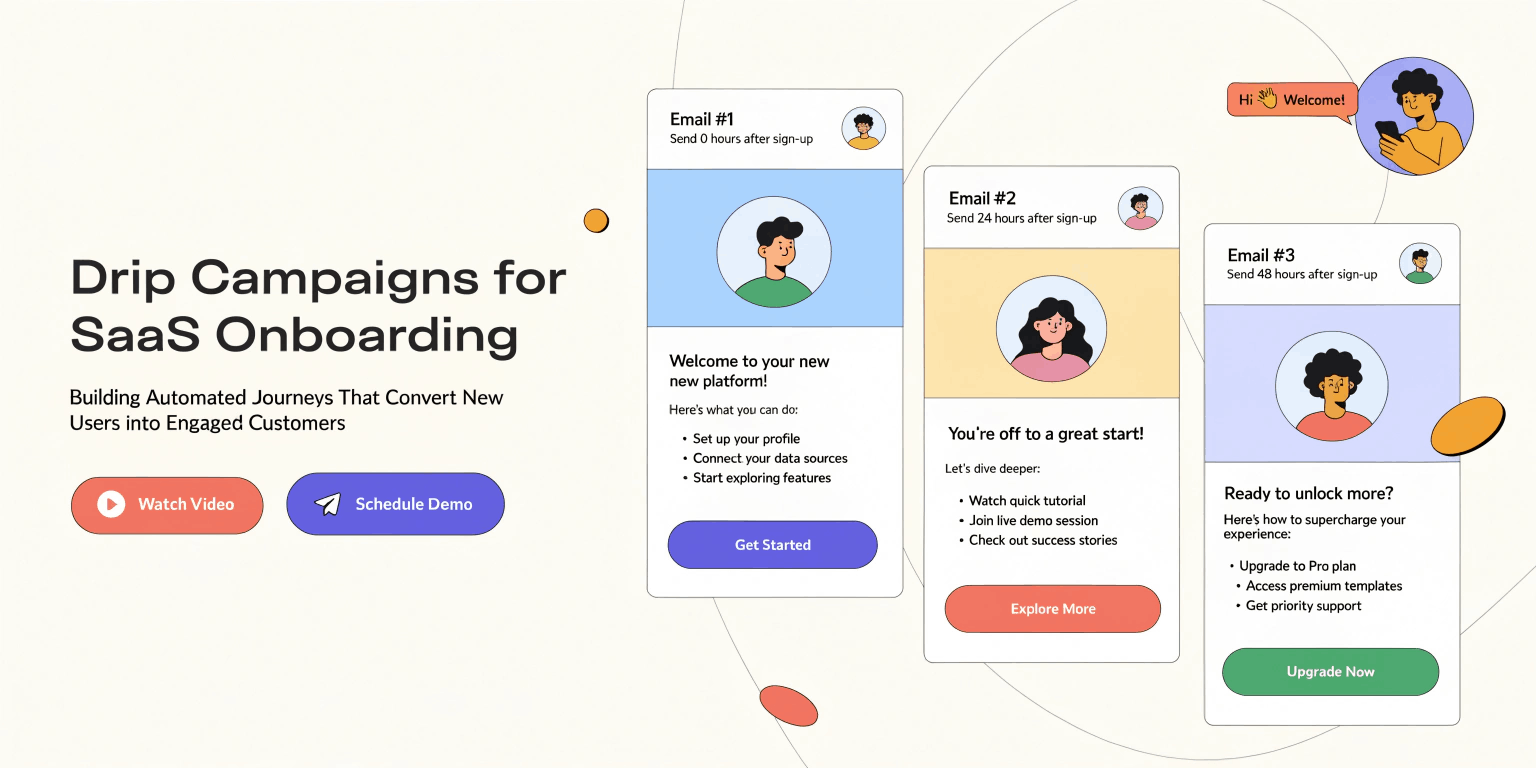
Create a simple onboarding process that helps customers reach their first meaningful outcome quickly. Use product walkthroughs, tutorials, welcome emails, knowledge bases, and automated guidance.
Better onboarding can improve activation and retention, helping companies generate more value from every acquired customer.
6. Build a Referral Program
Existing satisfied customers can become a powerful acquisition channel. Referral programs encourage customers to recommend your SaaS product to colleagues, friends, or other businesses.
Offer appropriate incentives such as account credits, discounts, additional features, or rewards. Referred customers often arrive with greater trust because they have received a recommendation from someone they know.
This can make referrals a cost-effective customer acquisition strategy.
7. Automate Repetitive Sales and Marketing Tasks
Automation can reduce the amount of manual work required to acquire customers. SaaS companies can automate email campaigns, lead nurturing, appointment scheduling, customer segmentation, reporting, and follow-ups.
Marketing automation helps sales teams prioritize qualified leads instead of spending time on prospects who are unlikely to convert.
The result is greater productivity and lower operational costs.
8. Measure CAC by Marketing Channel
Not every marketing channel produces the same results. Instead of looking only at total CAC, calculate acquisition costs for individual channels such as Google Ads, social media, SEO, email marketing, referrals, partnerships, and outbound sales.
Identify channels that generate customers with strong retention and lifetime value. Reduce spending on channels that consistently produce expensive or low-quality customers.
Data-driven budget allocation can significantly improve marketing efficiency.
9. Increase Customer Lifetime Value
Reducing CAC is only one side of SaaS profitability. Companies should also increase Customer Lifetime Value (LTV).
Improve retention by providing excellent customer support, regularly delivering product improvements, identifying customer problems early, and creating meaningful engagement. Upselling and cross-selling relevant features can also increase revenue from existing customers.
A healthy LTV-to-CAC ratio allows a SaaS company to spend more confidently on sustainable growth.
10. Continuously Test and Optimize
CAC reduction should be an ongoing process. Test different landing pages, pricing models, advertisements, email campaigns, offers, onboarding experiences, and sales approaches.
Use analytics to determine what works and make decisions based on actual customer behavior rather than assumptions.
Conclusion
Reducing CAC in SaaS requires more than cutting marketing expenses. Successful companies improve the entire customer acquisition journey—from targeting and content marketing to conversion, onboarding, retention, and referrals.
By focusing on high-performing channels, improving conversion rates, using automation, adopting product-led growth, and increasing customer lifetime value, SaaS businesses can acquire customers more efficiently and build a stronger foundation for long-term profitability.
The key is to spend smarter, understand customers better, and continuously optimize every stage of the acquisition funnel.
We build scalable web, mobile, and game products for clients worldwide — combining modern frameworks, cloud infrastructure, and best engineering practices.
.jpg)