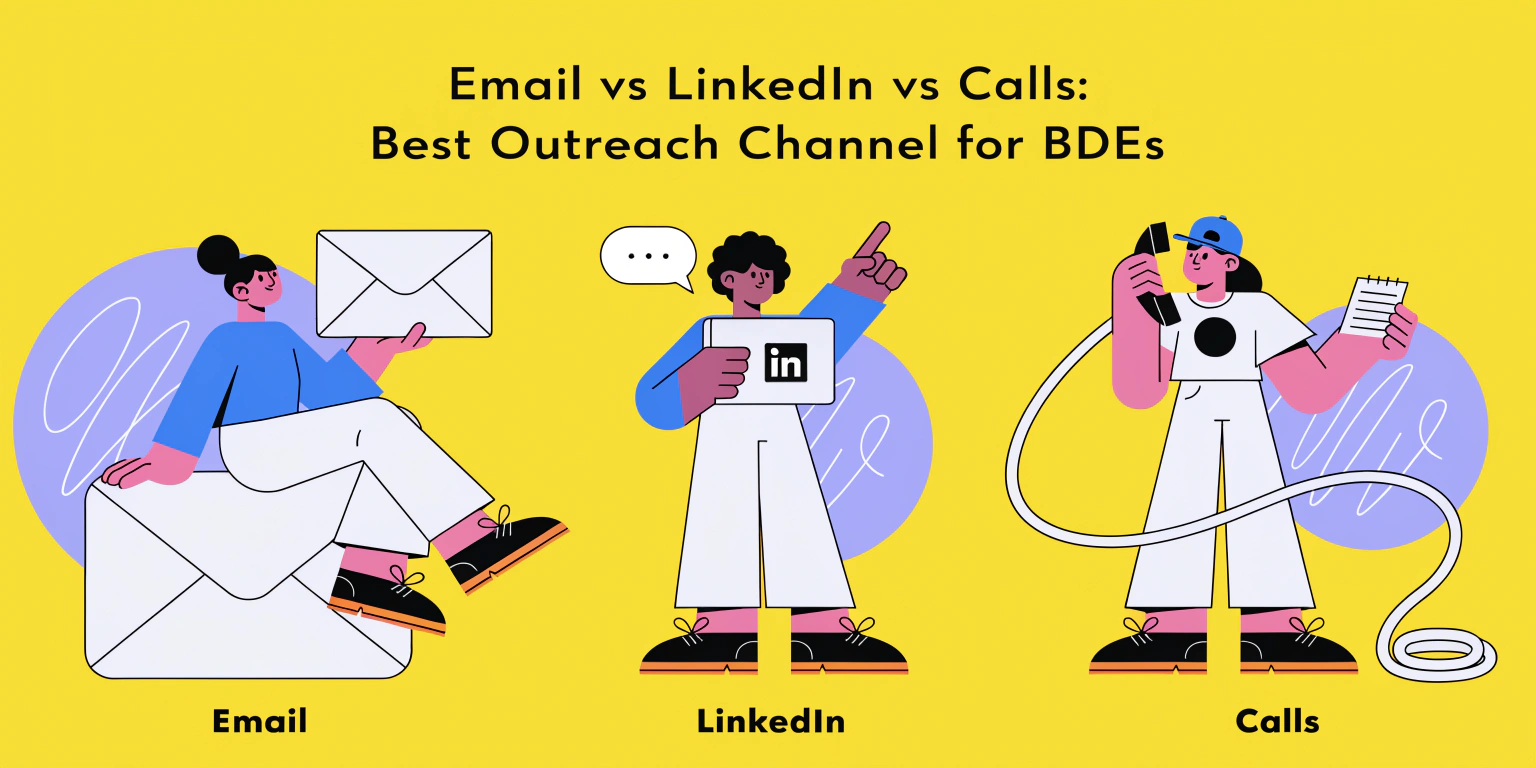
Should Business Development Executives use email, LinkedIn, or cold calls? Learn the strengths, weaknesses, and ideal use cases for each outreach channel, along with best practices for creating a successful multi-channel lead generation strategy.
Business Development Executives (BDEs) are responsible for identifying potential clients, building relationships, and generating revenue. However, one of the biggest challenges they face is deciding how to approach prospects effectively. With numerous communication channels available, choosing the right outreach method can significantly impact response rates and conversions.
Among the most popular outreach channels are email, LinkedIn, and phone calls. Each offers unique advantages and serves different purposes throughout the sales cycle. Instead of asking which channel is universally the best, successful BDEs should understand when and how to use each one.
This guide compares email, LinkedIn, and phone calls to help you build an effective outreach strategy for acquiring high-value IT clients.
Why Choosing the Right Outreach Channel Matters
Your outreach method influences:
- First impressions
- Response rates
- Trust-building
- Sales cycle length
- Meeting bookings
- Client relationships
Using the wrong channel at the wrong time may reduce engagement, while combining channels strategically can dramatically improve results.
Email Outreach
Email remains one of the most widely used communication tools in B2B sales. It provides a professional way to introduce your company, explain your services, and share valuable resources.
Advantages of Email
- Highly scalable for reaching many prospects
- Easy to personalize
- Suitable for detailed communication
- Supports attachments such as portfolios and proposals
- Convenient for prospects to read at their preferred time
Email is especially useful for IT companies offering software development, cloud services, AI solutions, or digital transformation projects where detailed explanations are often required.
Limitations
- Competitive inboxes reduce visibility.
- Generic emails are frequently ignored.
- Poor subject lines can lower open rates.
- Follow-ups are essential for maintaining engagement.
Best Practices
- Write concise subject lines.
- Personalize every message.
- Focus on solving business problems rather than selling services.
- Include a clear call to action.
- Keep emails brief and relevant.
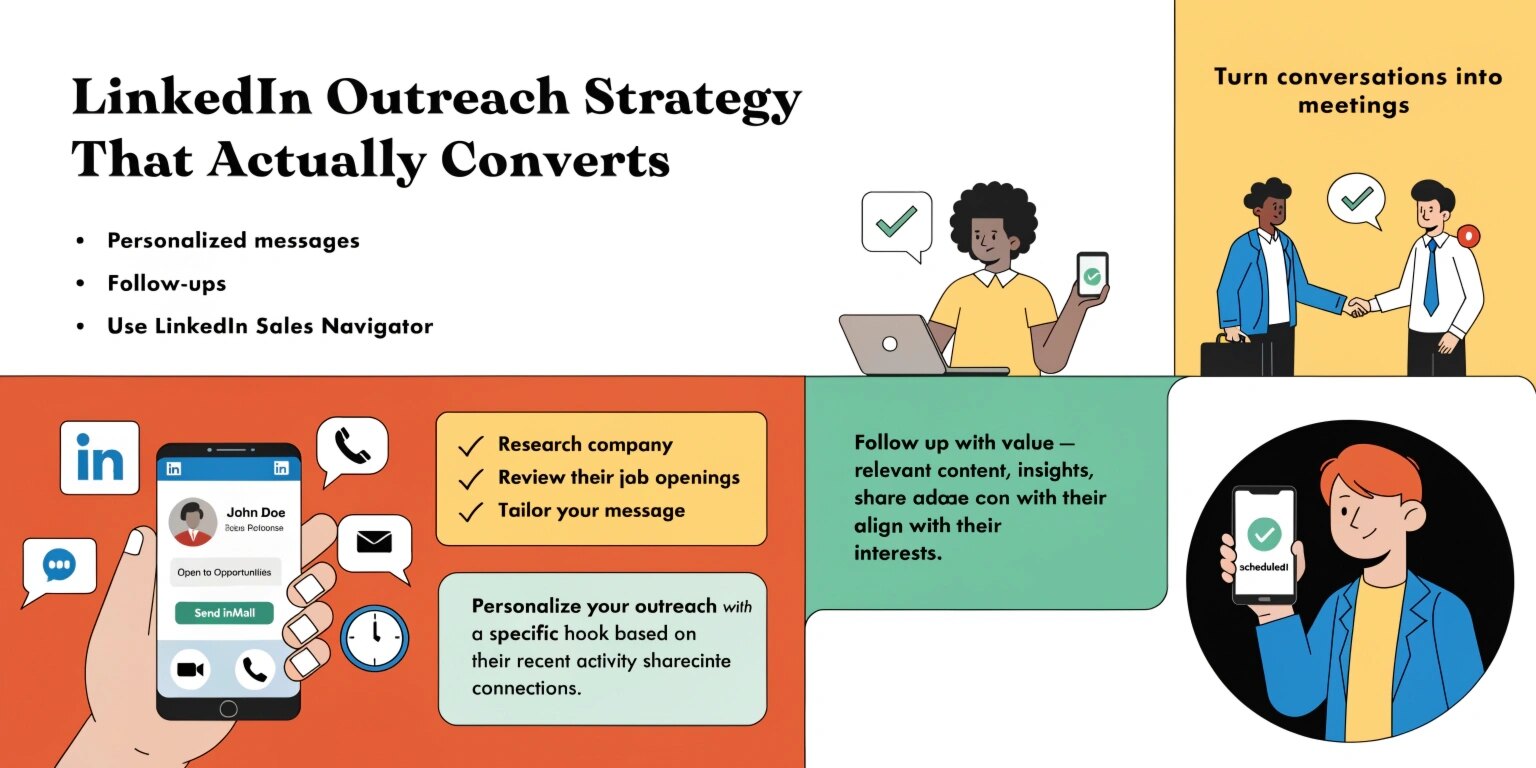
LinkedIn Outreach
LinkedIn has become one of the most effective platforms for B2B networking and business development. It enables BDEs to connect directly with founders, CEOs, CTOs, and decision-makers.
Advantages of LinkedIn
- Access to professional decision-makers
- Opportunity to build credibility through content
- Easier personalization using profile information
- Supports relationship-building before sales conversations
- Ideal for long-term networking
Unlike cold emails, LinkedIn interactions often begin with profile visits, comments, or connection requests, making outreach feel more natural.
Limitations
- Connection request limits
- Lower response rates for generic messages
- Requires consistent profile optimization
- Relationship-building takes time
Best Practices
- Optimize your LinkedIn profile before outreach.
- Personalize connection requests.
- Engage with prospects' posts before sending direct messages.
- Share valuable industry insights regularly.
- Avoid immediately pitching your services.
Phone Calls
Cold calling remains one of the fastest ways to establish direct communication with prospects. Although many BDEs hesitate to make calls, they continue to play an important role in enterprise sales.
Advantages of Phone Calls
- Immediate interaction
- Faster qualification of prospects
- Ability to handle objections in real time
- Builds stronger personal connections
- Speeds up appointment scheduling
Phone conversations allow BDEs to understand client needs through tone, questions, and live discussion.
Limitations
- Lower answer rates
- Some prospects dislike unsolicited calls
- Requires strong communication skills
- Timing significantly affects success
Best Practices
- Research the company before calling.
- Prepare a concise introduction.
- Focus on asking questions rather than delivering lengthy pitches.
- Respect the prospect's time.
- Follow up with an email after the conversation.
Comparing the Three Channels
FactorEmailLinkedInPhone CallsScalabilityExcellentHighModeratePersonalizationHighVery HighVery HighSpeed of CommunicationModerateModerateImmediateRelationship BuildingGoodExcellentExcellentSharing DocumentsExcellentLimitedPoorHandling ObjectionsLimitedLimitedExcellentLead QualificationModerateGoodExcellentBest ForInitial Outreach & Follow-upNetworking & TrustDiscovery & Closing
Which Channel Works Best?
The answer depends on your objective.
Use Email When
- Introducing your company
- Sharing proposals
- Sending case studies
- Following up after meetings
- Nurturing long-term prospects
Use LinkedIn When
- Connecting with decision-makers
- Building authority
- Sharing industry insights
- Expanding professional networks
- Starting warm conversations
Use Phone Calls When
- Qualifying leads
- Scheduling meetings
- Clarifying requirements
- Addressing objections
- Negotiating opportunities
Each channel performs best at different stages of the sales process.
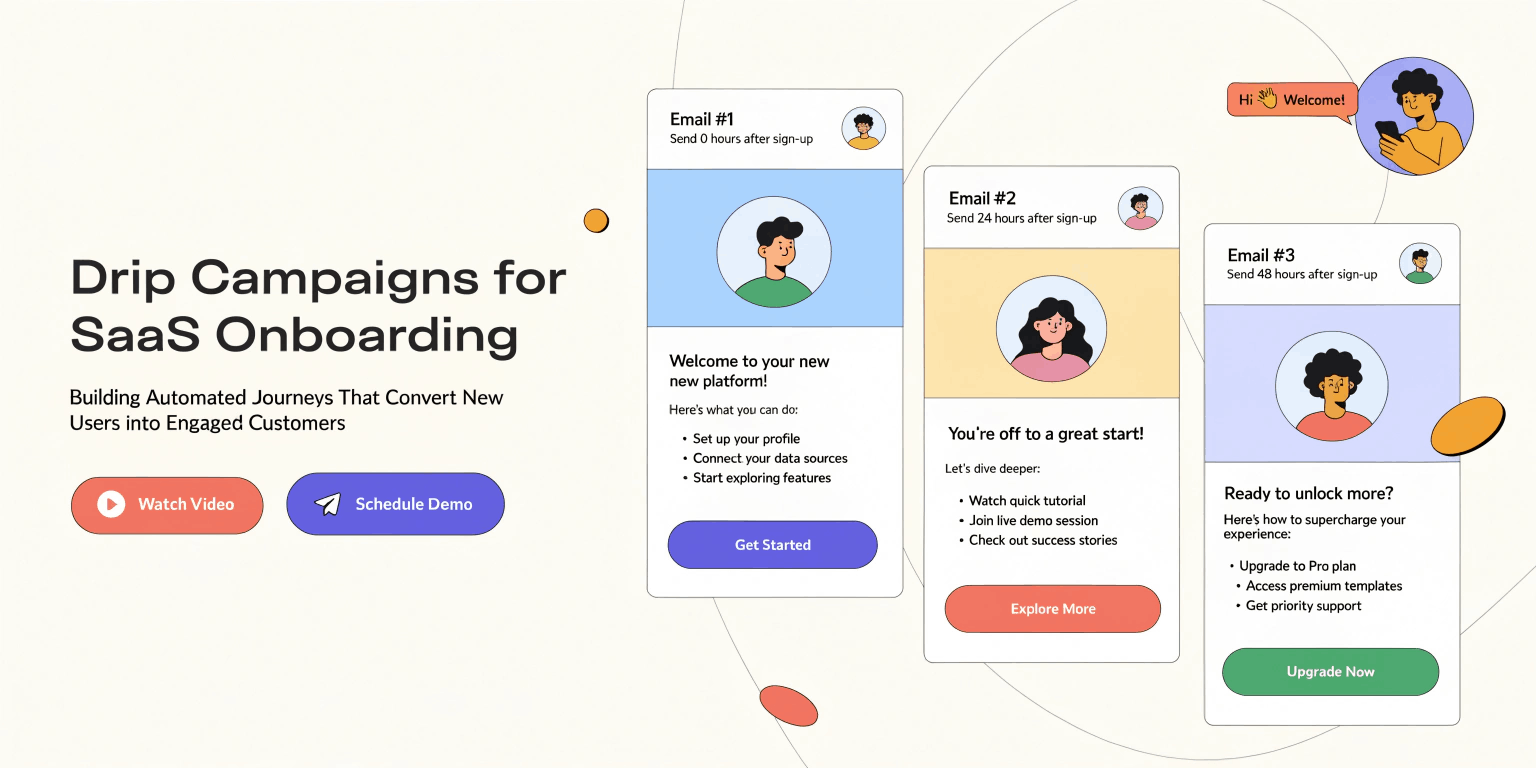
The Power of Multi-Channel Outreach
The highest-performing BDEs rarely rely on a single communication channel. Instead, they combine email, LinkedIn, and phone calls into a coordinated outreach sequence.
An example workflow:
- Research the prospect and company.
- Send a personalized LinkedIn connection request.
- Share useful content or engage with their posts.
- Send a tailored introduction email.
- Follow up with a phone call if appropriate.
- Continue nurturing the relationship with valuable insights and periodic follow-ups.
This approach increases visibility and reinforces your message without overwhelming the prospect.
Common Mistakes to Avoid
Many new BDEs reduce their success by making avoidable mistakes:
- Sending generic mass emails
- Pitching immediately after connecting on LinkedIn
- Calling without prior research
- Ignoring follow-ups
- Contacting prospects too frequently
- Focusing only on selling instead of understanding business needs
Successful outreach is built on relevance, consistency, and genuine value.
Future Trends in B2B Outreach
Technology is changing how BDEs engage with prospects. Emerging trends include:
- AI-assisted email personalization
- LinkedIn automation with human oversight
- Predictive lead scoring
- CRM-driven outreach sequences
- Account-Based Marketing (ABM)
- Video messaging for personalized introductions
- Sales intelligence tools for better prospect research
BDEs who combine these technologies with authentic communication will be better positioned to build meaningful business relationships.
Conclusion
Email, LinkedIn, and phone calls each play a vital role in business development. Email provides structured communication, LinkedIn strengthens professional relationships, and phone calls enable direct conversations that accelerate trust and decision-making.
Rather than choosing one channel over another, successful Business Development Executives integrate all three into a strategic, multi-channel outreach process. By personalizing communication, understanding client needs, and maintaining consistent follow-ups, BDEs can generate more qualified leads, build stronger relationships, and consistently win high-value IT clients.
We build scalable web, mobile, and game products for clients worldwide — combining modern frameworks, cloud infrastructure, and best engineering practices.
.jpg)