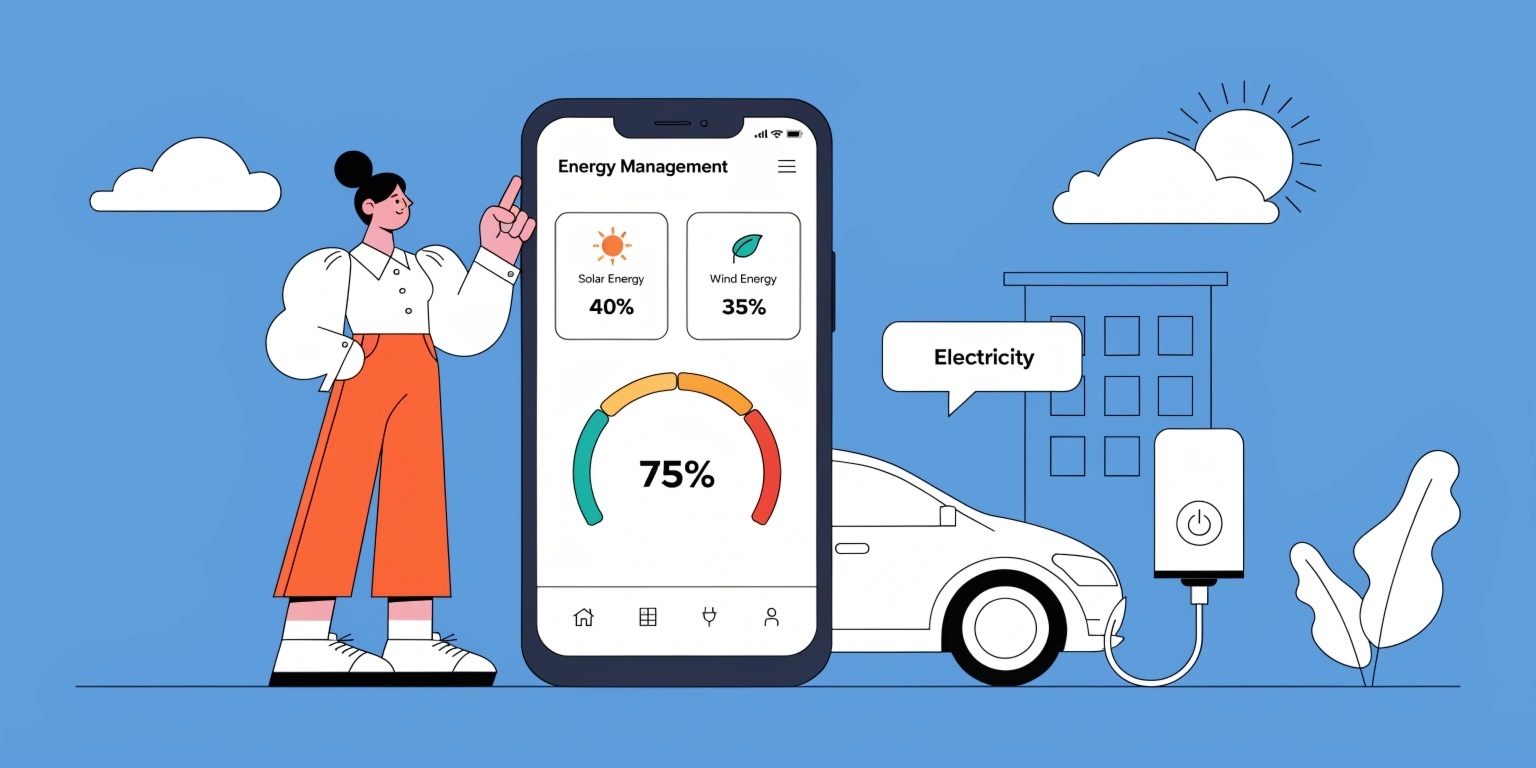
Learn how smart energy management applications use AI, IoT, and real-time analytics to optimize energy consumption, reduce costs, and improve sustainability across homes, businesses, and industrial facilities.
As global energy demand continues to rise, organizations and households are seeking smarter ways to reduce consumption, lower operational costs, and minimize environmental impact. Advances in the Internet of Things (IoT), Artificial Intelligence (AI), cloud computing, and data analytics have made it possible to monitor, analyze, and optimize energy usage in real time. Smart energy management applications are at the center of this transformation, enabling users to make data-driven decisions that improve efficiency and support sustainability goals.
These applications collect data from connected devices such as smart meters, sensors, HVAC systems, solar panels, and industrial equipment. By analyzing this information, they provide actionable insights, automate energy-saving actions, and help organizations achieve greater operational efficiency.
This article explores the architecture, key features, benefits, challenges, and best practices for building smart energy management applications.
What Is a Smart Energy Management Application?
A smart energy management application is a software solution that monitors, controls, and optimizes energy consumption across residential, commercial, or industrial environments. It combines connected devices, intelligent algorithms, and user-friendly dashboards to provide visibility into energy usage and recommend improvements.
Typical capabilities include:
- Real-time energy monitoring
- Device-level consumption tracking
- Automated energy optimization
- Remote equipment control
- Predictive maintenance alerts
- Renewable energy integration
- Usage reporting
- Cost analysis
These features empower users to reduce waste and improve energy efficiency.
Core Technologies
Developing a smart energy management system requires the integration of multiple modern technologies.
Internet of Things (IoT)
IoT devices such as smart meters, environmental sensors, and connected appliances continuously collect energy-related data from the physical environment.
Artificial Intelligence (AI)
AI analyzes historical and real-time data to predict consumption patterns, detect anomalies, recommend optimizations, and automate decision-making.
Cloud Computing
Cloud platforms store large volumes of sensor data, enable remote access, and support scalable analytics for thousands of connected devices.
Big Data Analytics
Advanced analytics identify trends, compare historical performance, and generate actionable insights that improve energy efficiency.
Key Features
Modern smart energy management applications typically include:
- Live energy consumption dashboards
- Smart device integration
- Energy usage forecasting
- Automated scheduling
- Alert and notification systems
- Carbon footprint tracking
- Utility billing analysis
- Renewable energy monitoring
These capabilities provide users with complete visibility into their energy ecosystem.
Application Architecture
A typical smart energy management platform follows this workflow:
- IoT sensors collect energy data.
- Gateways transmit information securely to cloud servers.
- Cloud services process and store incoming data.
- AI models analyze consumption patterns.
- Optimization recommendations are generated.
- Mobile or web applications display dashboards and reports.
- Automation systems adjust connected devices based on predefined rules or AI-driven decisions.
This architecture supports real-time monitoring while remaining scalable for large deployments.
Common Applications
Smart energy management systems are widely used across multiple industries.
Residential Homes
Homeowners monitor electricity usage, automate lighting and climate control, and optimize appliance schedules to reduce utility bills.
Commercial Buildings
Businesses improve HVAC efficiency, monitor occupancy-based lighting, and manage peak energy demand across office spaces.
Manufacturing
Industrial facilities track machine energy consumption, identify inefficient equipment, and schedule predictive maintenance to reduce downtime.
Renewable Energy
Solar and wind energy operators monitor power generation, battery storage, and grid interactions to maximize renewable energy utilization.
Smart Cities
Municipalities optimize street lighting, public buildings, and transportation infrastructure to reduce energy consumption and improve sustainability.
Benefits
Implementing smart energy management applications offers numerous advantages:
- Lower energy costs
- Improved operational efficiency
- Reduced carbon emissions
- Better asset utilization
- Predictive maintenance
- Enhanced regulatory compliance
- Real-time visibility into energy usage
- Support for sustainability initiatives
These benefits contribute to both financial savings and environmental responsibility.
Challenges
Despite their advantages, smart energy solutions present several technical challenges.
Data Security
IoT devices generate sensitive operational data that must be protected through encryption, secure authentication, and access control.
Device Compatibility
Integrating devices from different manufacturers may require support for multiple communication protocols and interoperability standards.
Scalability
Applications must efficiently process data from thousands or even millions of connected devices without compromising performance.
Connectivity
Reliable communication between sensors, gateways, and cloud platforms is essential for accurate real-time monitoring.
Addressing these challenges is crucial for building dependable energy management systems.
Best Practices
To develop successful smart energy applications:
- Use secure communication protocols for IoT devices.
- Implement role-based access control.
- Design scalable cloud architectures.
- Provide intuitive dashboards with real-time insights.
- Optimize AI models using quality data.
- Support remote firmware updates for connected devices.
- Monitor system health continuously.
- Test applications under realistic operating conditions.
Following these practices improves security, usability, and long-term reliability.
Future Trends
Smart energy management continues to evolve with advancements in digital technologies.
Emerging innovations include:
- AI-driven autonomous energy optimization
- Vehicle-to-grid (V2G) integration
- Digital twins for energy infrastructure
- Edge AI for faster local decision-making
- Blockchain-enabled energy trading
- Advanced battery management systems
- Smart microgrids
- Carbon-aware energy scheduling
These technologies will help organizations create more sustainable and resilient energy ecosystems.
Conclusion
Smart energy management applications are transforming how homes, businesses, industries, and cities consume and manage energy. By combining IoT, AI, cloud computing, and advanced analytics, these solutions provide real-time visibility, automate optimization, and support long-term sustainability goals.
As global demand for energy-efficient solutions continues to grow, investing in intelligent energy management systems will become increasingly important. Developers who build secure, scalable, and user-friendly applications can play a significant role in driving innovation while helping organizations reduce costs, improve operational efficiency, and contribute to a greener future.
We build scalable web, mobile, and game products for clients worldwide — combining modern frameworks, cloud infrastructure, and best engineering practices.
.jpg)
.jpg)