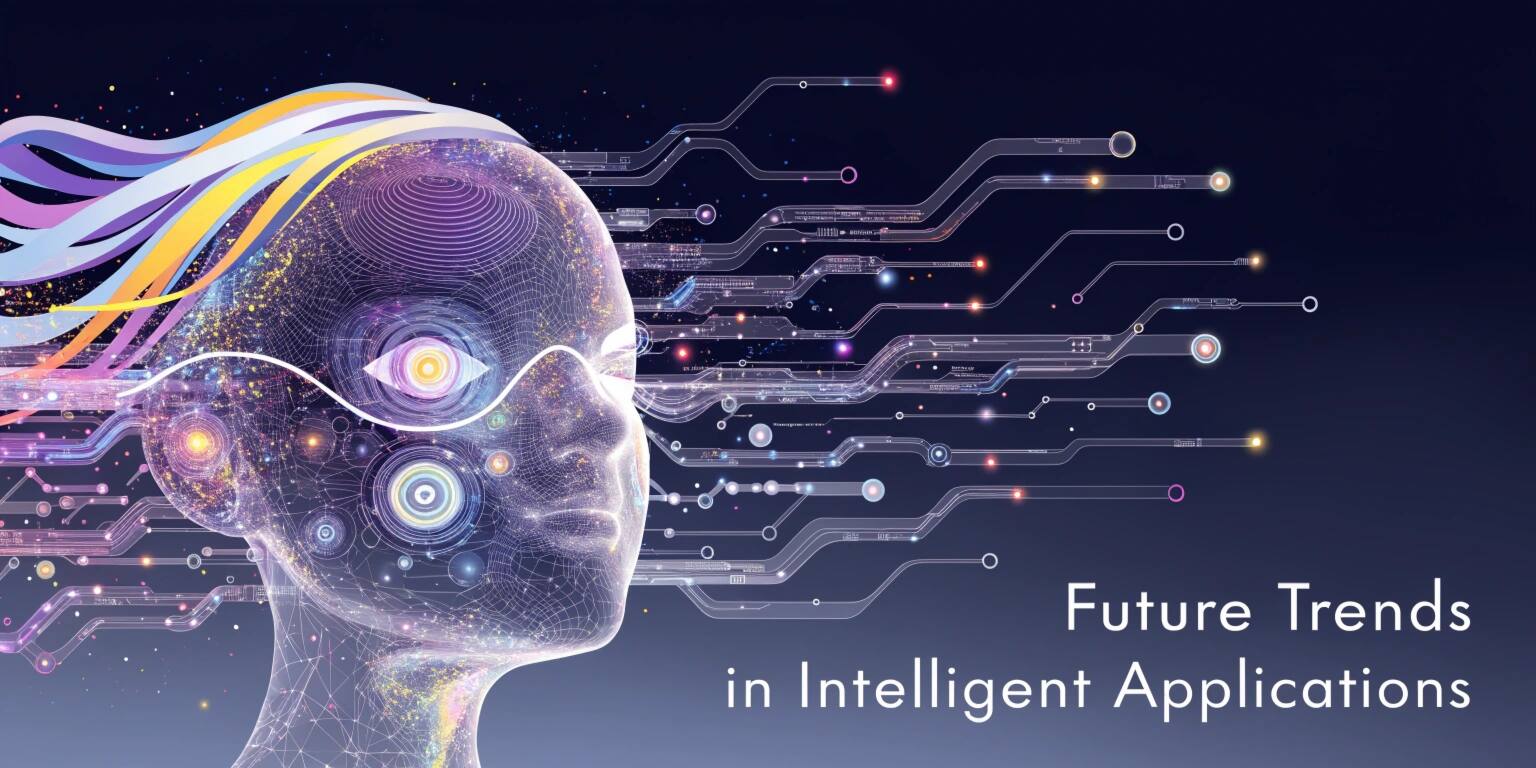
Discover the future trends transforming intelligent applications through AI, automation, personalization, predictive analytics, and next-generation adaptive digital experiences.
The digital technology landscape is rapidly evolving, and intelligent applications are becoming a central part of modern business ecosystems. Powered by artificial intelligence, machine learning, automation, and data analytics, intelligent applications are transforming how organizations operate, communicate, and deliver customer experiences.
Unlike traditional software systems, intelligent applications can:
- Learn from data
- Adapt to user behavior
- Make predictions
- Automate decisions
- Deliver personalized experiences
- Continuously improve performance
From AI-powered business platforms and recommendation engines to autonomous systems and virtual assistants, intelligent applications are reshaping industries globally.
As AI capabilities continue advancing, the next generation of intelligent applications will become more autonomous, context-aware, and deeply integrated into everyday digital interactions.
Understanding future trends in intelligent applications is essential for businesses, developers, and technology leaders preparing for the next wave of digital transformation.
What Are Intelligent Applications?
Intelligent applications are software systems enhanced with artificial intelligence and advanced analytics capabilities.
These applications combine:
- Machine learning
- Natural language processing
- Predictive analytics
- Automation
- Context awareness
- Real-time decision-making
to create adaptive and intelligent user experiences.
Examples include:
- AI chatbots
- Recommendation systems
- Smart CRM platforms
- Fraud detection systems
- AI copilots
- Autonomous business tools
- Intelligent healthcare systems
Modern intelligent applications go beyond simple automation by continuously learning and optimizing performance over time.
Rise of AI-Powered Personalization
One of the biggest future trends in intelligent applications is hyper-personalization.
Modern users expect:
- Customized recommendations
- Personalized interfaces
- Context-aware communication
- Adaptive digital experiences
AI systems increasingly analyze:
- User behavior
- Purchase history
- Interaction patterns
- Preferences
- Device usage
to deliver highly personalized experiences in real time.
Industries benefiting from personalization include:
- Ecommerce
- Streaming platforms
- Healthcare
- Education
- Financial services
Personalization improves:
- User engagement
- Customer satisfaction
- Retention rates
- Conversion performance
Generative AI Integration
Generative AI is rapidly becoming a major component of intelligent applications.
Applications powered by generative AI can:
- Generate text
- Create images
- Produce code
- Summarize documents
- Automate workflows
- Assist decision-making
Platforms such as OpenAI and Google are accelerating the adoption of AI copilots and conversational systems across enterprise software.
Future intelligent applications will increasingly embed generative AI directly into workflows, making software more interactive and assistive.
Conversational Interfaces and AI Assistants
Traditional interfaces are evolving toward conversational interactions.
Users increasingly prefer:
- Voice assistants
- Natural language queries
- AI chat interfaces
- Conversational workflows
Conversational AI improves accessibility and simplifies software interaction.
Future intelligent applications may rely heavily on:
- Multimodal AI
- Real-time speech processing
- Emotion-aware responses
- Contextual memory systems
This trend is expected to reshape enterprise software, customer support, education platforms, and productivity tools.
Autonomous Decision-Making Systems
Intelligent applications are moving beyond recommendations toward autonomous decision-making.
AI systems can increasingly:
- Detect anomalies
- Optimize operations
- Predict outcomes
- Execute workflows automatically
Industries adopting autonomous AI systems include:
- Manufacturing
- Logistics
- Finance
- Cybersecurity
- Healthcare
For example:
- AI systems may automatically detect fraud
- Supply chains may self-optimize routes
- IT systems may autonomously resolve incidents
Autonomous intelligence reduces operational delays and improves scalability.
Predictive Analytics and Real-Time Insights
Future intelligent applications will become increasingly predictive.
Instead of simply reacting to events, applications will anticipate:
- Customer behavior
- Equipment failures
- Market changes
- User intent
- Operational risks
Predictive analytics enables proactive decision-making.
Businesses use predictive intelligence for:
- Demand forecasting
- Customer retention
- Sales optimization
- Preventive maintenance
- Healthcare diagnostics
Real-time analytics combined with AI models will improve decision speed and operational efficiency.
Edge AI and Distributed Intelligence
As IoT devices and connected systems grow, intelligent applications are increasingly moving toward edge computing.
Edge AI processes data locally instead of relying entirely on cloud infrastructure.
Benefits include:
- Lower latency
- Faster decision-making
- Reduced bandwidth usage
- Improved privacy
- Real-time responsiveness
Industries adopting edge intelligence include:
- Autonomous vehicles
- Smart cities
- Industrial automation
- Healthcare monitoring
- Retail systems
Distributed intelligence will become critical for real-time applications.
Intelligent Cybersecurity Applications
Cybersecurity is becoming more AI-driven.
Future intelligent security applications will:
- Detect threats automatically
- Analyze attack patterns
- Predict vulnerabilities
- Respond to incidents in real time
AI-powered security systems can process massive amounts of network data faster than human analysts.
Intelligent cybersecurity applications are especially important as:
- Cloud adoption increases
- Remote work expands
- Cyberattacks become more sophisticated
AI-driven defense systems will become essential for modern enterprises.
Human-AI Collaboration
The future of intelligent applications is not only automation but collaboration between humans and AI systems.
AI copilots are increasingly assisting professionals in:
- Software development
- Marketing
- Healthcare
- Research
- Customer service
- Financial analysis
These systems improve productivity by augmenting human decision-making rather than fully replacing it.
Applications such as AI coding assistants and enterprise AI copilots are rapidly becoming mainstream.
Intelligent Applications in Healthcare
Healthcare is expected to experience major transformation through intelligent applications.
Future AI-powered healthcare systems may:
- Assist diagnosis
- Monitor patients remotely
- Predict disease risks
- Personalize treatment plans
- Automate administrative tasks
AI applications can improve:
- Accuracy
- Efficiency
- Accessibility
- Patient outcomes
Healthcare intelligence will continue expanding as AI models improve in medical reasoning and predictive capabilities.
Ethical AI and Responsible Intelligence
As intelligent applications become more powerful, ethical concerns are becoming increasingly important.
Key issues include:
- Bias in AI models
- Data privacy
- Explainability
- Transparency
- AI accountability
Governments and organizations are developing frameworks for responsible AI development.
Future intelligent applications will likely require:
- Ethical compliance systems
- Transparent AI decision-making
- Privacy-preserving architectures
Responsible AI practices will become essential for user trust and regulatory compliance.
Role of Cloud and AI Infrastructure
Cloud computing remains central to intelligent application development.
Platforms such as:
- Microsoft Azure
- Amazon AWS
- IBM Cloud
provide scalable AI infrastructure for:
- Model training
- Real-time inference
- Data processing
- Enterprise deployment
Future intelligent systems will increasingly combine:
- Cloud AI
- Edge computing
- Distributed architectures
to support global scalability.
Challenges Facing Intelligent Applications
Despite rapid progress, intelligent applications still face several challenges.
Data Quality Issues
Poor-quality data reduces AI accuracy.
High Infrastructure Costs
Large-scale AI deployment can be expensive.
Privacy and Security Risks
Sensitive user data requires strong protection.
AI Bias and Fairness
Improperly trained models may produce biased outcomes.
Regulatory Complexity
AI governance requirements are increasing globally.
Addressing these challenges will be critical for sustainable AI adoption.
Future Outlook
The future of intelligent applications will likely include:
- Fully adaptive software systems
- Autonomous AI agents
- Real-time multimodal AI
- Emotion-aware interfaces
- Personalized enterprise ecosystems
- Intelligent digital workspaces
AI systems will become more deeply integrated into everyday business operations and digital experiences.
Organizations that successfully adopt intelligent application strategies will gain significant competitive advantages in efficiency, customer experience, innovation, and scalability.
Conclusion
Intelligent applications are shaping the future of digital transformation across industries. Powered by artificial intelligence, machine learning, automation, and predictive analytics, these systems are becoming smarter, faster, and more adaptive.
From hyper-personalized customer experiences and conversational AI to autonomous decision-making and intelligent cybersecurity, future intelligent applications will fundamentally transform how businesses operate and interact with users.
As technology continues advancing, organizations that invest in scalable, ethical, and AI-driven intelligent applications will be better positioned for long-term innovation, competitiveness, and digital growth.
We build scalable web, mobile, and game products for clients worldwide — combining modern frameworks, cloud infrastructure, and best engineering practices.
-1.jpg)