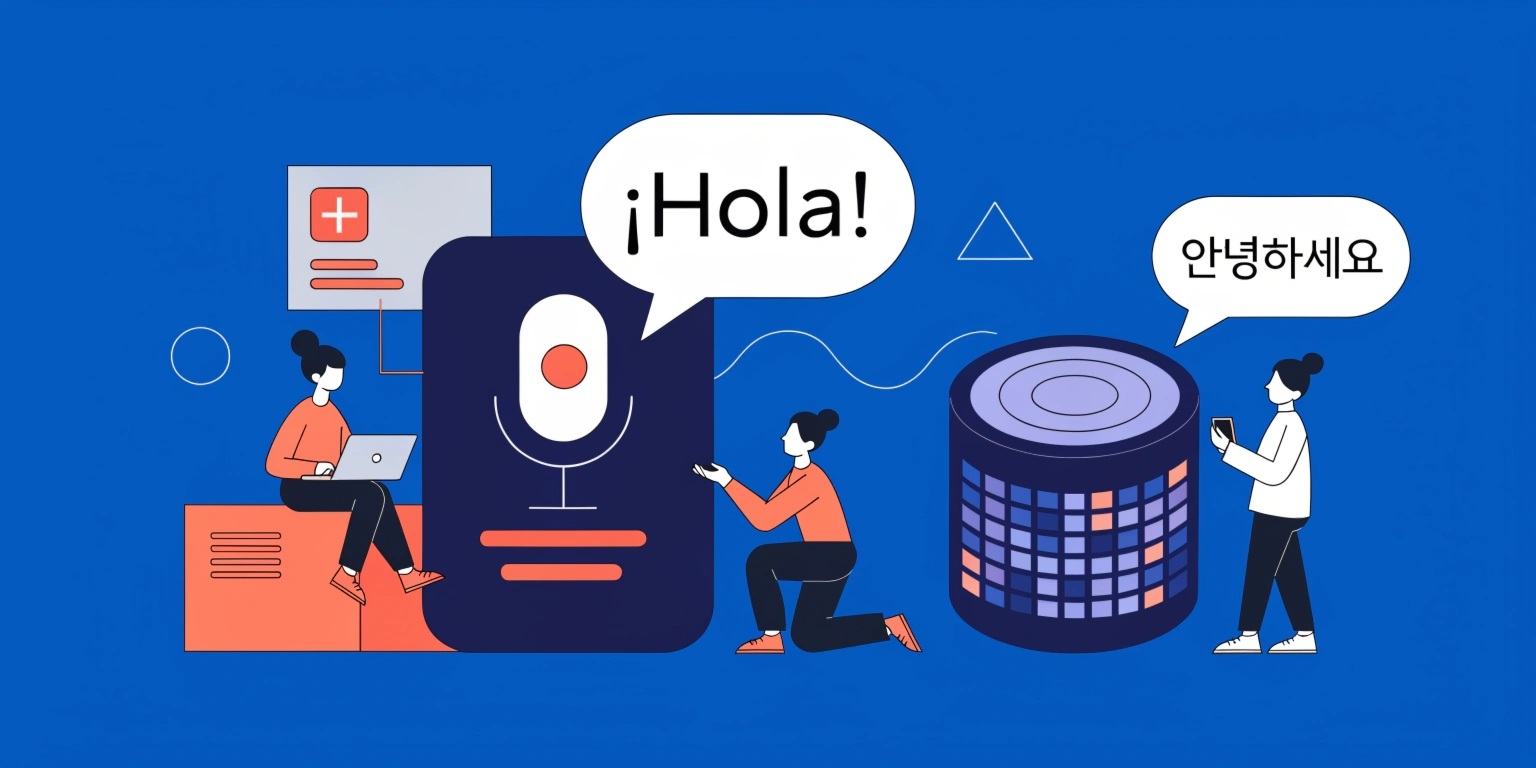
Discover how to build multilingual voice assistant apps using AI-powered speech recognition, NLP, language detection, and text-to-speech technologies. Learn architecture, implementation strategies, challenges, and best practices for global voice-enabled applications.
Voice assistants have transformed the way people interact with technology. Instead of navigating menus or typing commands, users can now communicate naturally through speech to perform tasks, search for information, control smart devices, or receive personalized assistance. As businesses expand globally, supporting multiple languages has become essential for delivering inclusive and engaging user experiences.
A multilingual voice assistant combines speech recognition, natural language processing (NLP), language detection, machine translation, and text-to-speech (TTS) technologies to understand and respond to users in their preferred language. Whether integrated into mobile applications, smart home devices, customer support platforms, or enterprise software, these assistants make technology more accessible and user-friendly.
This article explores the architecture, core technologies, implementation strategies, challenges, and best practices for building multilingual voice assistant applications.
What Is a Multilingual Voice Assistant?
A multilingual voice assistant is an AI-powered application capable of understanding spoken input and generating spoken or text responses in multiple languages. Unlike traditional assistants limited to one language, multilingual systems can detect, process, and respond appropriately across different linguistic contexts.
Common capabilities include:
- Speech recognition
- Language identification
- Natural language understanding
- Intent recognition
- Context-aware conversations
- Text-to-speech synthesis
- Voice command execution
- Multilingual responses
These features allow users to interact naturally regardless of their preferred language.
Core Technologies
Building a multilingual assistant requires integrating several AI technologies.
Automatic Speech Recognition (ASR)
ASR converts spoken language into text. High-quality speech recognition should handle accents, dialects, and varying speaking speeds while maintaining accuracy.
Language Detection
Before processing a request, the system identifies the language being spoken. Fast and accurate language detection ensures that downstream NLP models use the correct language pipeline.
Natural Language Processing (NLP)
NLP enables the assistant to interpret user intent, extract important information, and manage conversations in multiple languages.
Machine Translation
When internal processing or external services operate in a different language, machine translation bridges the gap while preserving the original meaning.
Text-to-Speech (TTS)
TTS converts generated responses into natural-sounding speech. Modern neural speech synthesis provides realistic voices with appropriate pronunciation, pacing, and intonation.
Application Architecture
A scalable multilingual voice assistant typically follows this workflow:
- Capture voice input from the user.
- Convert speech into text using ASR.
- Detect the spoken language.
- Process the request using NLP.
- Retrieve information or perform the requested action.
- Generate a response.
- Convert the response into speech using TTS.
- Deliver the spoken output to the user.
Cloud-based services or on-device processing can be used depending on performance, privacy, and connectivity requirements.
Key Features
Modern multilingual assistants often include:
- Voice activation
- Context-aware conversations
- Offline command support
- Multi-language switching
- Personalized responses
- Smart home integration
- Calendar and reminder management
- Search and knowledge retrieval
These capabilities create seamless and intuitive voice interactions.
Common Applications
Multilingual voice assistants are used across many industries.
Customer Support
Provide instant support to users in different languages while reducing response times.
Healthcare
Assist patients with appointment scheduling, medication reminders, and health information in their native language.
Education
Support language learning, tutoring, pronunciation practice, and interactive lessons.
Travel and Hospitality
Help travelers with bookings, directions, translations, and local recommendations.
Smart Homes
Enable voice control of lighting, appliances, security systems, and entertainment devices across multilingual households.
Challenges
Developing multilingual voice assistants presents several technical challenges.
Accent and Dialect Variations
Speech recognition systems must understand regional pronunciations and speaking styles to maintain accuracy.
Context Preservation
Maintaining conversation context across multiple languages requires robust dialogue management.
Translation Quality
Literal translations can distort meaning. Systems should preserve intent rather than simply translating words.
Latency
Voice interactions should feel conversational. Optimizing speech processing and response generation is essential to minimize delays.
Privacy and Security
Voice data often contains sensitive information. Developers should encrypt data in transit and at rest, implement secure authentication, and comply with applicable privacy regulations.
Best Practices
To build reliable multilingual voice assistants:
- Support language auto-detection with manual override options.
- Use high-quality speech recognition and neural TTS models.
- Design conversations that are culturally appropriate.
- Minimize response latency.
- Protect user data through encryption and secure APIs.
- Test across different accents, dialects, and noisy environments.
- Monitor usage analytics to improve recognition accuracy.
- Continuously update language models as new data becomes available.
Following these practices improves usability, accessibility, and long-term performance.
Future Trends
Voice AI continues to evolve rapidly with advances in artificial intelligence.
Emerging innovations include:
- Real-time multilingual conversations
- Emotion-aware speech recognition
- Personalized voice synthesis
- Multimodal AI combining voice, text, and images
- On-device AI for improved privacy
- Large Language Model (LLM)-powered assistants
- Context-aware task automation
- Seamless cross-device voice experiences
These developments will make voice assistants more intelligent, natural, and globally accessible.
Conclusion
Building multilingual voice assistant apps requires the integration of speech recognition, language detection, natural language processing, machine translation, and text-to-speech technologies. Together, these components enable users to communicate naturally in their preferred language while receiving accurate, context-aware responses.
As businesses increasingly serve global audiences, multilingual voice assistants are becoming an essential part of digital products. By focusing on accuracy, localization, security, and user experience, developers can create scalable voice-enabled applications that enhance accessibility, improve customer engagement, and deliver personalized interactions across languages and cultures.
We build scalable web, mobile, and game products for clients worldwide — combining modern frameworks, cloud infrastructure, and best engineering practices.
.jpg)
.jpg)