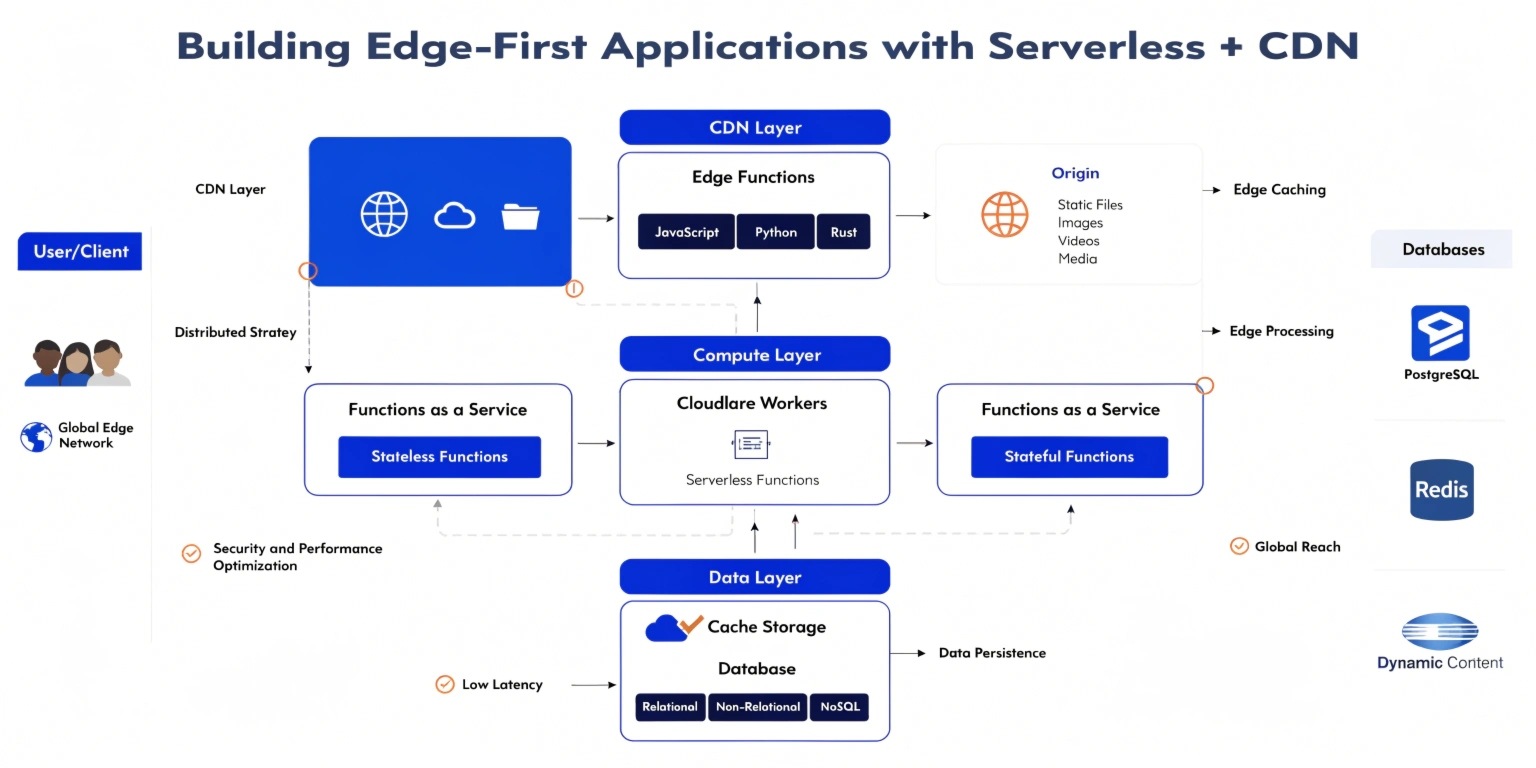
Edge-first applications combine serverless and CDN to deliver fast, scalable experiences. Learn how to build low-latency, globally distributed apps with modern edge computing architecture.
Modern users expect lightning-fast applications, regardless of their location. Traditional centralized server architectures often struggle with latency, scalability, and performance bottlenecks.
This is where edge-first applications come in. By combining serverless computing with Content Delivery Networks (CDNs), developers can deliver applications closer to users, reducing latency and improving performance dramatically.
What Are Edge-First Applications?
Edge-first applications are designed to run logic and deliver content from locations geographically closer to users—known as the edge.
Instead of relying solely on centralized servers, these applications:
- Execute code at edge locations
- Cache content globally
- Reduce round-trip time
This results in faster and more responsive user experiences.
Key Components of Edge-First Architecture
1. Serverless Computing
Serverless platforms allow developers to run code without managing infrastructure.
Popular options include:
- Amazon Web Services (AWS Lambda, Lambda@Edge)
- Cloudflare (Cloudflare Workers)
- Google Cloud (Cloud Functions)
2. Content Delivery Networks (CDNs)
CDNs cache and deliver static and dynamic content from distributed servers worldwide.
Examples include:
- Cloudflare
- Akamai
3. Edge Functions
Edge functions allow code execution at CDN nodes, enabling real-time processing close to users.
4. APIs & Data Layer
Edge-first apps connect to APIs and databases optimized for global access.
How Edge-First Applications Work
- User sends a request
- Request is routed to the nearest edge location
- CDN serves cached content or triggers edge function
- Serverless function processes logic
- Response is delivered instantly
This reduces latency and improves speed significantly.
Benefits of Edge-First Architecture
1. Ultra-Low Latency
Processing happens closer to users, minimizing delays.
2. Global Scalability
Edge networks automatically scale based on demand.
3. Improved Performance
Faster load times lead to better user experience.
4. Cost Efficiency
Serverless reduces infrastructure costs by charging per execution.
5. High Availability
Distributed architecture reduces single points of failure.
Use Cases for Edge-First Applications
- E-commerce platforms – Faster product loading and checkout
- Streaming services – Smooth content delivery
- Real-time applications – Chat apps, gaming, collaboration tools
- Personalized content delivery – Dynamic user experiences
Challenges in Edge-First Development
1. Limited Execution Time
Edge functions often have constraints on runtime and memory.
2. Debugging Complexity
Distributed environments make debugging harder.
3. Data Consistency
Managing data across multiple locations can be challenging.
4. Vendor Lock-In
Relying on specific cloud providers may limit flexibility.
Best Practices for Building Edge-First Apps
- Cache aggressively using CDN
- Keep edge functions lightweight
- Use stateless architecture
- Optimize API calls
- Monitor performance and logs
Popular Tools & Frameworks
- Cloudflare Workers
- Amazon Web Services Lambda@Edge
- Vercel Edge Functions
- Netlify Edge Functions
These platforms simplify edge-first development.
Edge-First vs Traditional Architecture
FeatureTraditionalEdge-FirstLatencyHighLowScalabilityLimitedHighPerformanceModerateExcellentInfrastructureServer-basedServerless
Future of Edge Computing
Edge-first architecture is rapidly evolving with:
- AI at the edge
- Real-time analytics
- IoT integration
- Faster global networks (5G)
This approach is becoming the standard for high-performance applications.
Conclusion
Building edge-first applications using serverless and CDNs is transforming how modern web apps are developed. By moving computation closer to users, developers can deliver faster, more scalable, and highly reliable applications.
As user expectations continue to rise, adopting edge-first architecture is no longer optional—it’s a competitive advantage. For developers and businesses, mastering this approach is key to building the next generation of high-performance digital experiences.
We build scalable web, mobile, and game products for clients worldwide — combining modern frameworks, cloud infrastructure, and best engineering practices.
.jpg)
.jpg)