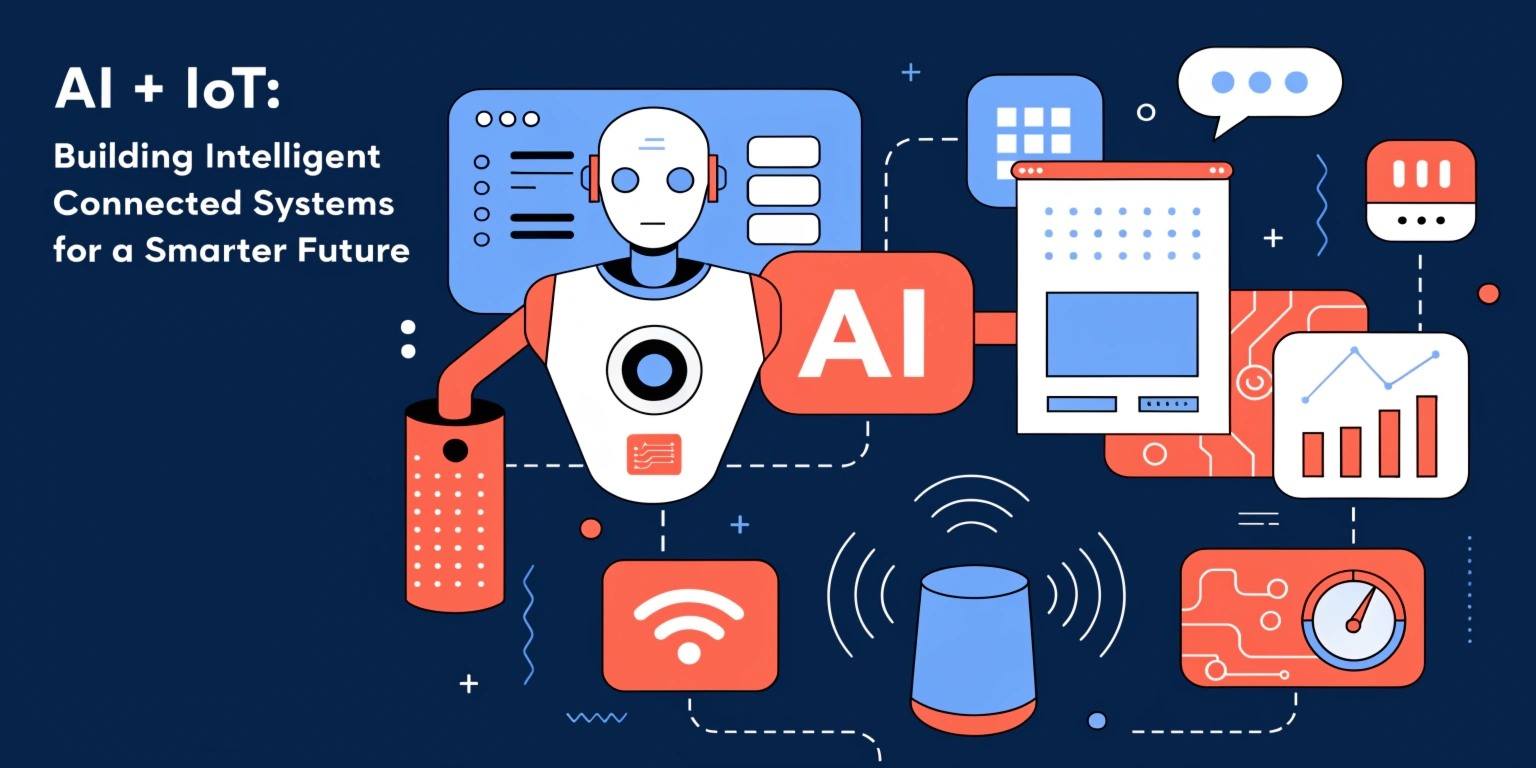
The convergence of Artificial Intelligence (AI) and the Internet of Things (IoT) is revolutionizing how devices communicate, learn, and make decisions. By combining IoT's vast network of connected devices with AI's analytical capabilities, organizations can create intelligent systems that automate operations, predict outcomes, and improve efficiency. This article explores the benefits, applications, challenges, and future potential of AI-powered IoT ecosystems.
Introduction
The digital transformation era has introduced groundbreaking technologies that are reshaping industries worldwide. Among the most impactful innovations are Artificial Intelligence (AI) and the Internet of Things (IoT). While IoT connects devices and enables data collection, AI transforms that data into actionable insights. Together, these technologies create intelligent connected systems capable of learning, adapting, and making autonomous decisions.
The combination of AI and IoT, often referred to as AIoT, is driving innovation across healthcare, manufacturing, transportation, retail, agriculture, and smart cities. Businesses are increasingly investing in AI-powered IoT solutions to gain a competitive advantage and improve operational efficiency.
Understanding AI and IoT Integration
IoT devices generate enormous amounts of data through sensors, cameras, wearables, and connected machines. However, collecting data alone provides limited value. AI enhances IoT systems by analyzing this data in real time, identifying patterns, and generating predictions.
For example, a smart factory may have thousands of sensors monitoring equipment performance. AI algorithms can process this information to detect abnormalities and predict failures before they occur. This proactive approach reduces downtime and maintenance costs.
The integration follows a simple process:
- IoT devices collect data.
- Data is transmitted to edge or cloud platforms.
- AI algorithms analyze and interpret data.
- Insights trigger automated actions or recommendations.
- Systems continuously learn and improve through machine learning.
Key Benefits of AI-Powered IoT Systems
1. Predictive Maintenance
One of the most valuable applications of AIoT is predictive maintenance. AI analyzes sensor data to identify signs of wear and potential failures before equipment breaks down. This reduces costly downtime and extends asset lifespan.
2. Real-Time Decision Making
AI enables IoT systems to process data instantly and make decisions without human intervention. Smart traffic management systems, for instance, can adjust traffic signals dynamically based on congestion patterns.
3. Enhanced Operational Efficiency
Businesses can automate repetitive tasks, optimize workflows, and reduce manual effort. AI-driven IoT systems improve productivity while minimizing errors.
4. Improved Customer Experience
Smart devices collect user behavior data, allowing organizations to personalize experiences. Retailers can offer tailored recommendations, while smart home systems adapt to user preferences automatically.
5. Better Resource Management
AIoT helps organizations optimize energy consumption, water usage, and supply chain operations, leading to significant cost savings and sustainability improvements.
Real-World Applications of AI and IoT
Smart Manufacturing
Manufacturers use AI-powered sensors and connected machinery to monitor production lines, predict maintenance needs, and improve quality control. This forms the foundation of Industry 4.0 initiatives.
Smart Healthcare
Wearable devices continuously monitor patient health metrics such as heart rate, blood pressure, and oxygen levels. AI analyzes this data to detect anomalies and alert healthcare professionals when intervention is needed.
Smart Cities
Cities leverage AIoT for traffic management, waste collection, public safety, and energy optimization. Connected infrastructure enables better urban planning and improved quality of life for residents.
Agriculture
Farmers use IoT sensors to monitor soil moisture, weather conditions, and crop health. AI processes this information to recommend irrigation schedules and optimize agricultural productivity.
Transportation and Logistics
Fleet management systems track vehicle performance, fuel consumption, and route efficiency. AI helps optimize delivery schedules and reduce transportation costs.
Challenges in Implementing AIoT
Despite its benefits, AIoT adoption presents several challenges:
Data Security and Privacy
Connected devices increase the attack surface for cyber threats. Organizations must implement strong encryption, authentication, and security protocols.
Data Quality
AI models require accurate and consistent data. Poor-quality sensor data can lead to incorrect predictions and decisions.
Scalability
Managing millions of connected devices requires robust infrastructure and efficient data processing capabilities.
Integration Complexity
Organizations often struggle to integrate AIoT solutions with legacy systems and existing business processes.
Cost Considerations
Initial investments in hardware, software, cloud infrastructure, and skilled professionals can be substantial.
Future Trends in AI and IoT
The future of AIoT is incredibly promising. Several emerging trends are expected to shape its evolution:
- Edge AI for faster processing and reduced latency.
- 5G connectivity enabling real-time communication between devices.
- Autonomous systems capable of self-management.
- Advanced predictive analytics for improved forecasting.
- Digital twins that simulate real-world environments.
- Increased adoption of smart infrastructure and connected ecosystems.
As technology advances, AIoT systems will become more intelligent, efficient, and autonomous, creating new opportunities across industries.
Conclusion
The fusion of Artificial Intelligence and the Internet of Things is transforming the way organizations operate and interact with technology. AI-powered IoT systems enable real-time intelligence, predictive capabilities, automation, and enhanced decision-making. From smart factories and healthcare solutions to connected cities and intelligent transportation, AIoT is driving the next wave of digital innovation.
Organizations that embrace AI and IoT integration today will be better positioned to improve efficiency, reduce costs, enhance customer experiences, and remain competitive in an increasingly connected world. As advancements in AI, edge computing, and connectivity continue, intelligent connected systems will become an essential part of our future.
We build scalable web, mobile, and game products for clients worldwide — combining modern frameworks, cloud infrastructure, and best engineering practices.
-1.jpg)