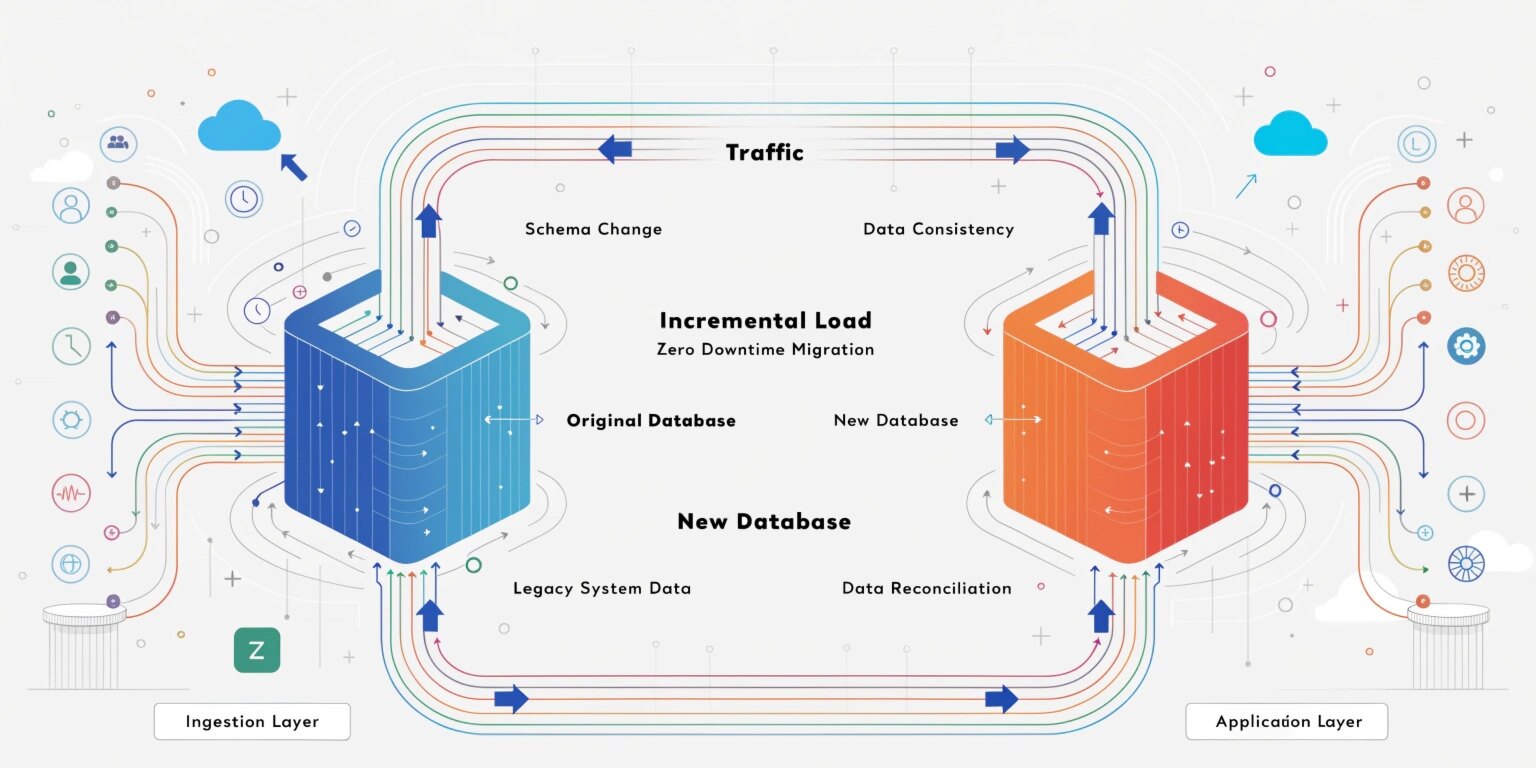
In modern high-traffic systems, even a few seconds of downtime can lead to significant revenue loss, poor user experience, and reputational damage. As applications scale, the need to evolve database schemas becomes inevitable—but doing so without disrupting live services is a major challenge. This is where zero-downtime database migrations come into play.
What Are Zero-Downtime Migrations?
Zero-downtime migrations are techniques that allow changes to a database schema or data without interrupting application availability. Unlike traditional migrations that may require system shutdowns, these approaches ensure that users experience no service disruption during updates.
Why Are They Important?
In high-traffic systems such as e-commerce platforms, banking apps, and SaaS products, downtime is costly. Continuous deployment practices demand frequent updates, making it essential to adopt migration strategies that align with always-on architectures.
Core Principles of Zero-Downtime Migrations
1. Backward Compatibility
Always design schema changes so that both old and new versions of the application can work simultaneously. For example:
- Adding new columns instead of modifying existing ones
- Avoiding immediate deletion of unused fields
2. Expand and Contract Pattern
This widely used approach involves two phases:
- Expand Phase: Introduce new schema changes without removing old ones
- Contract Phase: Remove deprecated elements once the system fully transitions
This ensures a smooth transition without breaking dependencies.
3. Decoupling Application and Database Changes
Never deploy application and database changes simultaneously if they depend on each other. Instead:
- Deploy database changes first (non-breaking)
- Then release application updates that use the new schema
Proven Strategies for Zero Downtime
1. Blue-Green Deployment
This method uses two identical environments:
- Blue: Current live system
- Green: Updated system
Traffic is gradually shifted to the green environment after successful testing, minimizing risk.
2. Rolling Deployments
Updates are applied incrementally across servers rather than all at once. This ensures:
- Continuous availability
- Easy rollback if something fails
3. Feature Flags
Feature flags allow you to enable or disable features dynamically without deploying new code. This helps in:
- Testing migrations safely
- Gradual rollout of changes
4. Shadow Writes
In this approach, data is written to both old and new schemas simultaneously. This ensures data consistency during migration and enables validation before full transition.
Handling Large Data Migrations
Migrating large datasets in high-traffic systems requires extra care:
- Batch Processing: Migrate data in small chunks to avoid performance degradation
- Background Jobs: Use asynchronous workers to handle migrations without blocking main operations
- Rate Limiting: Control migration speed to prevent database overload
Common Challenges and Solutions
1. Long-Running Queries
Large migrations can lock tables and slow down systems. Solution:
- Use non-blocking operations
- Optimize queries and indexing
2. Data Consistency Issues
Ensuring consistency between old and new schemas is critical. Solution:
- Use dual writes or change data capture (CDC)
- Validate data before switching fully
3. Rollback Complexity
Rolling back database changes is harder than application code. Solution:
- Always plan reversible migrations
- Avoid destructive changes in early stages
Popular Tools for Zero-Downtime Migrations
- Liquibase – Version-controlled database changes
- Flyway – Simple and reliable migration tool
- gh-ost / pt-online-schema-change – Online schema changes for large MySQL databases
These tools help automate and standardize the migration process.
Best Practices to Follow
- Test migrations in staging environments with production-like data
- Monitor system performance and logs during migration
- Maintain detailed migration scripts and documentation
- Communicate changes across teams to avoid conflicts
- Automate deployment pipelines for consistency
Conclusion
Zero-downtime database migrations are essential for maintaining reliability in high-traffic systems. By following principles like backward compatibility, phased rollouts, and decoupled deployments, teams can safely evolve their databases without impacting users.
As systems continue to scale, adopting these practices is no longer optional—it’s a necessity for delivering seamless, uninterrupted digital experiences.