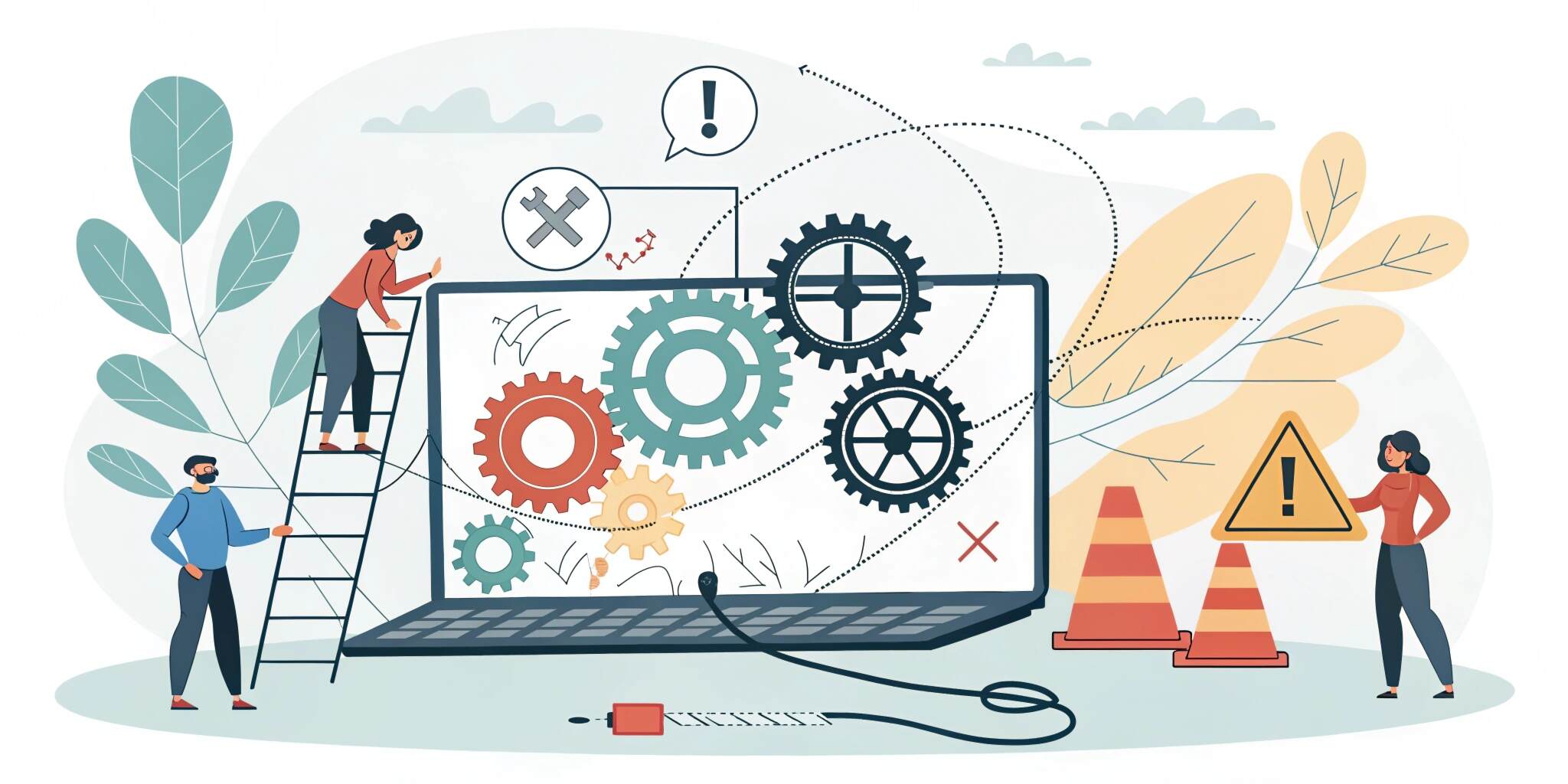
Launching a web application is relatively easy. Scaling it successfully is not. Many web apps perform well with thousands of users but begin to fail as traffic, data volume, and system complexity grow. These failures are rarely caused by a single issue—instead, they result from a combination of architectural, technical, and operational decisions made early in development.
Understanding why web apps fail at scale is the first step toward building systems that can grow reliably.
Scaling Is Not Just About Traffic
One of the most common misconceptions is that scale only means handling more users. In reality, scale introduces challenges across multiple dimensions: data growth, operational complexity, deployment frequency, and system reliability.
As systems scale, previously invisible inefficiencies become catastrophic. A database query that takes milliseconds at small scale can cripple performance under heavy load. A minor memory leak can take down entire services.
Monolithic Architectures That Don’t Evolve
Monolithic architectures are not inherently bad, but many web apps fail because monoliths are allowed to grow without clear boundaries. As features pile up, codebases become tightly coupled, making it difficult to scale teams, deploy safely, or isolate failures.
Without clear modularization, a small change in one area can impact the entire system. Scaling becomes risky, slow, and fragile.
Database Bottlenecks and Poor Data Modeling
Databases are the most common point of failure at scale. Many applications rely on a single relational database without planning for read-heavy traffic, large datasets, or high concurrency.
Common database-related issues include:
- Missing indexes
- Inefficient queries
- Overloaded write operations
- Lack of read replicas
- Poor schema design
At scale, even small inefficiencies compound rapidly, leading to slow responses, timeouts, and outages.
Stateful Application Design
Stateful application servers make horizontal scaling difficult. When user sessions, caches, or temporary data are stored in-memory on individual servers, traffic cannot be distributed freely.
As a result, teams are forced to scale vertically instead of horizontally, which quickly becomes expensive and unreliable. Stateless application design is essential for scalable systems.
Ignoring Caching and Content Delivery
Many web apps fail because they treat every request as unique. Without caching at multiple layers—browser, CDN, application, and database—systems waste resources processing repeated requests.
Caching reduces load, improves latency, and provides a buffer during traffic spikes. Without it, infrastructure costs rise sharply and performance degrades under pressure.
Distributed Systems Without Discipline
Microservices are often introduced to solve scaling problems, but they can create new ones when adopted without proper discipline. Network latency, service dependencies, and partial failures add complexity that many teams are unprepared to manage.
Without proper observability, retries, timeouts, and circuit breakers, failures cascade quickly across services.
Lack of Observability and Monitoring
At scale, guessing is no longer an option. Many web apps fail simply because teams lack visibility into system behavior. Without metrics, logs, and traces, diagnosing performance issues becomes slow and reactive.
Teams often discover problems only after users complain. By then, the impact is already severe.
Deployment and Release Failures
Frequent releases are necessary for modern web platforms, but unsafe deployment practices cause outages. Manual deployments, lack of rollback strategies, and poor testing pipelines increase failure rates as systems grow.
At scale, even minor deployment mistakes can affect millions of users.
Operational and Organizational Gaps
Technical systems reflect organizational structures. As teams grow, unclear ownership, poor documentation, and lack of operational maturity become significant risk factors.
Scaling engineering teams without improving processes leads to slower incident response and repeated failures.
Scaling Requires a Reliability Mindset
The biggest reason web apps fail at scale is the absence of a reliability-first mindset. Systems must be designed with the assumption that components will fail, networks will be unreliable, and traffic will be unpredictable.
Engineering for failure—through redundancy, graceful degradation, and automated recovery—is essential for long-term success.
Final Thoughts
Most web apps fail at scale not because of bad technology, but because of optimistic assumptions and short-term design decisions. Scalability is an architectural, operational, and cultural challenge. Teams that invest early in solid system design, observability, and reliability practices are far more likely to build platforms that survive and thrive under growth.