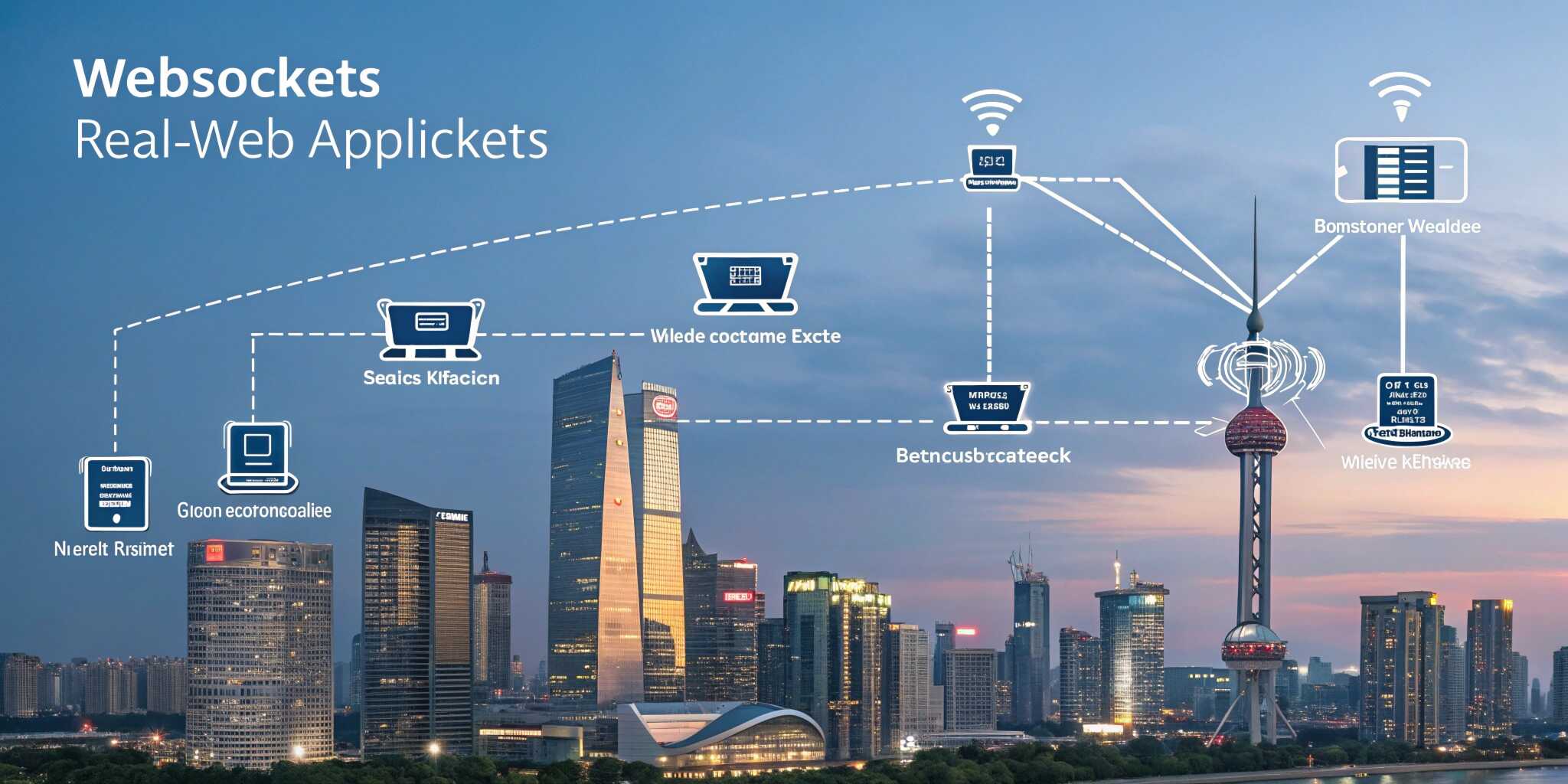
Modern web applications demand instant updates and seamless interactivity. Features such as live chat, collaborative editing, real-time notifications, and live dashboards require continuous data exchange between the client and server. Traditional HTTP-based communication struggles to meet these demands efficiently. This is where WebSockets become essential, enabling real-time web applications with low latency and persistent connections.
What Are WebSockets?
WebSockets are a communication protocol that provides full-duplex, bi-directional communication over a single, long-lived TCP connection. Unlike HTTP, which follows a request–response model, WebSockets allow both the client and server to send data independently at any time.
Once established, a WebSocket connection remains open, eliminating the overhead of repeated HTTP requests and significantly reducing latency.
How WebSockets Work
The WebSocket communication process begins with an HTTP handshake. The client sends an HTTP request requesting an upgrade to the WebSocket protocol. If the server supports WebSockets, it responds with a successful upgrade response.
After the handshake:
- The connection remains persistent
- Data is exchanged using lightweight frames
- Messages can flow in both directions without re-establishing the connection
This persistent channel is the foundation for real-time communication.
WebSockets vs Traditional HTTP Techniques
Before WebSockets, developers relied on workarounds such as polling, long polling, and Server-Sent Events (SSE).
- Polling repeatedly checks the server for updates, wasting resources
- Long polling reduces requests but still adds latency
- SSE supports only server-to-client communication
WebSockets outperform these approaches by enabling instant, bi-directional messaging with minimal overhead.
Real-Time Use Cases Powered by WebSockets
WebSockets are widely used across industries:
- Chat Applications: Instant messaging and presence indicators
- Live Collaboration Tools: Real-time document editing and whiteboards
- Online Gaming: Multiplayer state synchronization
- Financial Dashboards: Live stock prices and market data
- Notifications & Alerts: Instant system and user notifications
These use cases demonstrate how WebSockets enable rich, interactive experiences that traditional HTTP cannot support efficiently.
WebSocket Architecture in Web Applications
A typical WebSocket-based system includes:
- Client Layer
- Web browsers or mobile apps using WebSocket APIs.
- WebSocket Server
- Handles connection management, message routing, and authentication.
- Message Broker (Optional)
- Tools like Redis or Kafka help scale real-time messaging across multiple servers.
- Backend Services
- Process events, persist data, and trigger updates.
This architecture allows systems to scale horizontally while maintaining real-time responsiveness.
Scalability Challenges with WebSockets
While powerful, WebSockets introduce scalability considerations:
- Connection Management: Thousands of concurrent open connections
- Stateful Servers: Connections require session awareness
- Load Balancing: Sticky sessions or shared state are often needed
- Resource Usage: Memory and CPU usage increase with connections
Successful implementations use horizontal scaling, connection sharding, and message brokers to manage these challenges.
Security Considerations
WebSocket security is critical in production environments:
- Always use WSS (WebSocket Secure) over TLS
- Authenticate users during the handshake
- Validate and sanitize incoming messages
- Implement rate limiting and connection timeouts
Without proper safeguards, persistent connections can become attack vectors.
When Not to Use WebSockets
WebSockets are not always the right choice. For applications that require infrequent updates or simple data fetching, traditional HTTP APIs may be more efficient. Choosing WebSockets should be driven by real-time requirements, not trend adoption.
Final Thoughts
WebSockets are a foundational technology for real-time web applications. By enabling persistent, low-latency, bi-directional communication, they unlock user experiences that were once impossible on the web. When designed with scalability and security in mind, WebSockets empower developers to build responsive, interactive systems capable of supporting millions of users in real time.