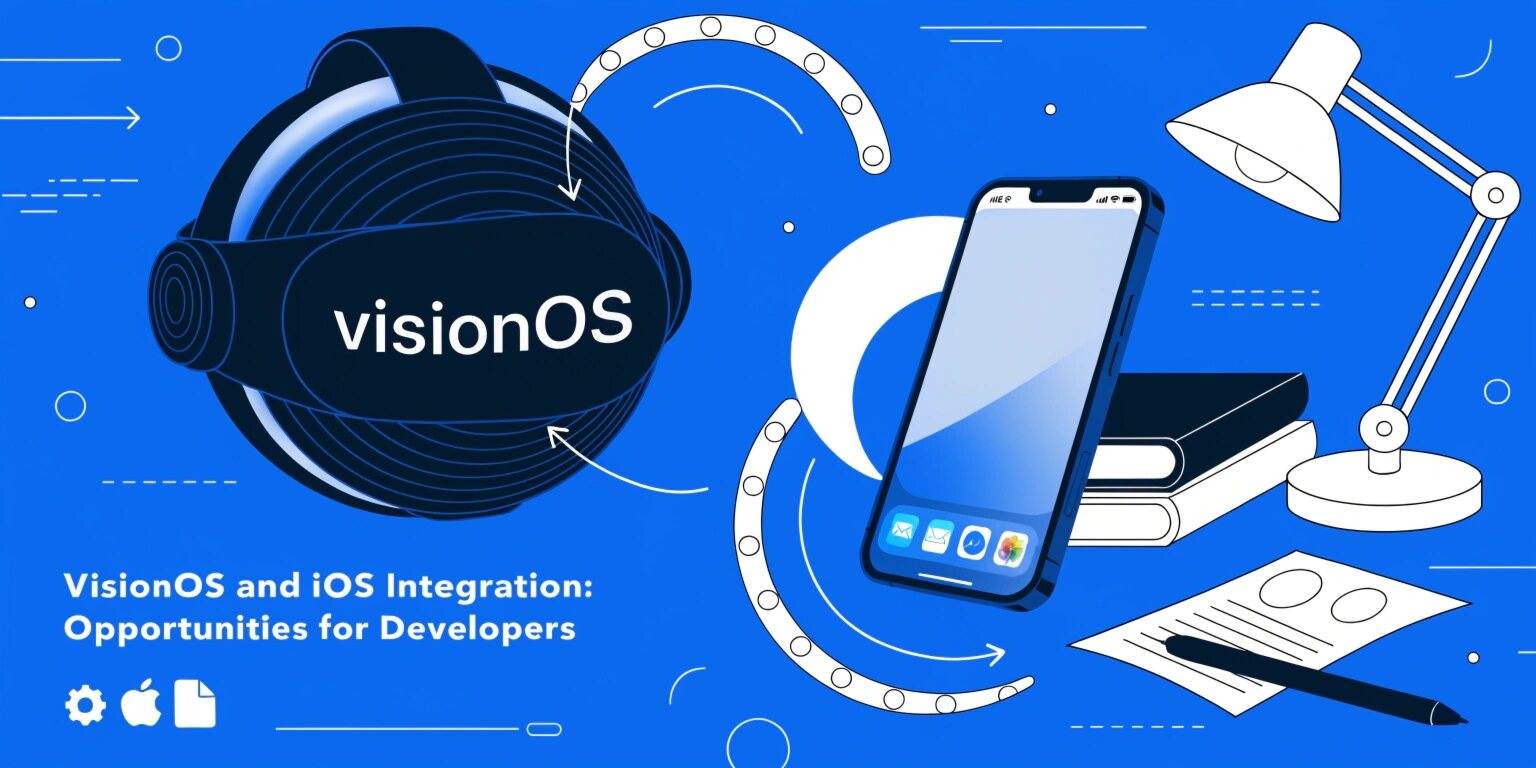
The technology industry is entering a new era of spatial computing, where digital experiences extend beyond traditional screens and become part of the physical world. Apple's introduction of VisionOS has accelerated this transition, providing developers with a platform designed specifically for immersive and spatial experiences.
Unlike previous augmented reality solutions, VisionOS combines digital content with real-world environments through intuitive interactions, eye tracking, gesture controls, and advanced spatial awareness. When integrated with iOS applications, VisionOS creates a powerful ecosystem that enables developers to deliver seamless cross-device experiences.
For businesses and developers, this integration represents a significant opportunity to innovate, expand application capabilities, and prepare for the future of computing.
Understanding VisionOS
VisionOS is Apple's operating system built for spatial computing devices.
It powers immersive experiences that blend:
- Digital content
- Physical environments
- Real-time interactions
- Three-dimensional interfaces
The platform introduces a new way of interacting with applications through:
- Eye tracking
- Hand gestures
- Voice commands
- Spatial positioning
Unlike traditional mobile applications, VisionOS apps can exist within a user's environment, creating more natural and engaging experiences.
The Role of iOS in the Apple Ecosystem
iOS remains one of the most widely used mobile operating systems globally.
Millions of businesses rely on iOS applications for:
- Customer engagement
- E-commerce
- Productivity
- Entertainment
- Communication
Because VisionOS shares many development frameworks and tools with iOS, developers can leverage existing knowledge, codebases, and design patterns when building spatial experiences.
This compatibility lowers the barrier to entry and accelerates adoption.
Why VisionOS and iOS Integration Matters
The integration between VisionOS and iOS extends the Apple ecosystem beyond smartphones and tablets.
Benefits include:
- Unified user experiences
- Cross-device continuity
- Shared data synchronization
- Simplified development workflows
- Expanded application functionality
Users can move seamlessly between devices while maintaining context and productivity.
For developers, this creates opportunities to extend existing applications into entirely new interaction models.
Reusing Existing iOS Applications
One of the most attractive features for developers is the ability to adapt existing iOS applications for VisionOS.
Many applications can be:
- Ported efficiently
- Enhanced with spatial features
- Optimized for immersive interactions
This approach reduces development costs while expanding reach to new device categories.
Organizations can maximize the value of existing investments without starting from scratch.
Creating Immersive User Experiences
VisionOS introduces opportunities that go beyond traditional mobile interfaces.
Developers can create:
- Spatial workspaces
- Interactive dashboards
- Virtual collaboration environments
- Immersive educational tools
- 3D product visualizations
Applications become more engaging by allowing users to interact naturally with digital content.
This shift opens entirely new categories of software experiences.
Opportunities in Augmented Reality
Augmented Reality (AR) has long been part of Apple's ecosystem through ARKit.
VisionOS expands these capabilities significantly.
Developers can build:
- AR shopping experiences
- Interactive training systems
- Virtual tours
- Healthcare visualization tools
- Educational simulations
By integrating iOS applications with VisionOS, businesses can offer enhanced AR experiences while maintaining compatibility across devices.
Enterprise and Productivity Applications
Enterprise software stands to benefit greatly from spatial computing.
Potential applications include:
Virtual Workspaces
Employees can organize multiple windows and applications within a shared digital environment.
Data Visualization
Complex datasets can be displayed in three-dimensional formats for deeper analysis.
Remote Collaboration
Teams can interact within immersive virtual environments regardless of location.
Training and Simulation
Organizations can deliver realistic training experiences that improve knowledge retention.
These capabilities can significantly enhance workplace productivity.
Gaming and Entertainment Opportunities
The gaming industry is one of the biggest beneficiaries of VisionOS innovation.
Developers can create:
- Mixed reality games
- Immersive storytelling experiences
- Interactive entertainment platforms
- Spatial multiplayer environments
VisionOS provides new ways for users to engage with digital content, creating richer and more memorable experiences.
Integration with iOS also enables synchronized gameplay and cross-device engagement.
Development Tools and Technologies
Apple has simplified VisionOS development by extending familiar tools and frameworks.
Developers can use:
- Swift
- SwiftUI
- RealityKit
- ARKit
- Xcode
- VisionOS SDK
This shared ecosystem enables developers to build applications efficiently while maintaining consistency across platforms.
Existing iOS expertise becomes highly valuable when entering the spatial computing market.
Business Benefits of VisionOS Adoption
Organizations investing in VisionOS development can gain several advantages.
Competitive Differentiation
Early adopters can establish leadership in emerging markets.
Enhanced Customer Engagement
Immersive experiences create stronger user interactions.
New Revenue Streams
Spatial applications can introduce premium features and services.
Future Readiness
Businesses can prepare for the continued growth of spatial computing technologies.
These benefits make VisionOS an attractive platform for innovation-focused organizations.
Challenges Developers Must Consider
While opportunities are significant, developers must address several challenges.
Learning New Design Principles
Spatial interfaces require different UX strategies compared to traditional mobile applications.
Performance Optimization
Immersive experiences demand efficient rendering and resource management.
User Adoption
Spatial computing remains an emerging market with evolving user expectations.
Development Costs
Advanced spatial applications may require specialized expertise and testing.
Addressing these challenges is essential for successful implementation.
The Future of VisionOS and iOS Integration
The future of Apple's ecosystem is increasingly centered on seamless interaction between devices.
Emerging trends include:
- AI-powered spatial assistants
- Shared immersive environments
- Advanced mixed reality experiences
- Cross-platform continuity
- Real-time collaboration spaces
- Personalized spatial interfaces
As VisionOS adoption grows, integration with iOS will become even more important for delivering connected digital experiences.
Conclusion
VisionOS and iOS integration represents a major milestone in the evolution of application development. By combining the power of mobile computing with immersive spatial experiences, developers can create innovative applications that redefine how users interact with technology.
From augmented reality and enterprise productivity to gaming and education, the opportunities are vast. Organizations that embrace VisionOS today can position themselves at the forefront of spatial computing while leveraging the strength of Apple's existing ecosystem. As the technology matures, VisionOS and iOS integration will play a crucial role in shaping the future of digital experiences.