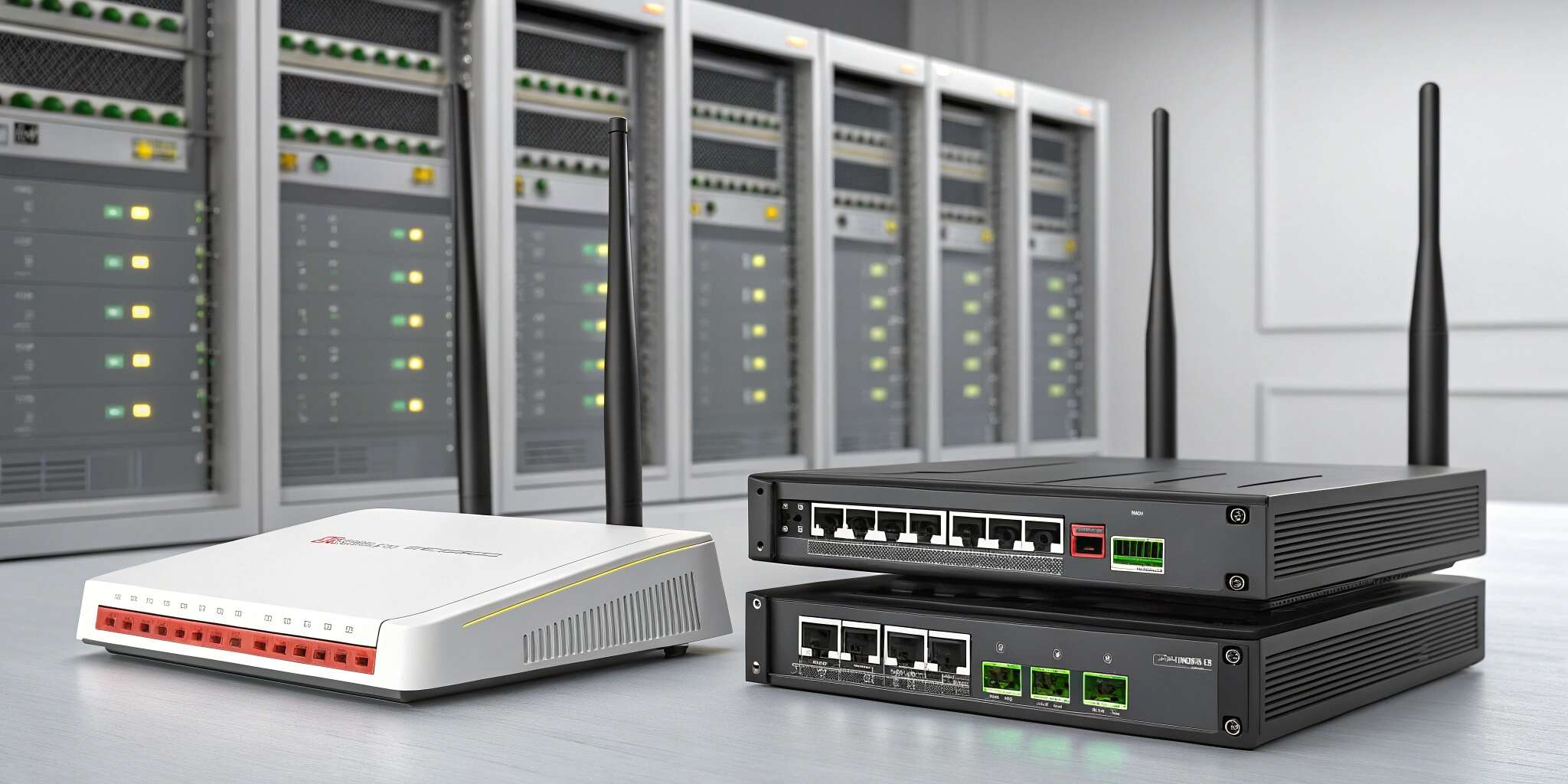
In the world of IT and networking, routers, switches, and firewalls form the foundation of communication and security. These devices may seem similar at first glance, but each plays a unique role in ensuring that data is transmitted efficiently and securely. Understanding their functions is essential for IT professionals, businesses, and students alike.
1. Routers
A router is a networking device that connects multiple networks together and directs data packets between them. Most commonly, routers connect home or office networks to the internet.
Key Functions of Routers:
- Connects multiple networks (LAN to WAN).
- Assigns IP addresses to devices.
- Determines the best path for data to travel.
- Supports both wired and wireless communication.
Example: When you use Wi-Fi at home, your router connects your devices to the internet.
2. Switches
A switch operates within a single network, enabling devices like computers, printers, and servers to communicate with one another efficiently. Unlike routers, switches do not connect different networks but manage internal traffic.
Key Functions of Switches:
- Connects multiple devices within a LAN (Local Area Network).
- Forwards data only to the intended recipient device.
- Improves network efficiency by reducing data collisions.
- Supports higher bandwidth for internal communications.
Example: In an office, a switch connects all employee computers, allowing them to share files and printers.
3. Firewalls
A firewall is a security system that monitors and controls incoming and outgoing network traffic. It acts as a barrier between a trusted internal network and external threats, such as hackers or malware.
Key Functions of Firewalls:
- Blocks unauthorized access to networks.
- Monitors data packets for malicious activity.
- Can be hardware-based, software-based, or a combination.
- Enforces security policies for network safety.
Example: A firewall prevents hackers from accessing sensitive company data by blocking suspicious traffic.
4. How They Work Together
- Routers connect different networks and provide internet access.
- Switches enable communication between devices within the same network.
- Firewalls protect both routers and switches by filtering traffic and blocking malicious activities.
Together, they ensure connectivity, efficiency, and security.
5. Importance in Modern IT Infrastructure
- For Businesses: Essential for smooth communication and data protection.
- For Individuals: Provide secure internet usage at home.
- For Cybersecurity: Act as the first line of defense against threats.
Conclusion
Routers, switches, and firewalls may serve different purposes, but they are interdependent and equally vital for building a strong, secure, and reliable IT infrastructure. A well-configured network with these three components ensures seamless communication and robust protection from cyber threats.