Main Content
Understanding Net Profit Margin: A Guide for Business Development Executives
In today's competitive business environment, Business Development Executives (BDEs) play a crucial role in driving revenue and expanding market opportunities. However, generating sales alone does not guarantee business success. Profitability is equally important, and one of the most valuable metrics used to measure profitability is the Net Profit Margin.
What is Net Profit Margin?
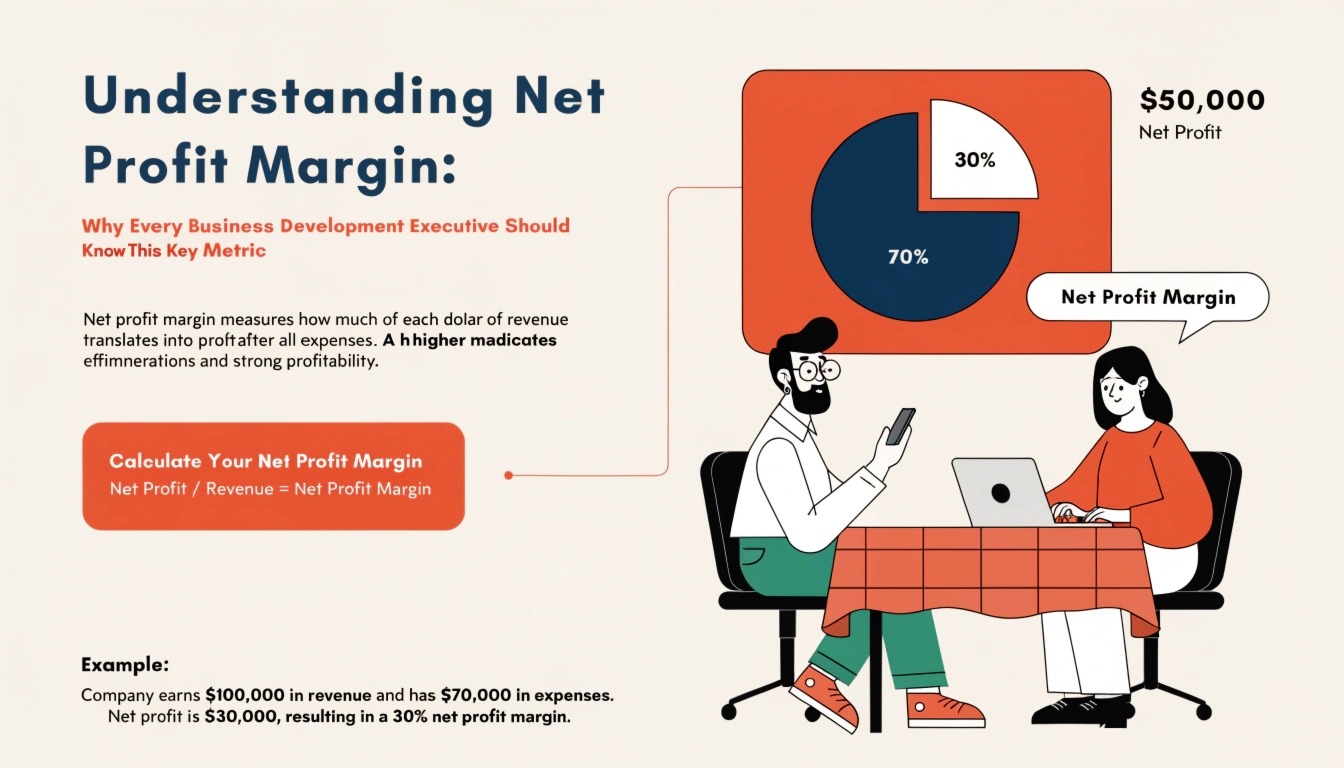
Net Profit Margin is a financial ratio that indicates how much profit a company retains after deducting all expenses, taxes, and operational costs from its total revenue. It is expressed as a percentage and reflects the overall financial health of a business.
Formula:
Net Profit Margin=Net IncomeRevenue×100Net\ Profit\ Margin = \frac{Net\ Income}{Revenue}\times100Net Profit Margin=RevenueNet Income×100
For example, if a company generates ₹10,00,000 in revenue and earns a net profit of ₹2,00,000, its net profit margin would be 20%. This means the business keeps ₹20 as profit for every ₹100 earned.
Why Should Business Development Executives Understand Net Profit Margin?
Many professionals assume that financial metrics are only important for accountants or management teams. However, Business Development Executives can significantly benefit from understanding profitability metrics.
1. Better Client Selection
Not all customers contribute equally to profitability. Some clients may require excessive resources or demand lower prices, reducing profit margins. BDEs who understand net profit margin can focus on acquiring customers that provide long-term value and sustainable returns.
2. Improved Pricing Strategies
Pricing directly impacts profitability. Offering discounts without considering costs can reduce overall margins. By understanding net profit margin, BDEs can negotiate effectively while maintaining healthy profits for the organization.
3. Strategic Business Growth
Revenue growth without profitability can lead to financial challenges. Business Development Executives should aim to bring in business opportunities that align with the company's long-term objectives. High-value partnerships and recurring clients often contribute more to profitability than one-time sales.
4. Enhanced Decision-Making
Financial awareness enables BDEs to make informed decisions regarding:
- Product positioning
- Market expansion
- Customer segmentation
- Sales targets
- Resource allocation
Understanding profitability helps executives prioritize opportunities that generate maximum returns.
5. Strengthening Collaboration with Finance and Management
Business Development teams frequently work with finance, marketing, and operations departments. Knowledge of net profit margin improves communication and allows BDEs to contribute meaningfully to strategic discussions.
Factors Affecting Net Profit Margin
Several factors influence a company's net profit margin:
Operating Costs
High operational expenses reduce profitability. Efficient cost management helps maintain healthy margins.
Pricing Policies
Competitive pricing should balance customer expectations and profitability requirements.
Customer Acquisition Costs
Excessive spending on marketing and sales activities can negatively affect profit margins.
Market Competition
Competitive industries often experience pressure on pricing, which can impact profitability.
Customer Retention
Retaining existing clients is generally more cost-effective than acquiring new customers. Long-term relationships contribute positively to profit margins.
How Business Development Executives Can Improve Net Profit Margin
Focus on High-Value Customers
Identify clients with higher lifetime value and prioritize building strong relationships with them.
Increase Customer Retention
Providing excellent customer service and maintaining regular communication can increase repeat business.
Cross-Selling and Upselling
Introducing complementary products or premium services helps increase revenue without significantly raising acquisition costs.
Optimize Sales Processes
Using CRM tools and automation can improve efficiency and reduce operational expenses.
Collaborate with Marketing Teams
Aligning sales and marketing efforts ensures better lead quality and improves conversion rates, contributing to higher profitability.
Key Performance Indicators Related to Net Profit Margin
Business Development Executives should regularly monitor:
- Customer Acquisition Cost (CAC)
- Customer Lifetime Value (CLV)
- Conversion Rate
- Average Deal Size
- Revenue Growth Rate
- Return on Investment (ROI)
- Gross Profit Margin
- Net Profit Margin
These KPIs provide valuable insights into the effectiveness of business development strategies.
Conclusion
Net profit margin is more than just a financial metric; it is an indicator of business efficiency and sustainability. For Business Development Executives, understanding profitability enables smarter decision-making, better customer targeting, and stronger alignment with organizational goals. By focusing on profitable growth rather than revenue alone, BDEs can contribute significantly to long-term business success and create lasting value for their organizations.