Deep learning models are data-hungry and resource-intensive. Training them from scratch requires enormous datasets, powerful hardware, and time. Enter transfer learning—a technique that lets you leverage knowledge from pre-trained models to build better models, faster. Whether you're recognizing images or processing language, transfer learning gives your AI a valuable head start.
What Is Transfer Learning?
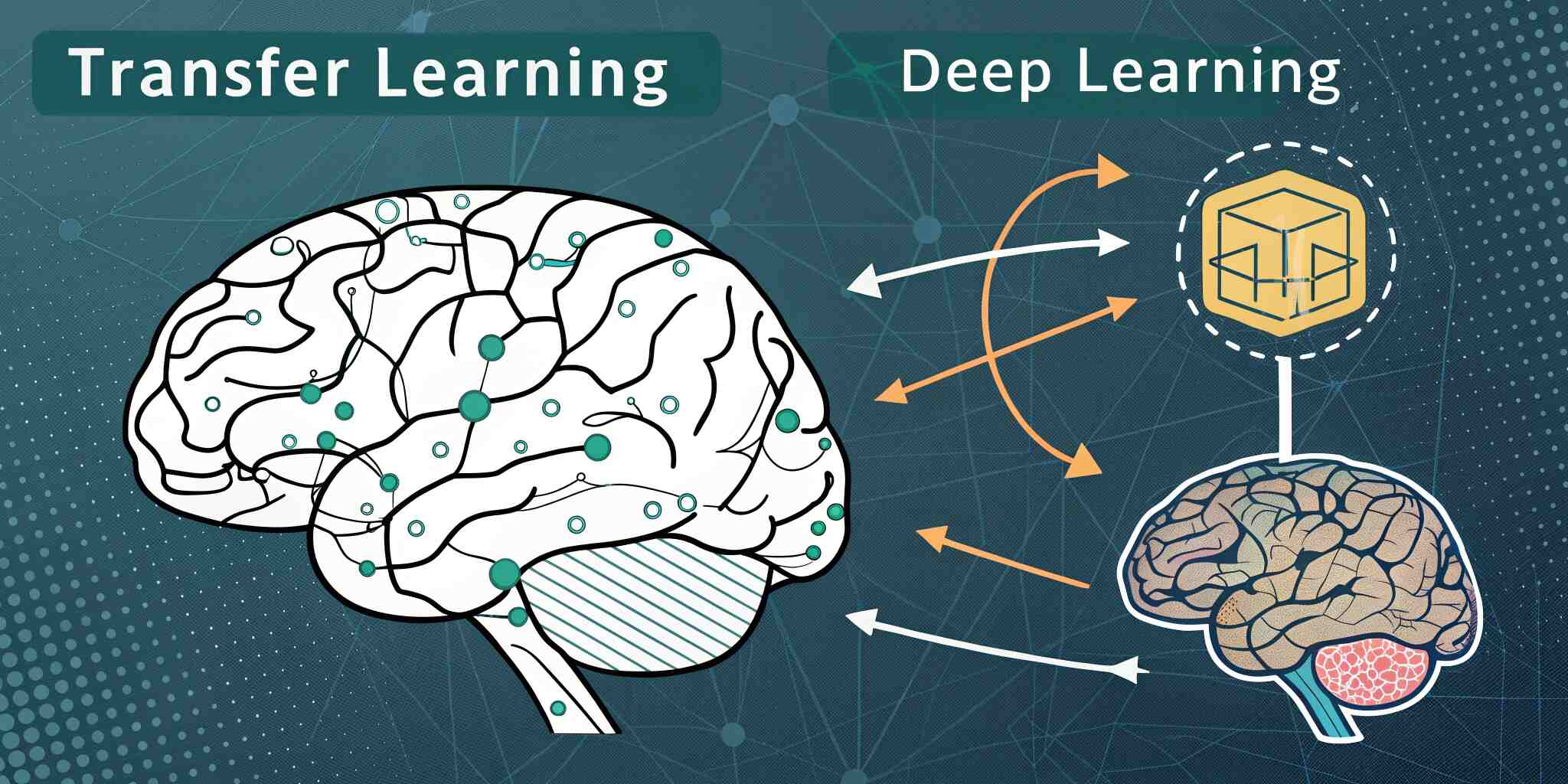
Transfer learning is a method in deep learning where a model developed for one task is reused as the starting point for a model on a second, related task. Instead of training a model from scratch, you adapt an existing model trained on a large dataset (like ImageNet or BERT) for your specific problem.
How Transfer Learning Works
- Pretraining Phase: A model is trained on a large, generic dataset.
- Transfer Phase: The learned features (weights and layers) are reused.
- Fine-tuning Phase: The model is adapted to the new task using a smaller dataset.
This approach significantly reduces the need for huge amounts of labeled data and compute resources.
Why Use Transfer Learning?
- Faster Training: Build and train models more quickly.
- Less Data Required: Ideal for domains with limited labeled data.
- Improved Accuracy: Boosts performance, especially on small datasets.
- Knowledge Reuse: Taps into patterns already learned by advanced models.
Common Applications of Transfer Learning
- Image Classification
- Using pre-trained models like VGG, ResNet, or Inception for custom object detection or recognition tasks.
- Natural Language Processing (NLP)
- Adapting large language models like BERT, GPT, or RoBERTa for tasks like sentiment analysis, question answering, or summarization.
- Speech Recognition
- Transferring learned audio features to new voice data.
- Medical Imaging
- Applying models trained on general image datasets to detect tumors or anomalies in medical scans.
Types of Transfer Learning
- Feature Extraction: Use the pretrained model’s layers as fixed feature extractors.
- Fine-Tuning: Unfreeze part of the pretrained model and retrain it on the new data.
- Domain Adaptation: Transfer knowledge between similar but distinct domains (e.g., photos to medical images).
When to Use Transfer Learning
- When you have limited data for your task.
- When computational resources are constrained.
- When your task is similar to the one used to train the original model.
- When you need rapid prototyping or experimentation.
Limitations of Transfer Learning
- Not always effective for vastly different domains (e.g., images to audio).
- Overfitting can occur if not fine-tuned properly.
- Pretrained models may carry biases from their original datasets.
Conclusion
Transfer learning is revolutionizing how we approach deep learning projects. By reusing proven models, developers and researchers can save time, reduce costs, and achieve high performance—even with limited data. In a world where data is precious and speed is key, transfer learning is the shortcut smart AI builders rely on.