Main Content
Modern digital products require consistency, scalability, and speed across multiple platforms. Whether developing a mobile application, enterprise dashboard, SaaS platform, or eCommerce website, maintaining a unified user interface becomes increasingly difficult as projects grow. This challenge has led organizations to adopt Token-Based Design Systems, one of the most advanced approaches in modern UI/UX engineering.
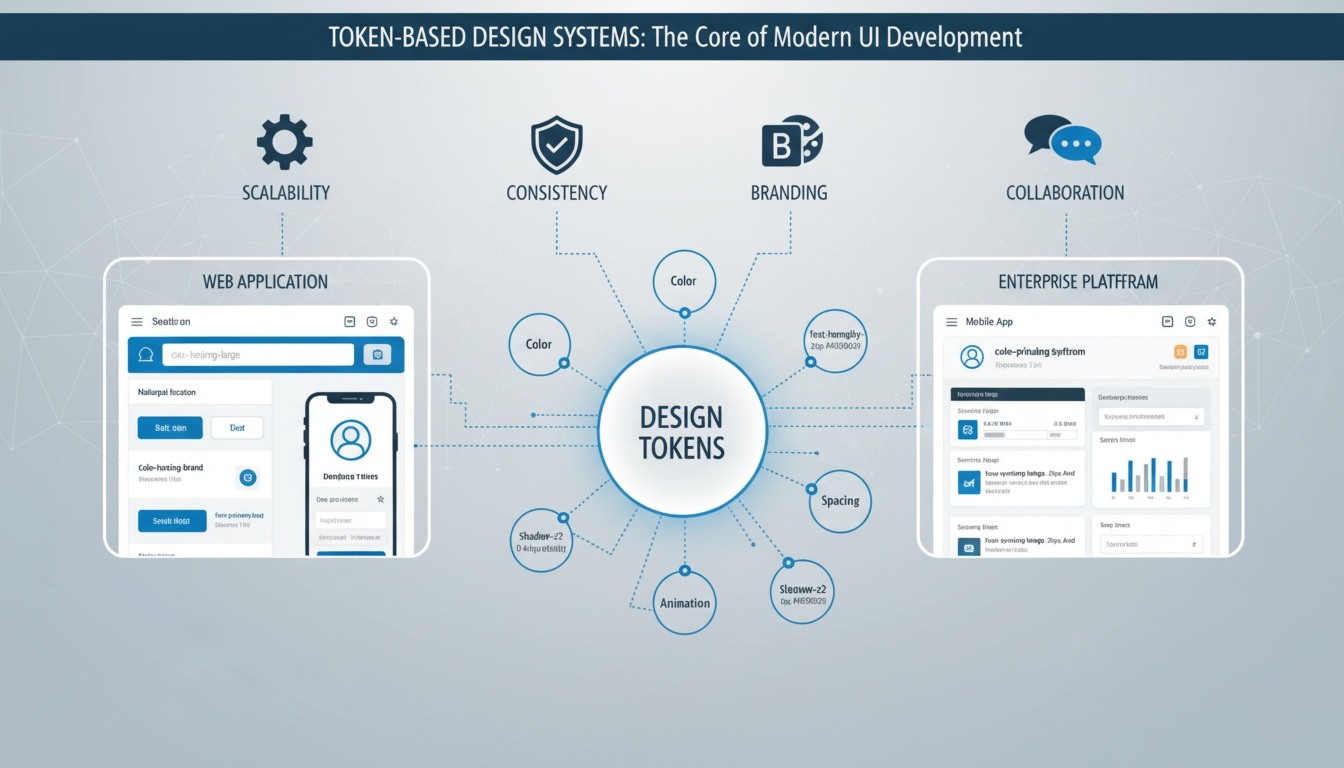
A token-based design system creates a structured architecture where design values such as colors, typography, spacing, border radius, shadows, and animations are stored as reusable variables called design tokens. Instead of hardcoding values repeatedly, developers and designers use centralized tokens that can be updated globally.
For example, instead of using #0057FF multiple times in CSS or Flutter code, teams define a token like:
--primary-color: #0057FF;
This token can then be reused across buttons, cards, navigation menus, forms, and mobile interfaces. If branding changes in the future, updating one token automatically updates the entire system.
What Are Design Tokens?
Design tokens are the smallest reusable units within a design system. They represent visual decisions in a structured format that both designers and developers can understand.
Common token categories include:
- Color Tokens
- Typography Tokens
- Spacing Tokens
- Shadow Tokens
- Border Radius Tokens
- Animation Tokens
- Theme Tokens
For example:
{
"color-primary": "#0057FF",
"spacing-medium": "16px",
"font-heading": "Poppins"
}
These tokens can be exported into CSS, SCSS, JavaScript, Flutter, React Native, or Android/iOS frameworks.
Why Token-Based Design Systems Matter
1. Consistency Across Platforms
Modern businesses operate across websites, mobile apps, smart devices, and enterprise platforms. Maintaining identical branding and UI manually is inefficient.
Token-based systems ensure:
- Consistent colors
- Unified typography
- Standardized spacing
- Predictable component behavior
This creates a seamless user experience across all devices.
2. Faster Development Process
Developers no longer need to repeatedly define styles. Tokens provide predefined standards, allowing teams to build interfaces faster.
Benefits include:
- Reduced UI bugs
- Faster onboarding
- Easier maintenance
- Reusable components
- Reduced code duplication
This significantly improves development efficiency in large-scale projects.
3. Simplified Dark Mode and Theming
Dark mode support has become essential in modern applications. Token systems make theme switching extremely simple.
Example:
{
"theme-light-background": "#FFFFFF",
"theme-dark-background": "#121212"
}
Applications can dynamically switch themes without redesigning components individually.
Integration with Modern Technologies
Token-based design systems integrate seamlessly with modern frontend and mobile frameworks such as:
- React
- Vue.js
- Angular
- Flutter
- React Native
- SwiftUI
- Jetpack Compose
Large organizations use token automation pipelines where design changes from Figma automatically synchronize with development environments.
This creates a highly efficient workflow between:
- UI Designers
- Frontend Developers
- Mobile Developers
- Product Teams
Design Tokens in Figma
Figma has become one of the most popular tools for token-based workflows. Plugins now allow teams to:
- Export design tokens
- Synchronize themes
- Manage component libraries
- Maintain responsive layouts
This reduces communication gaps between design and development teams.
Atomic Design and Tokens
Many enterprises combine token systems with Atomic Design Methodology.
Atomic Design consists of:
- Atoms
- Molecules
- Organisms
- Templates
- Pages
Tokens become the foundational layer powering these reusable components.
For example:
- Buttons use spacing tokens
- Cards use shadow tokens
- Typography components use font tokens
This creates a highly scalable architecture.
Enterprise Benefits
Large enterprises benefit significantly from token-based systems because they often manage:
- Multiple brands
- Regional themes
- Large developer teams
- White-label products
With tokens, companies can rapidly customize interfaces without rewriting UI logic.
Enterprise advantages include:
- Reduced maintenance costs
- Faster product releases
- Improved branding consistency
- Easier scalability
- Better accessibility compliance
Accessibility and Inclusive Design
Accessibility is another major advantage. Tokens help enforce:
- Contrast ratios
- Font scaling
- Readability standards
- Responsive layouts
This ensures applications remain user-friendly for all audiences.
Future of Token-Based Design Systems
The future of UI engineering is heavily centered around automation and scalable design architecture. AI-powered design tools are already beginning to generate token systems automatically based on branding guidelines.
Future trends include:
- AI-generated themes
- Automated accessibility checks
- Dynamic personalization
- Multi-brand token architecture
- Real-time synchronization between design and code
As applications become increasingly complex, token-based systems will become a core requirement rather than an optional enhancement.
Conclusion
Token-based design systems are redefining how modern digital products are built. They improve scalability, maintain consistency, simplify maintenance, and accelerate development across web and mobile platforms.
Organizations adopting design tokens gain long-term advantages in UI quality, developer productivity, branding consistency, and user experience. Whether for startups or enterprise applications, token-driven architecture has become one of the most powerful strategies in modern frontend and mobile development.