Introduction: A New Era of Game Creation
As games grow larger and more complex, traditional asset creation often struggles to keep up with demand. Building massive environments, realistic effects, and dynamic content manually requires enormous time and resources. This is where procedural tools like Houdini come in, revolutionizing workflows by enabling scalable, automated, and creative solutions for game development.
1. What Are Procedural Tools in Game Development?
Procedural tools are software systems that use algorithms and rules to generate content automatically rather than relying on manual design. In the context of games, this can include:
- Terrain and environment generation (mountains, cities, landscapes).
- Dynamic visual effects like fire, smoke, and destruction.
- Game assets such as modular buildings, vegetation, and props.
Instead of hand-crafting every detail, developers set parameters, and the system generates variations, creating endless possibilities.
2. Why Houdini Stands Out
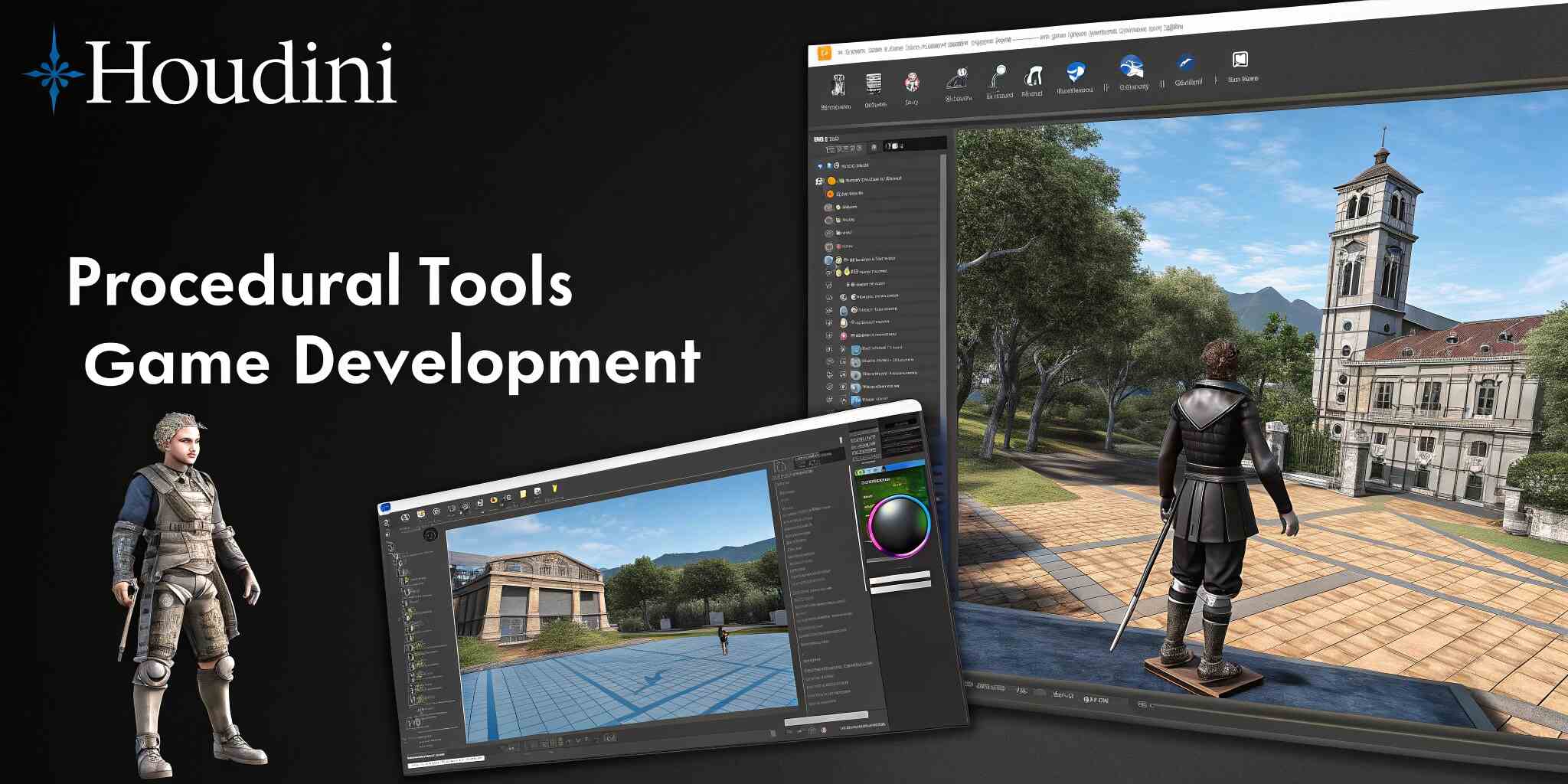
Among procedural tools, Houdini by SideFX has become an industry leader. Known for its node-based workflow, Houdini gives developers unprecedented control and flexibility in creating procedural assets and simulations.
Key advantages include:
- Scalability: Generate thousands of assets with consistent quality.
- Customization: Adjust rules and parameters for endless variations.
- Integration: Houdini Engine integrates seamlessly with engines like Unreal and Unity.
- Advanced VFX: Its simulation tools are unmatched for fire, smoke, fluids, and destruction effects.
This combination makes Houdini invaluable for AAA studios and indie developers alike.
3. Procedural Content Creation in Games
Procedural workflows powered by Houdini impact multiple areas of development:
- Environment Design: Vast landscapes, cities, and natural worlds can be built in less time with procedural terrain tools.
- Props and Assets: Instead of modeling hundreds of unique trees, Houdini can generate variations procedurally, saving time.
- Special Effects: Explosions, weather, and destruction sequences gain realism through procedural simulations.
- Level Design: Procedural generation can create dynamic layouts, caves, and dungeons while maintaining design rules.
This approach allows studios to focus on creativity and polish, rather than repetitive manual labor.
4. Benefits of Procedural Workflows
The role of procedural tools like Houdini extends far beyond efficiency. Benefits include:
- Time Savings: Automated workflows drastically reduce production time.
- Consistency: Assets remain visually consistent across large worlds.
- Replayability: Procedural generation creates unique player experiences each time.
- Creative Freedom: Artists focus on high-level design while the system handles repetitive tasks.
By reducing bottlenecks, procedural tools empower smaller teams to achieve AAA-level scope.
5. Challenges and Limitations
Despite their advantages, procedural tools also bring challenges:
- Learning Curve: Houdini is complex, requiring specialized training.
- Performance Costs: Procedural systems must be optimized for real-time game play.
- Artistic Control: Pure procedural generation can feel artificial if not guided by strong design direction.
Successful integration requires balancing automation with human creativity to ensure worlds feel believable and engaging.
6. Examples in Modern Games
Many top studios already rely on Houdini for large-scale content creation. Examples include:
- Horizon Forbidden West: Vast natural environments built with procedural tools.
- Assassin’s Creed series: Cities and terrains generated with procedural workflows.
- Far Cry and Ghost Recon titles: Realistic foliage, terrain, and effects.
These examples demonstrate how procedural tools bridge the gap between massive scope and production efficiency.
Conclusion: The Future of Procedural Tools
As games continue to expand in scale and detail, procedural tools like Houdini will become even more essential. By automating repetitive tasks, enhancing creativity, and enabling dynamic worlds, procedural workflows are reshaping how developers build the next generation of immersive gaming experiences.
Far from replacing human creativity, Houdini amplifies it, allowing artists and designers to focus on vision while letting algorithms handle complexity.