Space exploration has always represented the peak of human curiosity and innovation. But behind every successful launch, orbit, and discovery lies an invisible force powering it all—Information Technology (IT). From mission control systems to satellite communication, IT plays a central role in enabling precise calculations, secure communication, and efficient data management across the space and satellite industry.
As the world continues to expand its presence in outer space, IT stands as the digital backbone connecting humans to the cosmos.
1. The Intersection of IT and Space Technology
Space missions involve collecting, transmitting, and analyzing massive volumes of data. Whether it’s monitoring Earth’s atmosphere, transmitting GPS signals, or analyzing Martian soil samples, IT ensures that these processes happen in real time and without error.
Modern spacecraft, satellites, and ground control systems rely on software automation, cloud computing, AI, and big data analytics—all pillars of information technology—to manage mission-critical operations and ensure success.
2. IT in Satellite Communication and Networking
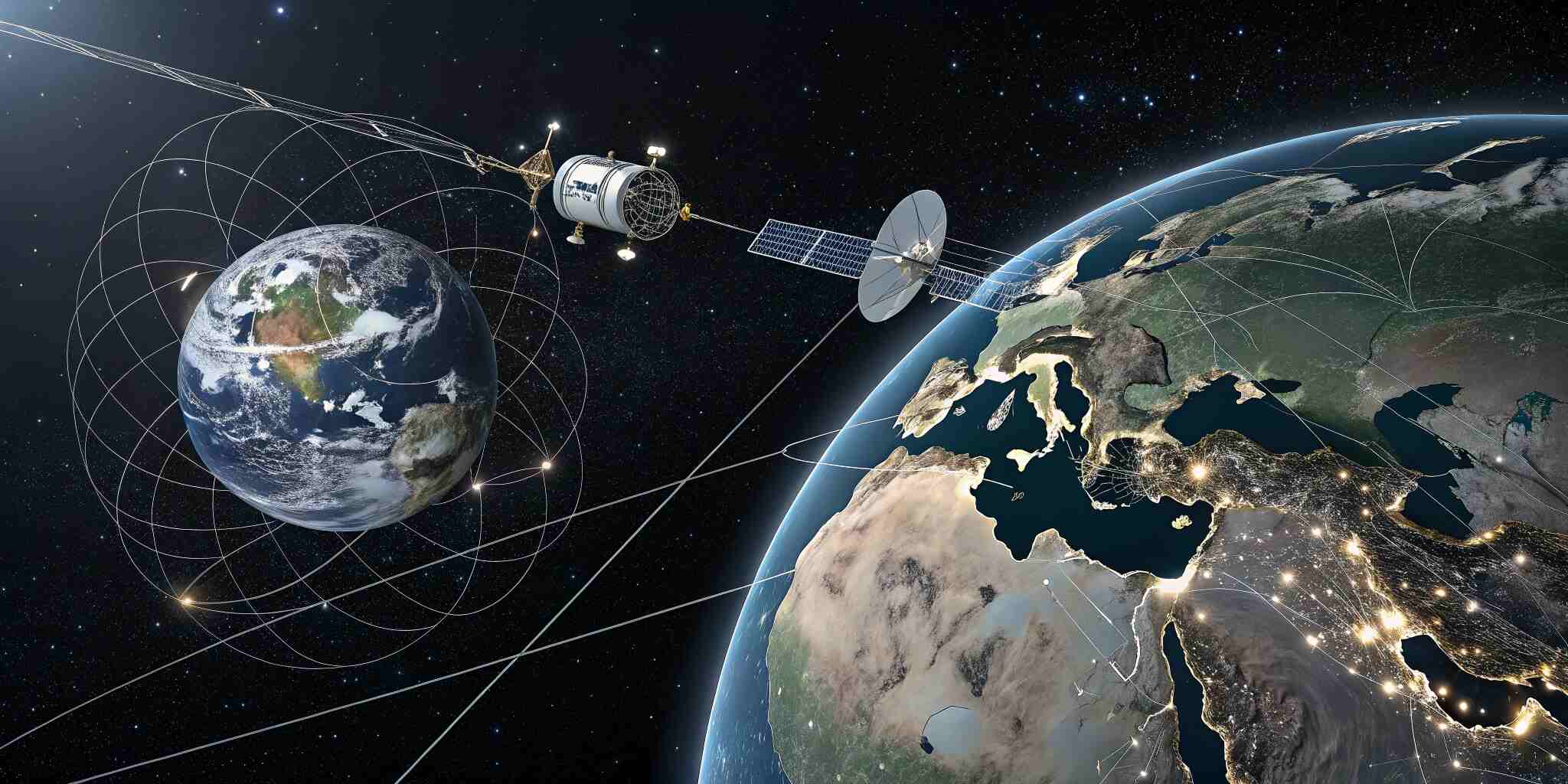
One of IT’s most important contributions to space technology lies in communication systems. Satellites orbiting the Earth transmit vast amounts of data daily, including TV signals, GPS coordinates, and weather updates.
Through IT-driven systems such as network optimization, data compression, and error correction algorithms, satellites can efficiently transmit signals across continents. High-performance computing ensures uninterrupted global connectivity—even in remote or disaster-stricken areas.
With the rise of Low Earth Orbit (LEO) constellations like Starlink, IT innovations have made it possible to deliver high-speed internet from space, bridging the digital divide and transforming how the world connects.
3. Data Processing and Cloud Computing in Space Missions
Space missions generate terabytes of data daily, from satellite imagery to sensor readings. Managing this enormous data flow requires advanced IT infrastructure and cloud computing solutions.
Cloud-based systems allow scientists to store, analyze, and share mission data seamlessly across the globe. NASA, ESA, and private companies like SpaceX and Blue Origin leverage cloud services for real-time analytics, simulation modeling, and predictive maintenance.
For example, Earth observation satellites use IT algorithms to analyze climate patterns, deforestation, and natural disasters—helping scientists respond faster and more effectively.
4. Artificial Intelligence and Machine Learning in Space
Artificial Intelligence (AI) and Machine Learning (ML) have become indispensable in the space industry. AI assists in mission planning, anomaly detection, and autonomous navigation, reducing human intervention and minimizing errors.
For instance:
- AI-driven rovers like NASA’s Perseverance can analyze terrain and make independent navigation decisions on Mars.
- Predictive algorithms monitor spacecraft systems for potential failures before they occur.
- Image recognition AI processes satellite photos for applications in agriculture, defense, and environmental monitoring.
Machine learning also enhances space debris tracking and satellite collision avoidance, ensuring safer orbital operations.
5. IT in Mission Control and Spacecraft Operations
Every space mission relies on a complex IT ecosystem for telemetry, tracking, and control (TT&C). Ground control stations use specialized IT systems to communicate with spacecraft, analyze telemetry data, and make split-second decisions during launch or re-entry.
These systems are supported by redundant networks, secure databases, and high-speed communication links, ensuring no signal is lost even during high-risk maneuvers.
Cybersecurity also plays a crucial role—protecting satellite networks from hacking attempts, data theft, and signal interference. As space becomes more commercialized, cyber-resilience has become a top IT priority.
6. The Role of IT in Satellite Imaging and Remote Sensing
Satellites capture high-resolution images used for mapping, disaster management, and climate observation. IT enhances this process through image processing algorithms, AI-based classification systems, and geospatial analytics tools.
Remote sensing technology, powered by IT, enables governments and organizations to monitor:
- Urban development and deforestation
- Agricultural yield and soil health
- Ocean currents, ice caps, and pollution levels
These insights support sustainable development and help mitigate global challenges such as climate change.
7. Emerging IT Trends in Space and Satellite Technology
The integration of IT with space technology continues to evolve rapidly. Some key trends shaping the future include:
- Edge computing in space: Performing data analysis directly on satellites to reduce transmission delays.
- Quantum communication: Offering unhackable data transmission for secure space communication.
- Blockchain for satellite data sharing: Ensuring transparency and traceability of mission data.
- Digital twins: Creating virtual replicas of spacecraft for predictive maintenance and testing.
These advancements will make space exploration faster, safer, and more cost-efficient than ever.
8. Conclusion
The role of IT in space and satellite technology extends far beyond software—it represents the digital lifeline of exploration. From powering communication systems to managing planetary data, IT enables humanity to explore, analyze, and connect with the universe.
As computing power, AI, and cloud infrastructure continue to advance, the partnership between IT and space technology will only grow stronger—pushing the boundaries of what we can achieve beyond Earth’s atmosphere.
The future of space is not just among the stars—it’s written in code.