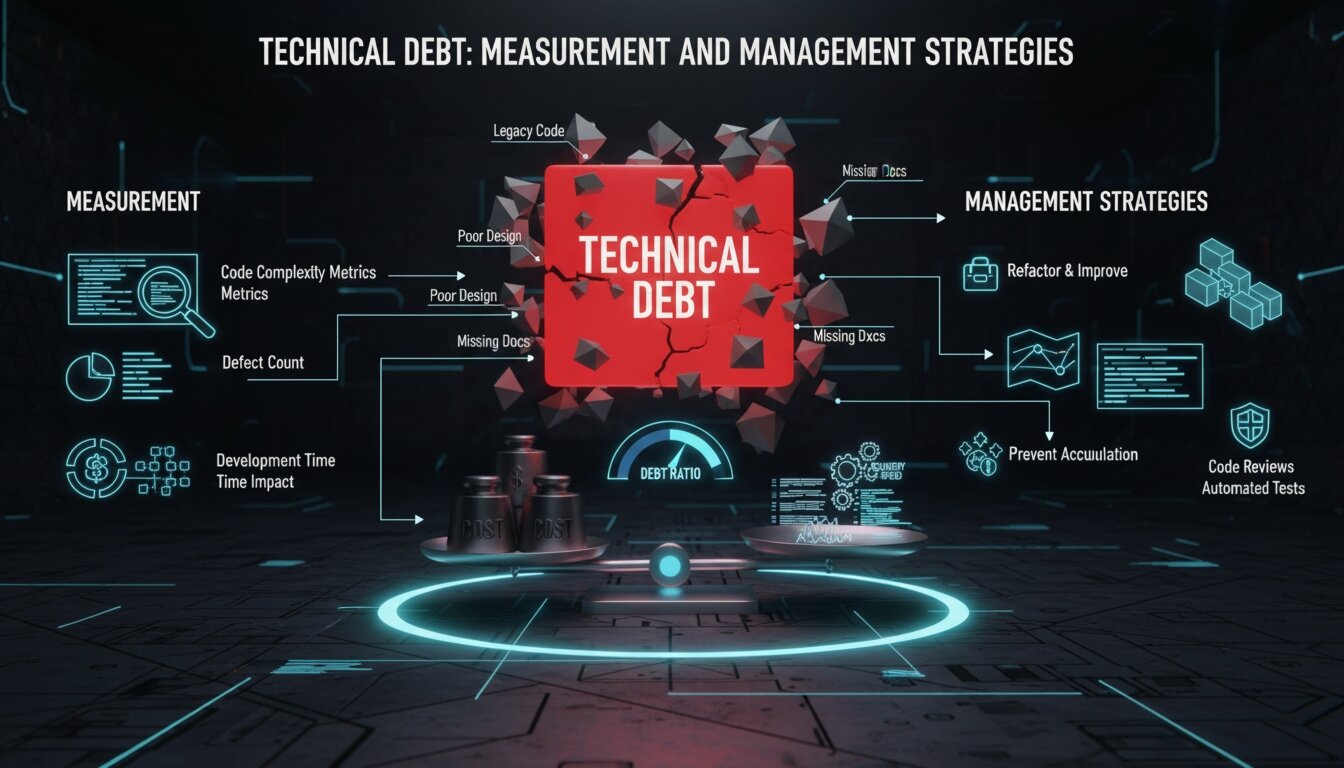
In modern software development, speed is often prioritized over perfection. Teams rush to deliver features, meet deadlines, and stay competitive. In doing so, they frequently take shortcuts—quick fixes, temporary solutions, or incomplete designs.
These shortcuts accumulate into what is known as technical debt.
The term was popularized by Ward Cunningham, who described it as the cost of choosing an easy solution now instead of a better approach that would take longer.
Technical debt is not inherently bad. In fact, it can be a strategic tool. The problem arises when it is unmeasured, unmanaged, and ignored.
Understanding Technical Debt
Technical debt represents the gap between the current implementation and an ideal solution.
It can take many forms:
- Poorly written or duplicated code
- Outdated dependencies
- Lack of automated tests
- Inconsistent architecture
- Temporary fixes that become permanent
Over time, this debt accumulates interest in the form of:
- Slower development cycles
- Increased bug rates
- Reduced system performance
- Developer frustration
If left unmanaged, technical debt can cripple a system’s ability to scale.
Why Measuring Technical Debt Matters
You cannot manage what you cannot measure.
Without visibility, technical debt becomes an invisible burden that grows silently. Measuring it allows teams to:
- Prioritize refactoring efforts
- Justify engineering time to stakeholders
- Balance feature development with maintenance
- Track improvement over time
Measurement transforms technical debt from a vague concept into a quantifiable engineering concern.
Key Metrics for Measuring Technical Debt
1. Code Complexity
High complexity indicates code that is difficult to understand, test, and maintain.
Metrics include:
- Cyclomatic complexity
- Cognitive complexity
- Function length
Complex code increases the likelihood of bugs and slows down future development.
2. Code Duplication
Duplicate code creates maintenance overhead.
When the same logic exists in multiple places, any change must be repeated—introducing risk and inconsistency.
Reducing duplication improves maintainability and consistency.
3. Code Coverage
Low test coverage indicates higher risk.
Without sufficient automated tests:
- Refactoring becomes dangerous
- Bugs are harder to detect
- Deployment confidence decreases
Test coverage is a key indicator of system resilience.
4. Dependency Health
Outdated or unsupported dependencies introduce security vulnerabilities and compatibility issues.
Tracking:
- Version age
- Known vulnerabilities
- Upgrade frequency
helps assess long-term system stability.
5. Lead Time and Cycle Time
Slower development cycles often indicate underlying technical debt.
If simple changes take too long, the system may be difficult to modify due to poor design or accumulated complexity.
6. Defect Density
Frequent bugs in certain modules suggest problematic areas in the codebase.
Tracking defect patterns helps identify high-debt components.
Strategies to Manage Technical Debt
1. Make Debt Visible
Technical debt should be tracked like any other work item.
Use:
- Backlogs
- Tickets
- Documentation
This ensures debt is acknowledged and prioritized.
2. Prioritize Based on Impact
Not all technical debt is equal.
Focus on debt that:
- Affects critical business functionality
- Slows down development significantly
- Introduces security risks
High-impact debt should be addressed first.
3. Allocate Dedicated Time
Many teams adopt the “20% rule”—allocating a portion of each sprint to refactoring and cleanup.
This prevents debt from accumulating uncontrollably.
4. Refactor Continuously
Refactoring should not be a one-time activity.
Instead, integrate it into daily development:
- Improve code during feature development
- Simplify logic incrementally
- Eliminate duplication
Continuous improvement prevents large-scale rewrites later.
5. Improve Code Review Practices
Strong code reviews prevent new debt from entering the system.
Review focus areas:
- Code readability
- Maintainability
- Test coverage
- Architectural consistency
Prevention is more effective than correction.
6. Automate Quality Checks
Use automated tools to enforce code quality standards.
These tools can detect:
- Code smells
- Security vulnerabilities
- Complexity issues
Automation ensures consistency and reduces manual effort.
7. Align Business and Engineering Goals
One of the biggest challenges is convincing stakeholders to invest in reducing technical debt.
Translate technical issues into business impact:
- Faster feature delivery
- Reduced downtime
- Improved customer experience
When stakeholders understand the value, prioritization becomes easier.
Balancing Speed and Quality
Technical debt often arises from the need to move quickly.
The goal is not to eliminate debt entirely—but to manage it strategically.
Smart teams:
- Take on intentional debt when necessary
- Track and revisit it regularly
- Avoid reckless shortcuts
This balance allows innovation without compromising long-term sustainability.
The Long-Term Impact
Unchecked technical debt leads to:
- System fragility
- Increased maintenance costs
- Slower innovation
- Team burnout
On the other hand, well-managed debt results in:
- Cleaner architecture
- Faster development cycles
- Higher code quality
- Better scalability
Final Thoughts
Technical debt is an inevitable part of software development—but it does not have to be a liability.
By measuring it, prioritizing it, and addressing it continuously, teams can turn technical debt into a manageable aspect of engineering strategy.
The key is discipline.
Build systems not just for today’s requirements, but for tomorrow’s growth.
Because in the long run, clean, maintainable code is not a luxury—it is a competitive advantage.