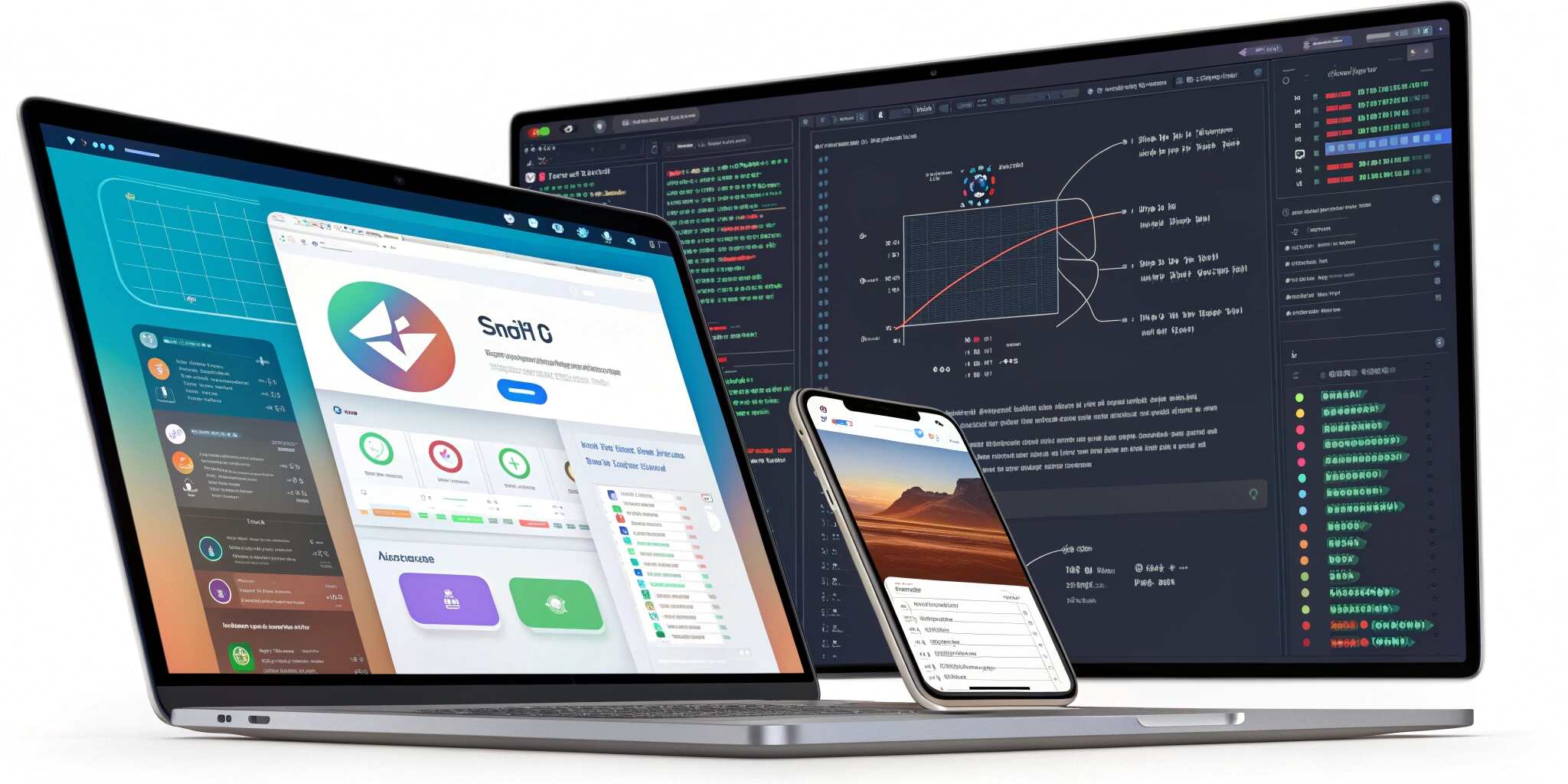
Since its introduction in 2014, Swift has grown into one of the most powerful and widely adopted programming languages for iOS, macOS, watchOS, and tvOS development. Alongside Swift, SwiftUI, Apple’s declarative UI framework, has been steadily evolving since 2019. With the release of Swift 6 and the maturity of SwiftUI, Apple’s development ecosystem is undergoing one of its most important shifts yet.
This article explores how Swift 6 strengthens the language foundation and how SwiftUI, now stable and production-ready, changes the way developers create apps across Apple’s platforms.
Swift 6: A New Era of Safety and Performance
Swift 6 is more than just an incremental update—it represents a paradigm shift in language design, performance, and concurrency. Apple has positioned Swift as a modern language that continues to balance developer productivity with safety.
Key highlights of Swift 6 include:
- Enhanced Concurrency Model
- Swift 6 refines its structured concurrency, making asynchronous code safer and easier to write.
- Improved task management allows developers to handle parallel processes without introducing complex bugs or data races.
- Improved Type System
- The language continues to strengthen its type safety, reducing runtime errors.
- More expressive generics allow developers to write flexible, reusable code with fewer constraints.
- Performance Optimization
- Swift 6 compiles faster and produces more efficient binaries.
- Memory usage and runtime performance have been optimized, making apps lighter and more responsive.
- Cross-Platform Flexibility
- Swift continues to grow beyond Apple platforms, with server-side adoption (via Swift on Linux) becoming stronger.
- Developers can now write backend services, mobile apps, and even cross-platform UIs with a single language.
In essence, Swift 6 solidifies the language’s position as a powerful, future-proof tool for both Apple developers and the broader programming community.
The Maturity of SwiftUI
When SwiftUI was first introduced, it was met with excitement but also skepticism. Early adopters found it promising but lacking in depth for complex production apps. Fast forward to today, and SwiftUI has matured into a reliable, feature-rich UI framework.
Some of the major advancements in SwiftUI include:
- Production Readiness
- With broader API coverage and bug fixes, SwiftUI is no longer seen as experimental—it is production-ready.
- Complex navigation flows, advanced animations, and data handling are now easier to implement.
- Cross-Platform Support
- SwiftUI allows developers to build UIs for iOS, iPadOS, macOS, watchOS, and tvOS with a single codebase.
- This reduces time-to-market and improves code maintainability.
- Declarative Syntax Advantages
- SwiftUI’s declarative nature makes UI development more intuitive. Developers focus on what the UI should do rather than how it should be implemented.
- This results in fewer lines of code and less boilerplate.
- Integration with UIKit and AppKit
- SwiftUI now coexists smoothly with UIKit and AppKit, making hybrid apps possible.
- This gives developers flexibility to adopt SwiftUI incrementally without abandoning existing codebases.
- Performance and Accessibility
- Apple has optimized SwiftUI for speed and accessibility.
- UI rendering is smoother, animations are fluid, and accessibility tools like VoiceOver integrate seamlessly.
SwiftUI is no longer just an experimental framework—it’s becoming the default choice for Apple developers.
Why These Changes Matter
The combination of Swift 6 and SwiftUI maturity creates a powerful ecosystem:
- For Developers: Productivity improves with cleaner syntax, safer concurrency, and a unified UI framework.
- For Businesses: Faster development cycles mean quicker app releases and lower costs.
- For Users: Apps are more performant, accessible, and consistent across Apple platforms.
The maturity of SwiftUI also ensures long-term viability, meaning teams can invest confidently in building apps without worrying about framework instability.
The Road Ahead
Apple’s long-term vision is clear: a fully integrated development environment where Swift is the universal language and SwiftUI the standard UI framework. While UIKit and AppKit will continue to exist, the future is undeniably Swift + SwiftUI.
For developers, learning Swift 6’s advanced features and mastering SwiftUI will be key to staying competitive in the Apple ecosystem.
Conclusion
The release of Swift 6 and the maturity of SwiftUI marks a turning point in Apple development. Swift 6 strengthens concurrency, performance, and safety, while SwiftUI provides a stable, declarative framework for building apps across devices. Together, they redefine how developers build the next generation of applications.
If you’re an iOS or macOS developer, the message is clear: the future is here, and it’s time to embrace it.