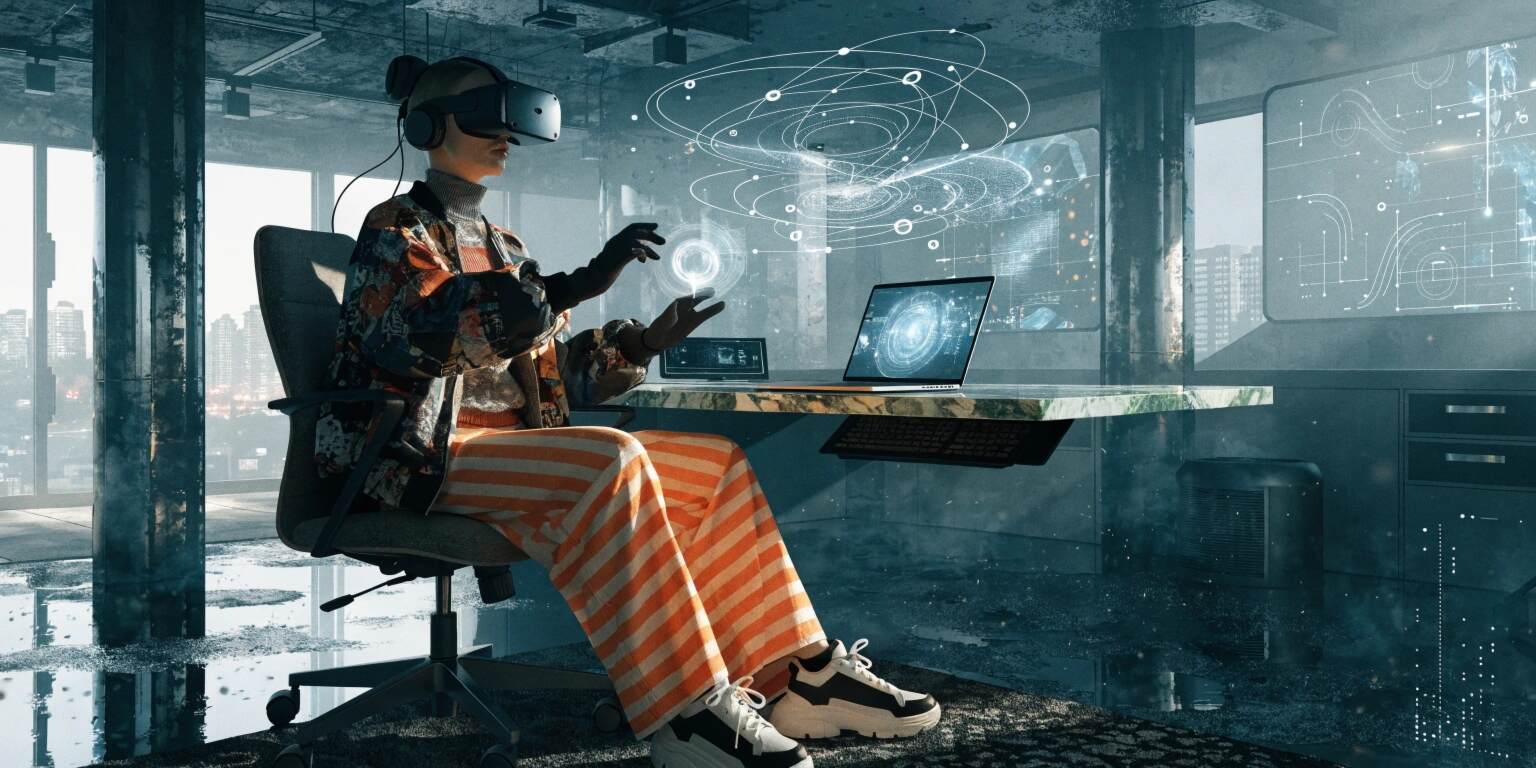
The gaming industry is entering a new era powered by spatial computing and mixed reality (MR). These technologies are redefining how players interact with digital content by blending the physical and virtual worlds. Unlike traditional gaming, which confines players to screens, spatial computing enables immersive, real-world experiences that feel natural and interactive.
What is Spatial Computing?
Spatial computing refers to the ability of devices to understand and interact with the physical environment in three dimensions. It uses technologies such as sensors, cameras, and artificial intelligence to map surroundings and place digital objects within real-world spaces.
This concept is the foundation for mixed reality, where virtual objects are not just overlaid but anchored in the physical environment, responding to movement, depth, and context.
Understanding Mixed Reality in Gaming
Mixed reality combines elements of both augmented reality (AR) and virtual reality (VR). While AR overlays digital elements onto the real world, and VR creates entirely virtual environments, MR bridges the gap by enabling interaction between physical and digital objects.
Devices like Microsoft HoloLens 2 and Apple Vision Pro are leading the way in delivering advanced mixed reality experiences, allowing players to engage with games in their own surroundings.
Key Elements of MR Game Design
1. Real-World Interaction
One of the most exciting aspects of MR gaming is the ability to use real-world spaces as part of gameplay. Players can turn their living rooms into battle arenas or puzzle environments.
Games must be designed to:
- Detect surfaces and objects
- Adapt to different room sizes
- Ensure safe and intuitive interactions
2. Spatial Mapping and Anchoring
Spatial mapping allows the system to understand the environment and place virtual objects accurately. Anchoring ensures that these objects remain stable in the real world.
For example:
- A virtual character stays on a table
- A portal appears fixed on a wall
This consistency enhances immersion and realism.
3. Gesture and Voice Controls
Traditional controllers are replaced with natural inputs like hand gestures, eye tracking, and voice commands. This creates a more intuitive and immersive experience.
Game designers must ensure:
- Accurate gesture recognition
- Minimal input latency
- Clear user feedback
4. Immersive Audio Design
Spatial audio plays a crucial role in MR experiences. Sounds must appear to come from specific directions and distances to enhance realism.
For instance:
- Footsteps behind the player
- Environmental sounds tied to objects
5. Context-Aware Gameplay
MR games can adapt based on the player’s environment. For example:
- Changing gameplay based on lighting conditions
- Adjusting difficulty depending on space availability
This dynamic interaction makes each gaming session unique.
Tools and Technologies
Developers use powerful engines and frameworks to build MR games:
- Unity – Popular for AR/VR development with strong cross-platform support
- Unreal Engine – Known for high-quality graphics and realistic environments
- ARKit and ARCore – Enable spatial tracking on mobile devices
- OpenXR – Standard for cross-platform XR development
These tools simplify complex tasks like environment mapping, physics simulation, and rendering.
Challenges in MR Game Development
Despite its potential, MR game design comes with challenges:
1. Hardware Limitations
Not all users have access to advanced MR devices, limiting reach and adoption.
2. Performance Optimization
Rendering 3D objects in real-time while tracking the environment requires high processing power.
3. User Safety
Since players interact with real-world spaces, ensuring safety is critical. Games must avoid encouraging risky movements.
4. Design Complexity
Creating experiences that work across different environments requires flexible and adaptive design strategies.
Best Practices for MR Game Design
- Design for real-world variability
- Keep user interfaces minimal and intuitive
- Optimize for performance and battery life
- Test in multiple physical environments
- Prioritize user comfort and safety
Future of Spatial Computing in Gaming
The future of gaming lies in immersive, interactive experiences. As hardware becomes more accessible and powerful, spatial computing will become mainstream.
We can expect:
- Fully interactive holographic games
- Multiplayer MR experiences in shared spaces
- Integration with AI for smarter gameplay
- Expansion into education, fitness, and enterprise gaming
The line between reality and virtual worlds will continue to blur, offering players unprecedented levels of engagement.
Conclusion
Spatial computing and mixed reality are revolutionizing game design by creating immersive, real-world experiences. By leveraging advanced technologies and thoughtful design principles, developers can build innovative games that go beyond screens and redefine player interaction.
As the technology evolves, those who embrace MR early will be at the forefront of the next gaming revolution.