Serverless computing has rapidly evolved from a niche architectural approach to a mainstream cloud technology powering modern applications across industries. As organizations continue digital transformation in 2025, serverless models are gaining widespread adoption because they eliminate the need to maintain physical or virtual servers, allowing developers to deploy functions that automatically scale based on demand. This architecture enables higher development velocity, reduced operational overhead, and more efficient resource utilization—making it ideal for dynamic workloads, microservices, and event-driven applications.
At its core, serverless computing allows developers to focus solely on writing code while cloud providers handle provisioning, scaling, and maintenance. Functions execute only when triggered, and billing follows a pay-as-you-execute model, making it much more cost-effective compared to traditional provisioning where unused capacity often leads to wasted spend. Platforms including AWS Lambda, Google Cloud Functions, Azure Functions, and Cloudflare Workers continue to expand support, security frameworks, and developer tooling as serverless becomes a critical pillar for cloud development.
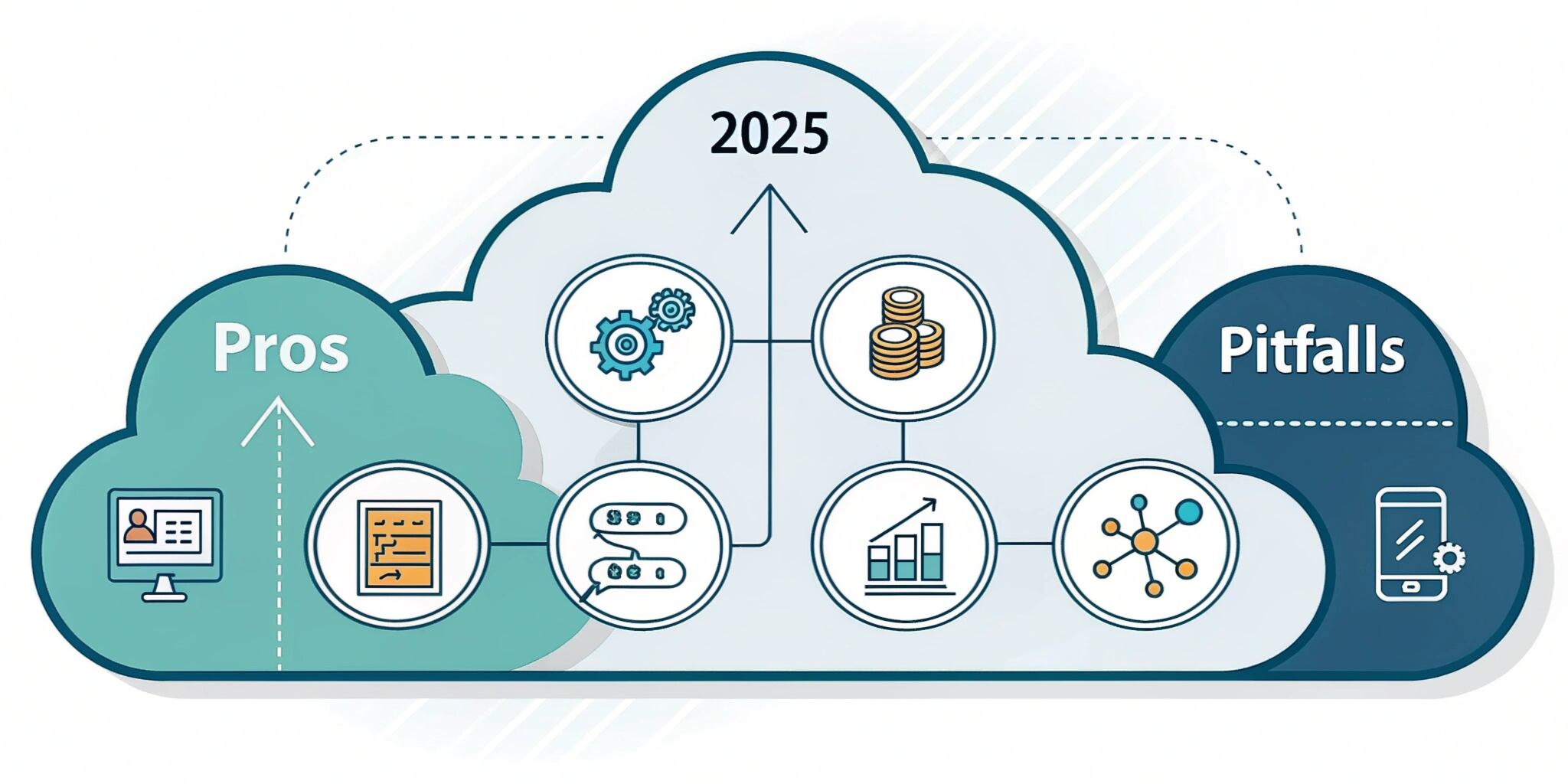
The Benefits of Serverless Computing in 2025
One of the biggest advantages of serverless architecture is automatic scaling. Applications can instantly respond to demand spikes without manual intervention or downtime risks. For example, an e-commerce app experiencing a flash sale can scale automatically to support thousands of transactions per minute and then scale back down, avoiding overspending and performance bottlenecks.
Another major benefit is reduced operational responsibility. Development teams no longer need to manage patching, load balancing, or server performance monitoring. They can focus fully on innovation and feature development, reducing time-to-market significantly. This shift is particularly valuable for startups and agile enterprises adopting rapid product iteration cycles.
Serverless also improves cost efficiency. Organizations pay only for actual execution time rather than fixed capacity. For intermittent, unpredictable, or seasonal workloads, serverless drastically lowers cloud expenses. Additionally, the architecture supports global deployment with minimal complexity, improving the user experience through distributed edge execution.
Pitfalls and Challenges of Serverless in 2025
Despite its strengths, serverless computing presents several challenges. One of the most significant is the cold start problem, where functions take extra time to initialize after inactivity. This delay affects performance-critical applications such as gaming, financial trading, or real-time data analytics, where even milliseconds matter.
Vendor lock-in is another concern. Because serverless applications depend heavily on platform-specific services, migrating between cloud providers can be costly and technically difficult. Enterprises seeking multi-cloud flexibility often struggle with abstraction strategies and must carefully architect portable solutions from the outset.
Debugging, monitoring, and observability are also more complex in distributed serverless systems. Traditional logging and tracing tools may not integrate seamlessly, making troubleshooting highly fragmented. As applications grow into networked microservices, diagnosing failures becomes challenging without sophisticated observability layers.
Cost unpredictability can also emerge at scale. While serverless is cost-efficient for smaller workloads, heavy usage or poorly optimized functions can result in unexpectedly high bills. Teams must track execution frequency, memory allocation, and architecture efficiency to avoid runaway cloud expenses.
Compliance and security present additional hurdles. Because serverless triggers run across shared multi-tenant cloud environments, organizations handling sensitive financial, medical, or identity data require advanced governance strategies and strict access policies.
Future Outlook for Serverless Computing
In 2025 and beyond, the serverless ecosystem will continue evolving toward hybrid and multi-runtime support, reduced cold start latency, improved workload observability, and deeper integration with AI-driven systems. Edge computing and serverless will increasingly merge to support ultra-low-latency experiences in IoT, autonomous vehicles, robotics, and smart city infrastructures.
Many enterprises will adopt serverless-first strategies, using serverless for event processing, real-time analytics, automation workflows, chatbots, streaming pipelines, and API backends. As cost and performance optimizations expand, serverless will play a foundational role in cloud modernization.
Conclusion
Serverless computing offers powerful advantages including scalability, cost efficiency, simplicity, and reduced infrastructure responsibility. However, enterprises must also consider challenges like cold starts, monitoring complexity, vendor dependency, and unpredictable costs. With careful architecture and smart governance, serverless can dramatically accelerate innovation. In 2025, serverless computing stands as one of the most influential trends shaping the future of cloud-native development.