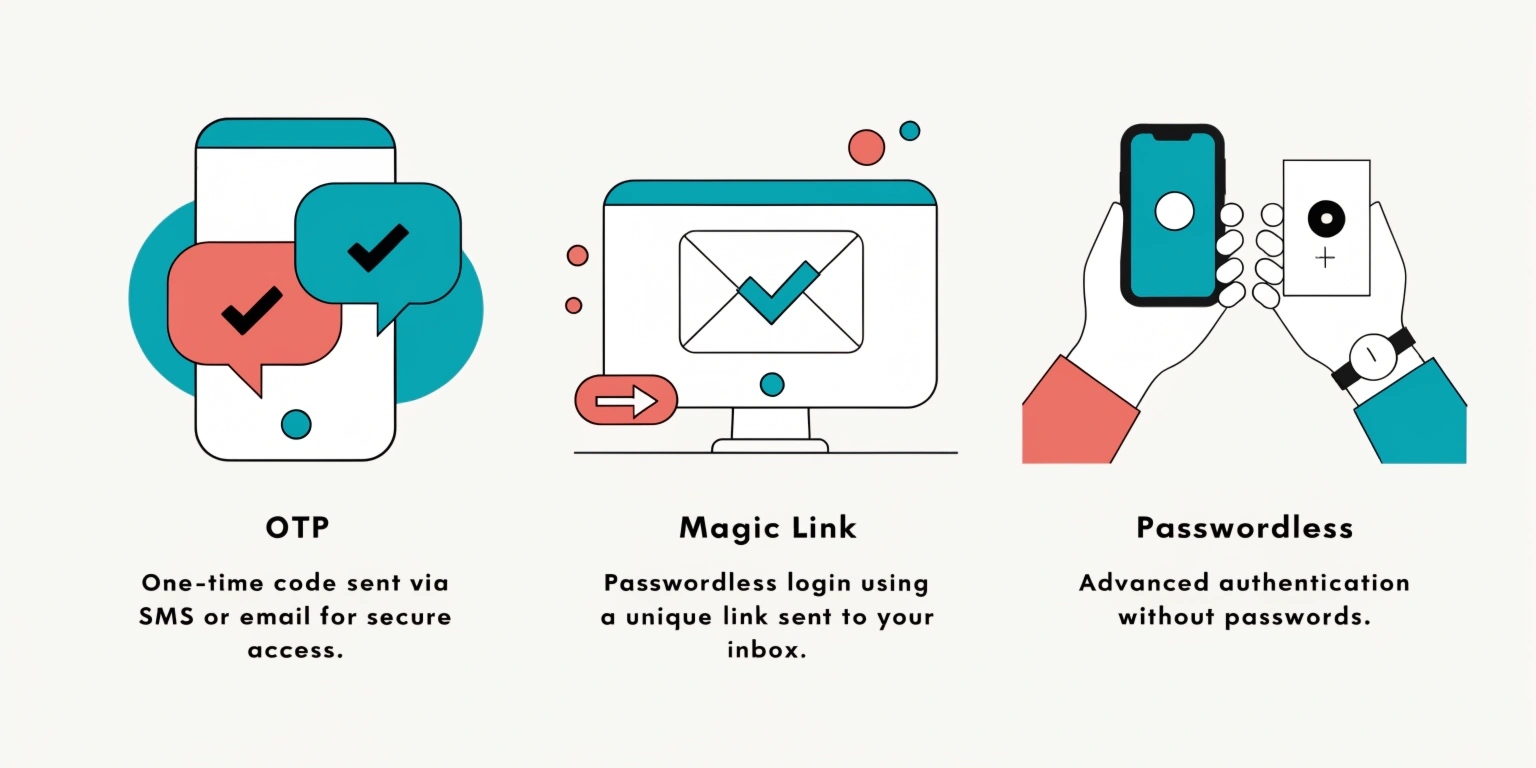
Explore how passwordless login, OTP verification, and magic links are transforming secure authentication by improving user experience and strengthening cybersecurity protection.
Authentication is one of the most critical components of modern digital systems. Every application, website, platform, and online service must verify user identity securely before granting access to sensitive information and features.
For years, passwords served as the primary authentication method. However, traditional password-based systems are increasingly becoming vulnerable to phishing attacks, credential leaks, brute-force attacks, and poor password management practices.
As cybersecurity threats continue to evolve, organizations are shifting toward more secure and user-friendly authentication methods such as passwordless login, OTP verification, and magic links.
These modern authentication flows not only improve security but also enhance user experience by reducing friction during login processes.
Why Traditional Password Systems Are Failing
Passwords have several long-standing weaknesses.
Common problems include:
- Weak password creation
- Password reuse across platforms
- Credential stuffing attacks
- Phishing scams
- Forgotten passwords
- Poor password storage practices
Users often struggle to remember multiple complex passwords, leading to insecure habits like storing passwords in browsers or reusing the same credentials everywhere.
For businesses, password-related issues create:
- Increased support costs
- Account recovery requests
- Higher security risks
- Reduced user satisfaction
Modern cybersecurity strategies are now focused on minimizing password dependency altogether.
What Are Secure Authentication Flows?
Secure authentication flows are systems designed to verify user identity safely while minimizing vulnerabilities and improving accessibility.
Modern authentication methods focus on:
- Strong identity verification
- Reduced attack surfaces
- Frictionless user experiences
- Adaptive security controls
- Multi-device compatibility
Popular authentication approaches include:
- Passwordless login
- OTP authentication
- Magic links
- Biometric authentication
- Multi-factor authentication (MFA)
These methods are rapidly replacing traditional username-password systems.
Passwordless Authentication
Passwordless authentication allows users to log in without entering traditional passwords.
Instead, users verify their identity through:
- Biometrics
- Device authentication
- One-time codes
- Security keys
- Email verification links
Passwordless systems reduce the risk of stolen credentials because there are no permanent passwords for attackers to compromise.
Benefits of Passwordless Login
Improved Security
Passwordless systems eliminate common password-based attacks such as:
- Credential theft
- Brute-force attacks
- Password spraying
- Phishing attempts
Better User Experience
Users no longer need to:
- Remember complex passwords
- Reset forgotten credentials
- Manage multiple login combinations
This simplifies onboarding and improves customer satisfaction.
Reduced Operational Costs
Businesses spend significant resources on password recovery and support tickets.
Passwordless systems reduce:
- Helpdesk workload
- Account recovery requests
- Security breach remediation costs
Companies like Microsoft and Google actively promote passwordless authentication strategies across enterprise ecosystems.
OTP Authentication (One-Time Passwords)
OTP authentication uses temporary verification codes sent to users through:
- SMS
- Authenticator apps
- Push notifications
Users enter the code to verify identity during login or sensitive actions.
OTPs are widely used because they:
- Add an extra security layer
- Expire quickly
- Reduce credential replay risks
Types of OTP Systems
SMS OTP
A temporary code is sent to the user’s mobile number.
Advantages:
- Easy implementation
- Familiar user experience
Limitations:
- SIM swapping risks
- SMS interception vulnerabilities
Email OTP
Verification codes are sent via email.
This approach works well for:
- Low-risk applications
- Account verification
- Secondary authentication
Authenticator Apps
Applications like authenticator apps generate time-based OTPs locally.
These systems offer stronger security because codes are not transmitted through telecom networks.
Magic Link Authentication
Magic links are secure login URLs sent directly to a user’s email address.
Instead of entering passwords, users simply click the link to authenticate automatically.
How Magic Links Work
- User enters email address
- Server generates a unique temporary token
- Email containing login link is sent
- User clicks the link
- System verifies the token and grants access
Magic links are increasingly popular in:
- SaaS applications
- Collaboration tools
- E-commerce platforms
- Enterprise portals
Advantages of Magic Links
Simpler User Experience
Users can log in instantly without remembering passwords.
Reduced Credential Theft
Since no password exists, attackers cannot steal reusable credentials.
Faster Onboarding
Magic links reduce friction during:
- User registration
- Login flows
- Device verification
However, email security becomes critically important because access depends entirely on email account protection.
Multi-Factor Authentication (MFA)
Many organizations combine passwordless methods with MFA for stronger security.
MFA requires users to provide multiple verification factors such as:
- Something they know
- Something they have
- Something they are
Examples include:
- OTP plus biometric verification
- Password plus hardware token
- Magic link plus device confirmation
MFA significantly reduces unauthorized access risks.
Security Best Practices for Authentication Flows
Use Short Expiration Times
OTP codes and magic links should expire quickly to reduce misuse risks.
Implement Rate Limiting
Rate limiting helps prevent:
- Brute-force attacks
- Automated login abuse
- Credential stuffing attempts
Monitor Suspicious Activity
Authentication systems should detect:
- Unusual login locations
- Device anomalies
- Repeated failed attempts
Secure Token Storage
Authentication tokens must be encrypted and stored securely.
Enforce HTTPS Everywhere
Secure communication channels protect authentication data during transmission.
Authentication in Mobile and Cloud Applications
Modern authentication systems must support:
- Mobile applications
- Cloud-native platforms
- Cross-device synchronization
- Remote work environments
Cloud-based identity providers such as Okta and Auth0 help organizations implement scalable authentication infrastructure securely.
These platforms simplify:
- Identity management
- Single sign-on (SSO)
- Access control
- User provisioning
Future of Authentication
Authentication systems are evolving rapidly toward:
- Biometric authentication
- Behavioral authentication
- Device-based identity verification
- Passkeys
- Decentralized identity systems
The industry is gradually moving toward a passwordless future where authentication becomes both invisible and highly secure.
Technologies such as passkeys and hardware-backed authentication are expected to become standard across devices and platforms.
Conclusion
Secure authentication flows are essential for protecting modern digital applications and user identities. As cyber threats continue to increase, traditional password systems are becoming insufficient for maintaining strong security.
Passwordless login, OTP authentication, and magic links provide more secure, scalable, and user-friendly alternatives that reduce friction while strengthening protection against cyberattacks.
Organizations that adopt modern authentication strategies can improve user trust, reduce security risks, and create smoother digital experiences. In the future, authentication will increasingly focus on intelligent, password-free identity verification systems designed for both convenience and security.
We build scalable web, mobile, and game products for clients worldwide — combining modern frameworks, cloud infrastructure, and best engineering practices.
.jpg)
.jpg)
.jpg)