Secure Authentication Flows: Passwordless Login, OTP, and Magic Links
As digital applications become increasingly integrated into everyday life, securing user identities has become a top priority for developers and businesses alike. Traditional password-based authentication has long been the standard, but it comes with well-known challenges such as weak passwords, password reuse, phishing attacks, and forgotten credentials. These issues not only compromise security but also create friction in the user experience.
Modern authentication methods such as passwordless login, One-Time Passwords (OTP), and magic links provide a more secure and convenient alternative. These approaches reduce dependency on static passwords while enhancing protection against cyber threats. Whether you're building a mobile application, SaaS platform, eCommerce website, or enterprise system, implementing secure authentication flows is essential for safeguarding user accounts and maintaining trust.
Why Traditional Passwords Are No Longer Enough
Passwords remain one of the weakest links in cybersecurity. Many users create simple passwords, reuse the same credentials across multiple platforms, or fall victim to phishing attacks.
Common risks include:
- Weak or predictable passwords
- Credential stuffing attacks
- Password database breaches
- Phishing scams
- Forgotten passwords causing poor user experience
- Increased support costs for password resets
Modern authentication systems aim to eliminate or minimize these risks by replacing passwords with more secure verification methods.
What Is Passwordless Authentication?
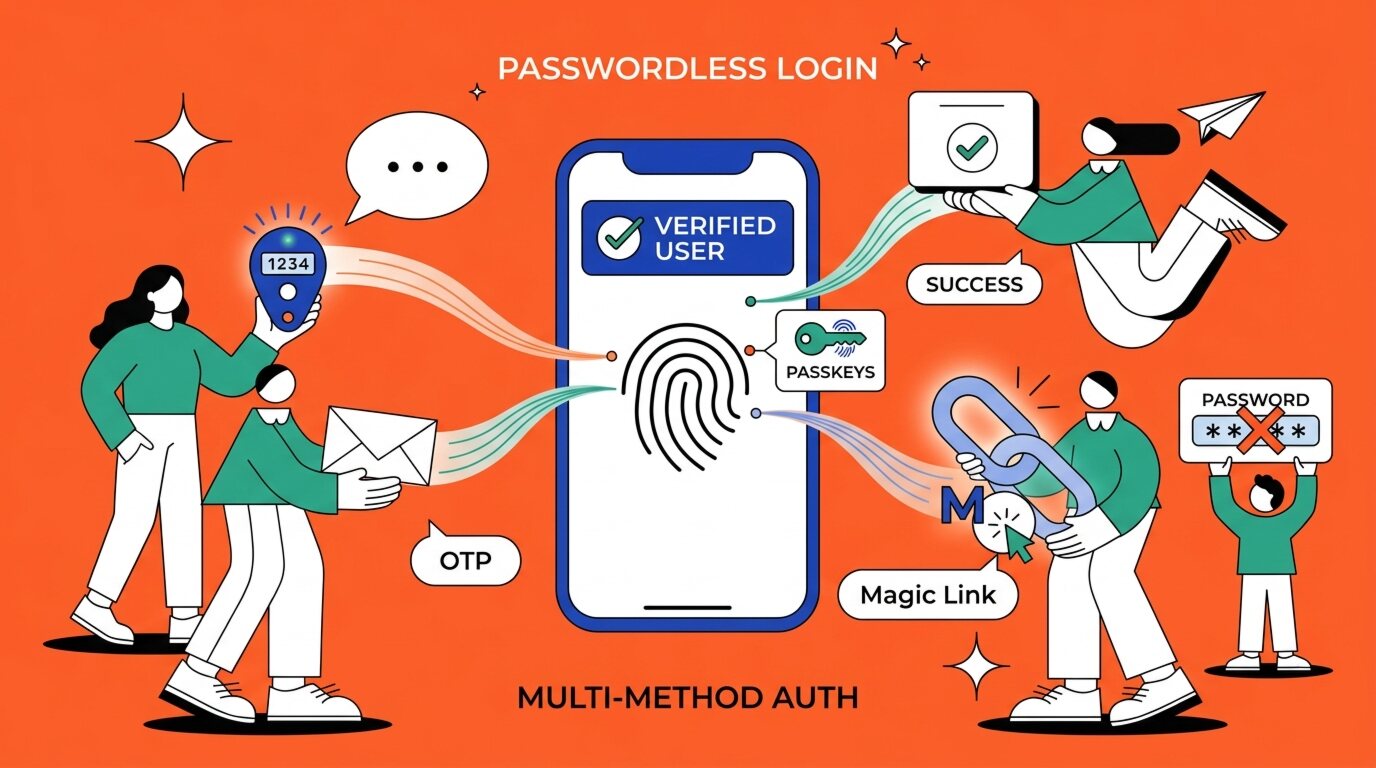
Passwordless authentication allows users to verify their identity without entering a traditional password. Instead, authentication relies on trusted devices, email verification, biometrics, security keys, or temporary authentication tokens.
Popular passwordless methods include:
- Email magic links
- SMS OTPs
- Authentication apps
- Push notifications
- Fingerprint authentication
- Face recognition
- Hardware security keys
- Passkeys
This approach improves both security and user convenience.
One-Time Password (OTP) Authentication
An OTP is a temporary verification code sent to a user's registered email address, phone number, or authentication application. The code is valid for a limited time and expires automatically after use.
OTP Delivery Methods
- SMS verification codes
- Email verification codes
- Voice call verification
- Authenticator applications
- Push notification approvals
Benefits of OTP Authentication
- Eliminates password reuse
- Reduces phishing success
- Supports two-factor authentication (2FA)
- Easy for users to understand
- Suitable for banking and financial services
Best Practices
- Set short expiration times (typically 30–120 seconds)
- Limit retry attempts
- Prevent OTP reuse
- Encrypt communication channels
- Monitor suspicious login attempts
Magic Link Authentication
Magic links provide a seamless login experience by sending users a secure, time-limited link via email. When the user clicks the link, they are authenticated automatically without entering a password.
How Magic Links Work
- User enters their email address.
- The server generates a secure authentication token.
- A unique login link is emailed to the user.
- The user clicks the link.
- The server validates the token.
- A secure session is created.
Advantages
- No passwords to remember
- Lower login friction
- Reduced support requests
- Better user experience
- Improved protection against password theft
Considerations
- Tokens should expire quickly.
- Links should only be usable once.
- Secure HTTPS connections are mandatory.
- Email accounts must also be well protected.
Passwordless Login with Biometrics
Modern smartphones and laptops include biometric authentication capabilities such as fingerprint scanners and facial recognition.
Examples include:
- Fingerprint login
- Face recognition
- Iris scanning
- Device PIN verification
Biometric authentication is convenient because credentials remain securely stored on the user's device rather than being transmitted over the internet.
Multi-Factor Authentication (MFA)
Even with passwordless systems, adding multiple layers of verification significantly improves security.
Common MFA combinations include:
- Magic link + fingerprint
- Password + OTP
- Passwordless login + push notification
- Security key + biometric verification
This layered approach minimizes the risk of unauthorized access.
Authentication Flow Design Best Practices
An effective authentication flow should balance security with usability.
Keep the Process Simple
Users should complete authentication in as few steps as possible while maintaining security.
Protect Against Brute Force Attacks
Implement:
- Rate limiting
- CAPTCHA after repeated failures
- Temporary account lockouts
- IP monitoring
Secure Sessions
Use:
- HTTPS encryption
- Secure cookies
- Short session expiration
- Token rotation
- Refresh tokens
- JWT validation
Monitor Login Activity
Track:
- Device information
- Geographic location
- Browser fingerprints
- Failed login attempts
- Unusual behavior
Suspicious activity should trigger additional verification.
Challenges of Passwordless Authentication
Although passwordless authentication offers many advantages, it also presents implementation challenges.
Email Delivery Delays
Magic links may be delayed if email providers experience latency.
SMS Security Risks
SIM swapping attacks can compromise SMS-based OTP systems.
Device Dependency
Biometric authentication depends on compatible hardware.
User Education
Some users are unfamiliar with passwordless login methods and may need guidance.
Future Trends in Authentication
Authentication technology continues to evolve rapidly.
Emerging innovations include:
- Passkeys based on FIDO2 standards
- Behavioral biometrics
- AI-powered fraud detection
- Continuous authentication
- Risk-based authentication
- Device trust scoring
- Passwordless enterprise identity management
- Decentralized digital identities
These technologies aim to provide stronger protection while making authentication nearly invisible to legitimate users.
Conclusion
Secure authentication is no longer just about protecting accounts—it is also about creating frictionless user experiences. Passwordless login, OTP verification, and magic links significantly reduce security risks associated with traditional passwords while simplifying the login process.
By following best practices such as implementing encrypted communication, short-lived authentication tokens, multi-factor authentication, and continuous monitoring, organizations can build authentication systems that are both secure and user-friendly. As digital threats continue to evolve, adopting modern authentication flows will be essential for protecting users, enhancing trust, and delivering exceptional application experiences.