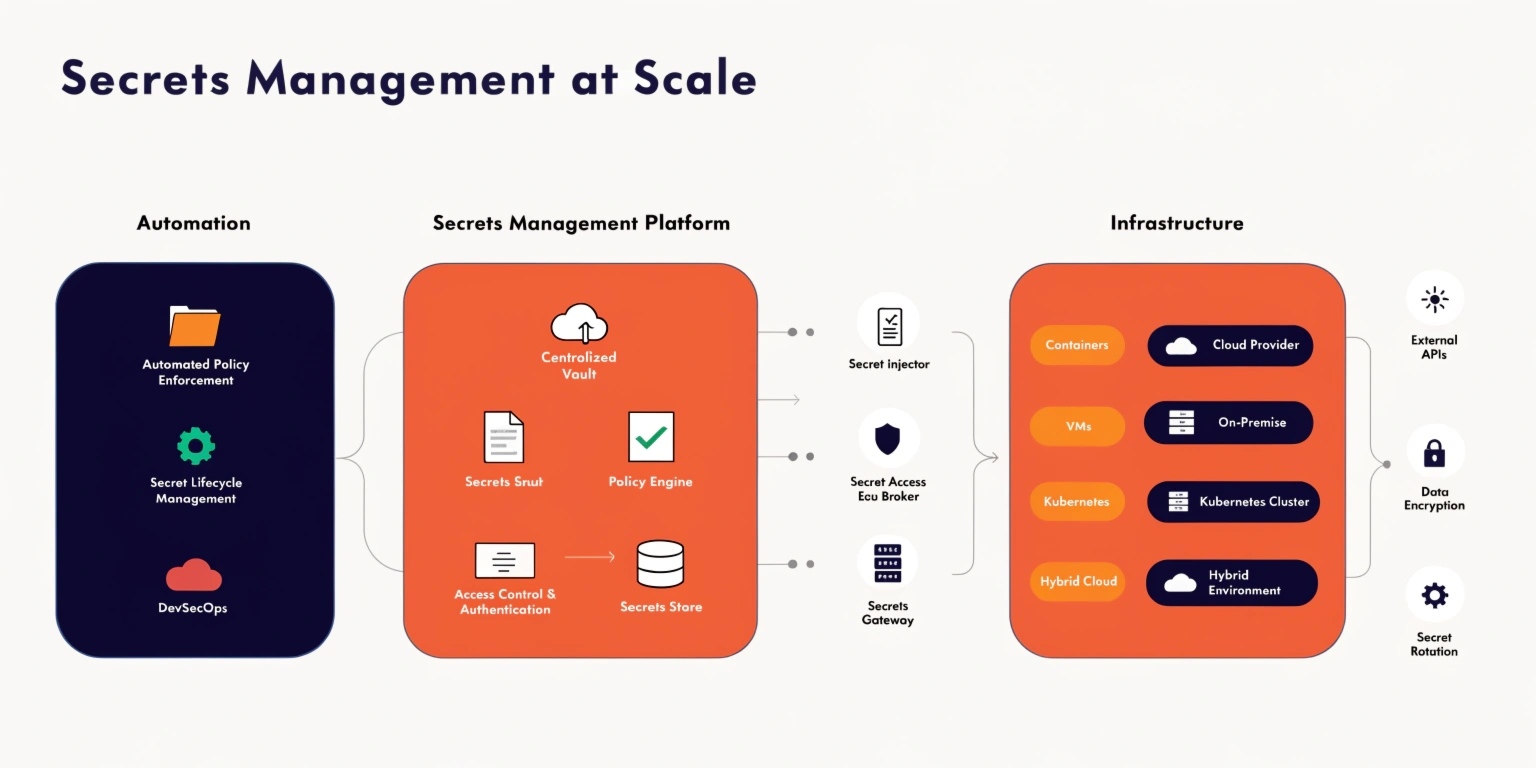
In today’s digital landscape, applications rely heavily on sensitive information such as API keys, database credentials, encryption keys, and access tokens. Managing these secrets securely becomes increasingly complex as systems scale across cloud environments, microservices, and distributed architectures. Poor secrets management can lead to data breaches, unauthorized access, and severe financial and reputational damage.
This blog explores how to effectively manage secrets at scale, including best practices, tools, and architectural strategies.
What is Secrets Management?
Secrets management refers to the process of securely storing, accessing, and controlling sensitive information used by applications, services, and infrastructure. These secrets include:
- API keys
- Passwords
- OAuth tokens
- SSH keys
- Encryption keys
At small scale, developers often store secrets in environment variables or configuration files. However, this approach becomes risky and unmanageable as systems grow.
Challenges of Managing Secrets at Scale
As organizations expand, secrets management faces several challenges:
1. Secret Sprawl
Secrets get scattered across multiple services, repositories, and environments, making tracking difficult.
2. Lack of Visibility
Without centralized control, it’s hard to know who accessed which secret and when.
3. Manual Processes
Manual rotation and updates increase the risk of human error.
4. Security Risks
Hardcoded secrets in code repositories can be exposed accidentally, especially in public repositories.
5. Compliance Requirements
Organizations must adhere to strict security standards and regulations, which require proper handling of sensitive data.
Best Practices for Secrets Management
1. Centralize Secret Storage
Use a dedicated secrets management system instead of storing secrets in code or configuration files. Centralized systems provide:
- Secure storage
- Access control
- Audit logging
Popular tools include vault-based solutions and cloud-native secret managers.
2. Implement Least Privilege Access
Adopt the principle of least privilege by ensuring users and services only have access to the secrets they need. This minimizes the impact of potential breaches.
Use role-based access control (RBAC) and identity-based authentication to enforce strict permissions.
3. Automate Secret Rotation
Regularly rotating secrets reduces the risk of compromised credentials. Automation ensures:
- Consistency
- Reduced manual effort
- Improved security posture
Set expiration policies and rotate keys periodically without downtime.
4. Encrypt Secrets Everywhere
Secrets should always be encrypted:
- At rest (stored securely)
- In transit (using secure protocols like HTTPS)
Strong encryption standards ensure that even if data is intercepted, it remains unreadable.
5. Avoid Hardcoding Secrets
Never store secrets directly in source code. Instead:
- Use environment variables
- Integrate with secret management APIs
- Use secure configuration management tools
This reduces the risk of accidental exposure.
6. Monitor and Audit Access
Tracking access to secrets is essential for security and compliance. Implement:
- Logging of all access events
- Real-time alerts for suspicious activity
- Regular audits
Monitoring helps detect unauthorized access early.
7. Use Dynamic Secrets
Dynamic secrets are generated on demand and expire after a short period. Benefits include:
- Reduced risk of long-term exposure
- Automatic expiration
- Enhanced security
For example, temporary database credentials can be generated for each session.
Tools for Secrets Management
Several tools and platforms help manage secrets at scale:
- HashiCorp Vault
- AWS Secrets Manager
- Azure Key Vault
- Google Secret Manager
These tools provide features like encryption, access control, secret rotation, and integration with cloud services and CI/CD pipelines.
Secrets Management in DevOps and CI/CD
In modern DevOps workflows, secrets are frequently used in:
- Build pipelines
- Deployment scripts
- Infrastructure provisioning
To secure these processes:
- Integrate secrets management tools with CI/CD pipelines
- Avoid exposing secrets in logs
- Use short-lived credentials
This ensures that automation does not become a security vulnerability.
Zero Trust Approach to Secrets
A Zero Trust security model assumes that no entity—inside or outside the network—is inherently trusted. Applying this to secrets management means:
- Verifying every access request
- Continuously authenticating users and services
- Limiting access based on context
This approach significantly strengthens security in distributed environments.
Final Thoughts
Secrets management at scale is not just a technical requirement—it is a critical component of modern cybersecurity strategy. As applications grow more complex, the risks associated with poor secrets handling also increase.
By centralizing secret storage, enforcing strict access controls, automating rotation, and leveraging modern tools, organizations can protect sensitive data effectively. Combining these practices with continuous monitoring and a Zero Trust mindset ensures robust security in an increasingly interconnected world.
Investing in proper secrets management today can prevent costly breaches tomorrow, making it an essential priority for any organization operating at scale.