Scaling software systems is one of the most discussed topics in technology. Organizations invest heavily in cloud infrastructure, microservices, automation, and performance optimization to ensure their applications can handle growing demand. However, technical scalability alone is not enough.
As systems become larger and more complex, engineering teams must also evolve. A company that successfully scales its technology but fails to scale its people, processes, and communication structures often faces delays, quality issues, and reduced productivity.
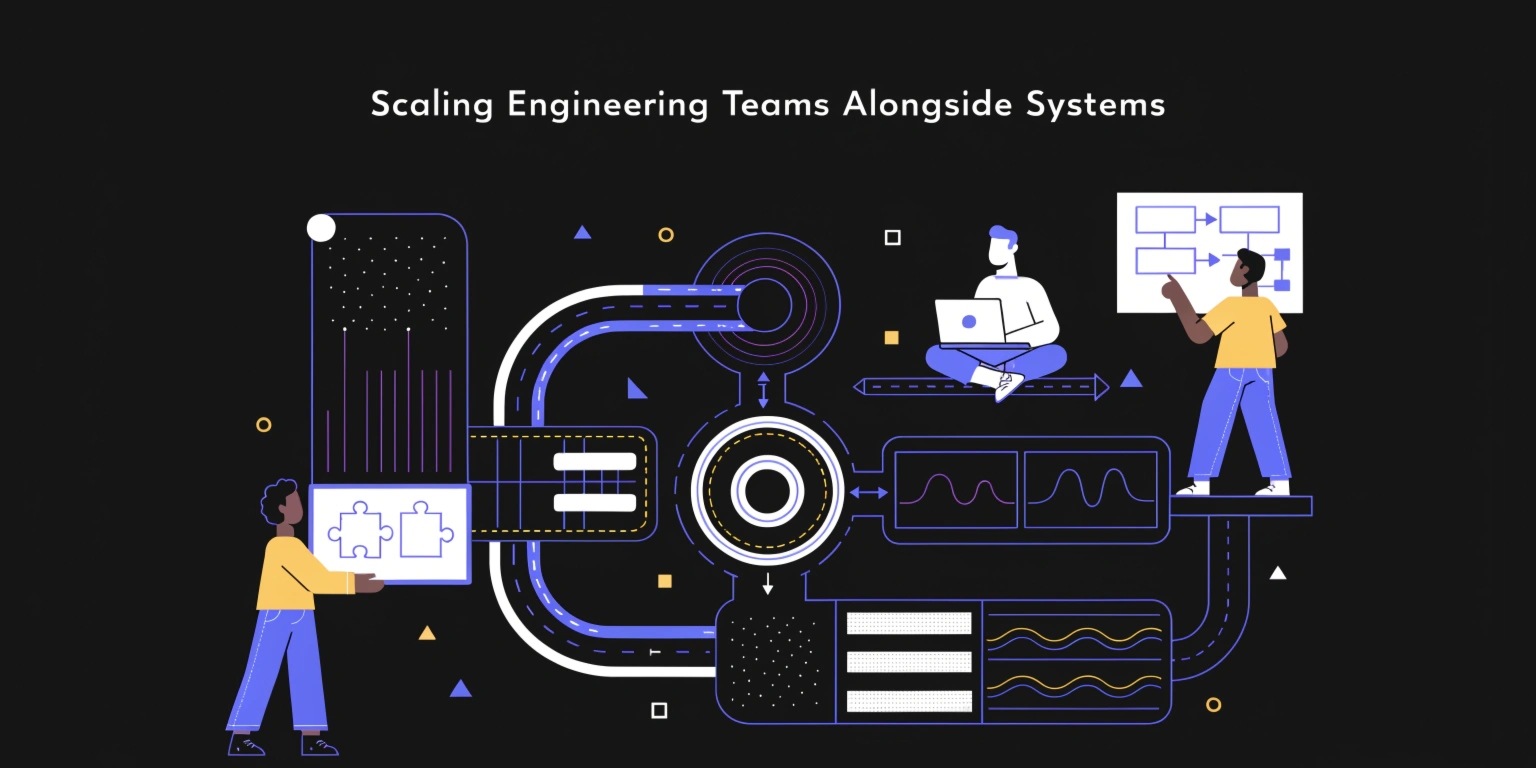
Scaling engineering teams alongside systems requires a balanced approach that aligns organizational growth with technical expansion. The most successful technology companies understand that scalable software is built by scalable teams.
Why Team Scaling Matters
In the early stages of a company, a small group of engineers can manage the entire product lifecycle. Communication is direct, decision-making is fast, and responsibilities are often shared.
As the company grows, challenges emerge:
- Increased codebase complexity
- More products and services
- Larger customer bases
- Multiple development teams
- Cross-functional dependencies
- Greater operational requirements
Without proper team scaling strategies, engineering productivity can decline despite adding more developers.
This phenomenon is often explained by Brooks's Law, which states that adding more people to a late software project can make it even later due to increased communication overhead.
Align Team Structure with System Architecture
One of the most effective ways to scale engineering organizations is to align team structures with system architecture.
As applications evolve into multiple services or modules, teams can be organized around specific domains such as:
- Authentication systems
- Payment services
- Mobile applications
- Data platforms
- Infrastructure operations
This approach provides several advantages:
- Clear ownership
- Faster decision-making
- Reduced coordination complexity
- Better accountability
Teams become responsible for both development and maintenance of their respective systems.
Build Strong Engineering Leadership
As organizations expand, leadership becomes increasingly important.
Engineering leaders help:
- Define technical vision
- Manage team growth
- Facilitate collaboration
- Resolve conflicts
- Maintain engineering standards
A common mistake is promoting excellent developers into leadership roles without providing management training.
Successful scaling requires investing in leadership development programs that prepare engineers for responsibilities beyond coding.
Establish Clear Communication Channels
Communication complexity increases exponentially as teams grow.
Small teams may communicate informally, but larger organizations require structured communication practices.
Effective approaches include:
- Regular team meetings
- Technical design reviews
- Architecture discussions
- Documentation standards
- Internal knowledge-sharing sessions
Clear communication reduces misunderstandings and ensures alignment across multiple teams.
Create Scalable Development Processes
Processes that work for ten engineers may not work for one hundred.
Organizations should gradually introduce scalable practices such as:
Standardized Code Reviews
Consistent review processes improve code quality and knowledge sharing.
Automated Testing
Comprehensive testing reduces the risk of defects as development velocity increases.
Continuous Integration and Deployment
CI/CD pipelines enable teams to release software efficiently and reliably.
Documentation Standards
Well-maintained documentation helps onboard new engineers and preserves organizational knowledge.
The goal is not bureaucracy but creating repeatable systems that support growth.
Invest in Developer Productivity
Engineering productivity becomes increasingly important as teams expand.
Organizations should focus on:
- Developer tools
- Automation platforms
- Internal frameworks
- Self-service infrastructure
- Development environments
Reducing friction in everyday tasks allows engineers to focus on solving business problems rather than dealing with operational inefficiencies.
High-performing organizations continuously evaluate ways to improve the developer experience.
Encourage Ownership and Accountability
As engineering teams grow, maintaining accountability becomes more challenging.
Clear ownership structures help ensure that:
- Systems are maintained properly
- Incidents are resolved quickly
- Technical debt is addressed
- Product goals are achieved
Many successful organizations adopt a "you build it, you run it" philosophy where teams are responsible for both development and operational support.
This approach strengthens accountability while improving software quality.
Scale Company Culture Intentionally
Culture plays a critical role in organizational growth.
When engineering teams are small, culture develops naturally through daily interactions. As organizations expand, leaders must actively reinforce cultural values.
Important cultural principles often include:
- Collaboration
- Continuous learning
- Innovation
- Customer focus
- Transparency
- Accountability
Strong cultures help maintain consistency even as teams grow across locations and time zones.
Manage Technical Debt Proactively
Rapid growth often introduces technical debt.
Examples include:
- Outdated code
- Poor documentation
- Architectural shortcuts
- Legacy dependencies
Ignoring technical debt can slow development and increase maintenance costs.
Engineering leaders should allocate dedicated time for:
- Refactoring
- System modernization
- Infrastructure improvements
- Performance optimization
Managing technical debt is essential for sustainable scaling.
Develop Career Growth Frameworks
Retaining talented engineers becomes increasingly important as organizations grow.
Clear career progression frameworks help employees understand:
- Skill expectations
- Promotion criteria
- Leadership opportunities
- Technical specialization paths
Providing growth opportunities improves retention while creating a stronger leadership pipeline.
Leverage Data-Driven Decision Making
Engineering organizations should measure performance using meaningful metrics.
Common indicators include:
- Deployment frequency
- Lead time for changes
- System reliability
- Incident response times
- Team productivity metrics
Data-driven insights help leaders identify bottlenecks and continuously improve organizational effectiveness.
Real-World Example
Consider a SaaS company that grows from 15 engineers to 150 engineers over three years.
Initially, a single team manages the entire platform. As the product expands, the company introduces specialized teams for infrastructure, customer-facing applications, data services, and platform engineering.
Alongside technical restructuring, the company implements CI/CD pipelines, leadership development programs, documentation standards, and ownership frameworks.
As a result, development velocity increases while system reliability improves, enabling the organization to scale both its technology and workforce successfully.
Conclusion
Scaling engineering teams alongside systems is one of the most important challenges facing modern technology organizations. Successful growth requires more than hiring additional developers. It demands thoughtful organizational design, strong leadership, scalable processes, effective communication, and a culture that supports continuous improvement.
Companies that align team structures with system architecture, invest in developer productivity, and foster accountability are better positioned to manage increasing complexity. By scaling people and technology together, organizations can maintain innovation, improve reliability, and achieve sustainable long-term growth.