Networking is the backbone of modern Android applications. From login authentication and product listings to chat systems and payment processing, almost every mobile app communicates with remote servers. Choosing the right networking library directly impacts performance, scalability, and maintainability.
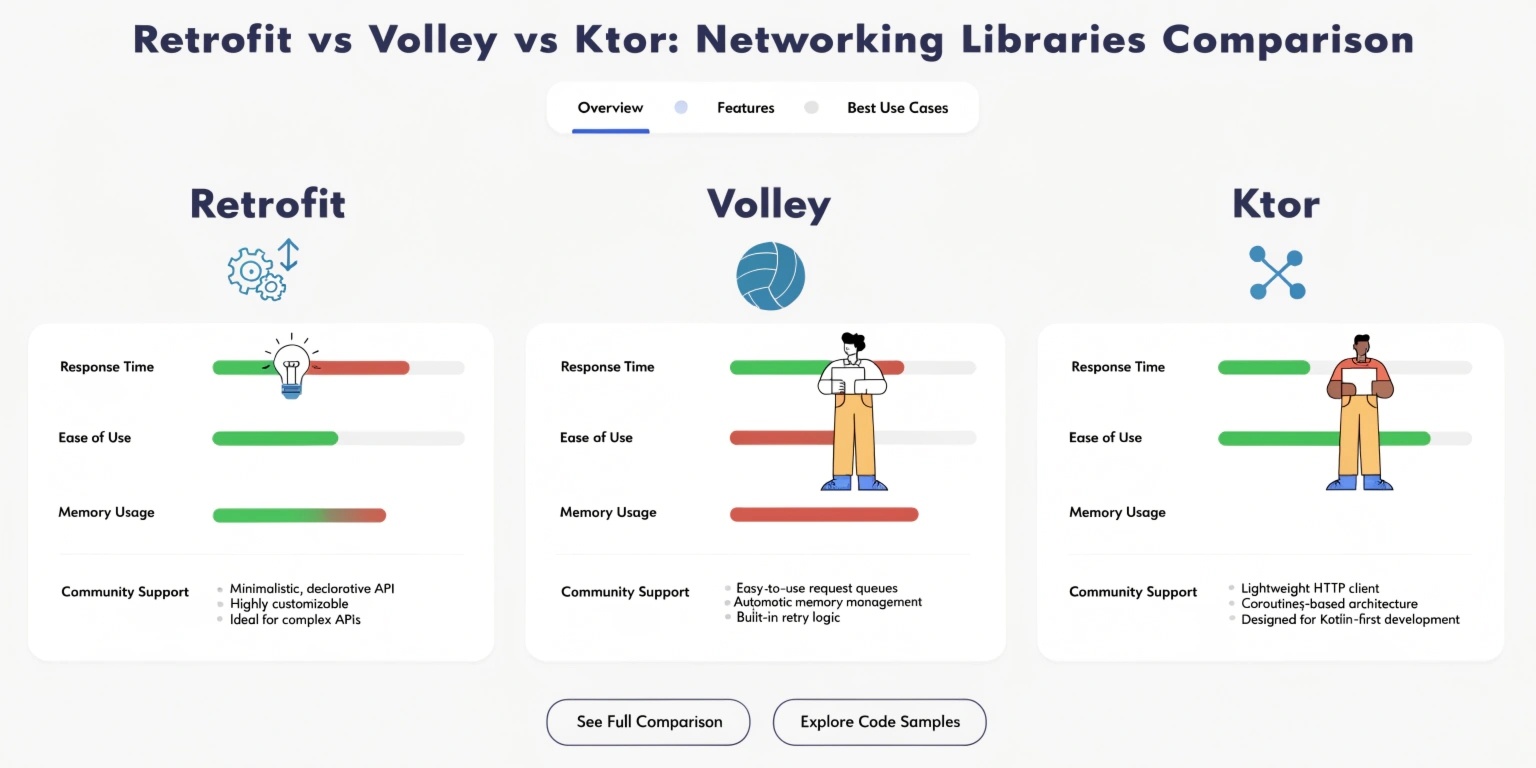
Among the most widely used networking libraries in Android development are Retrofit, Volley, and Ktor. Each has strengths and ideal use cases. Let’s compare them in depth.
1. Retrofit
Retrofit is developed by Square, Inc. and is built on top of OkHttp. It is currently the most widely adopted networking library in Android development.
Why Developers Prefer Retrofit
Retrofit is designed specifically for REST API communication. It converts HTTP APIs into Kotlin or Java interfaces. Developers simply define endpoints using annotations.
Example:
@GET("products")
suspend fun getProducts(): List<Product>
It automatically handles:
- JSON parsing (Gson, Moshi, Kotlinx Serialization)
- Coroutine support
- Error handling
- Interceptors
- Logging
Pros
- Very clean and readable code
- Built-in coroutine support
- Easy integration with MVVM
- Strong community support
- Highly scalable
Cons
- Slightly heavier than Volley
- Designed mainly for REST APIs
Best For
- E-commerce apps
- Fintech apps
- Large-scale production apps
- Applications using Clean Architecture
Retrofit is generally the default choice for professional Android development in 2026.
2. Volley
Volley is developed by Google and is an older networking library focused on small and fast network operations.
Volley was built for:
- Quick JSON requests
- Image loading
- Lightweight API calls
It works well for apps that require frequent small network calls.
Pros
- Lightweight
- Good for simple requests
- Built-in request queue management
- Automatic caching
Cons
- No native coroutine support
- More boilerplate compared to Retrofit
- Less flexible for complex APIs
Volley is suitable for:
- Small apps
- MVP projects
- Simple API calls without complex architecture
However, most modern Android teams prefer Retrofit due to better coroutine integration and scalability.
3. Ktor
Ktor is developed by JetBrains, the creators of Kotlin. Unlike Retrofit and Volley, Ktor is a fully customizable HTTP client.
Ktor is not limited to Android. It works across:
- Android
- iOS
- Backend servers
- Desktop
Why Ktor is Powerful
Ktor provides:
- Full coroutine support
- Custom request pipelines
- Multiplatform compatibility
- Advanced configuration
Example:
val response: HttpResponse = client.get("https://api.example.com/products")
It gives developers complete control over:
- Headers
- Timeouts
- Logging
- Authentication
- Serialization
Pros
- Multiplatform support
- Coroutine-native
- Highly customizable
- Lightweight
Cons
- More setup required
- Steeper learning curve
- Not as simple as Retrofit for quick REST APIs
Best For
- Kotlin Multiplatform projects
- Highly customized networking logic
- Advanced use cases requiring flexibility
Performance Comparison
FeatureRetrofitVolleyKtorCoroutine SupportYes (Native)No (Manual)Yes (Native)Ease of UseVery EasyModerateModerateREST API FriendlyExcellentGoodGoodCustomizationModerateLimitedVery HighMultiplatformNoNoYesLearning CurveLowMediumMedium-High
Real-World Scenario Comparison
Scenario 1: E-commerce App
You need pagination, authentication, logging, interceptors, and structured error handling.
→ Retrofit is ideal.
Scenario 2: Small News App
Simple GET requests and lightweight API calls.
→ Volley is sufficient.
Scenario 3: Kotlin Multiplatform Project
You want shared networking logic for Android and iOS.
→ Ktor is the best choice.
Which One Should You Choose in 2026?
For most Android developers building production-ready apps:
- Choose Retrofit for standard REST APIs.
- Choose Ktor if building Kotlin Multiplatform apps.
- Choose Volley only for lightweight or legacy projects.
Retrofit remains the industry standard because it integrates seamlessly with modern Android architecture (MVVM, Clean Architecture) and supports coroutines natively.
Conclusion
Selecting the right networking library is critical for app scalability and maintainability. While Volley paved the way for efficient Android networking, Retrofit modernized REST communication with clean architecture integration. Ktor, backed by JetBrains, brings flexibility and multiplatform power.
Understanding the strengths of each library helps developers make strategic decisions based on project requirements rather than trends. In today’s mobile development landscape, coroutine support, scalability, and architecture compatibility should guide your choice.