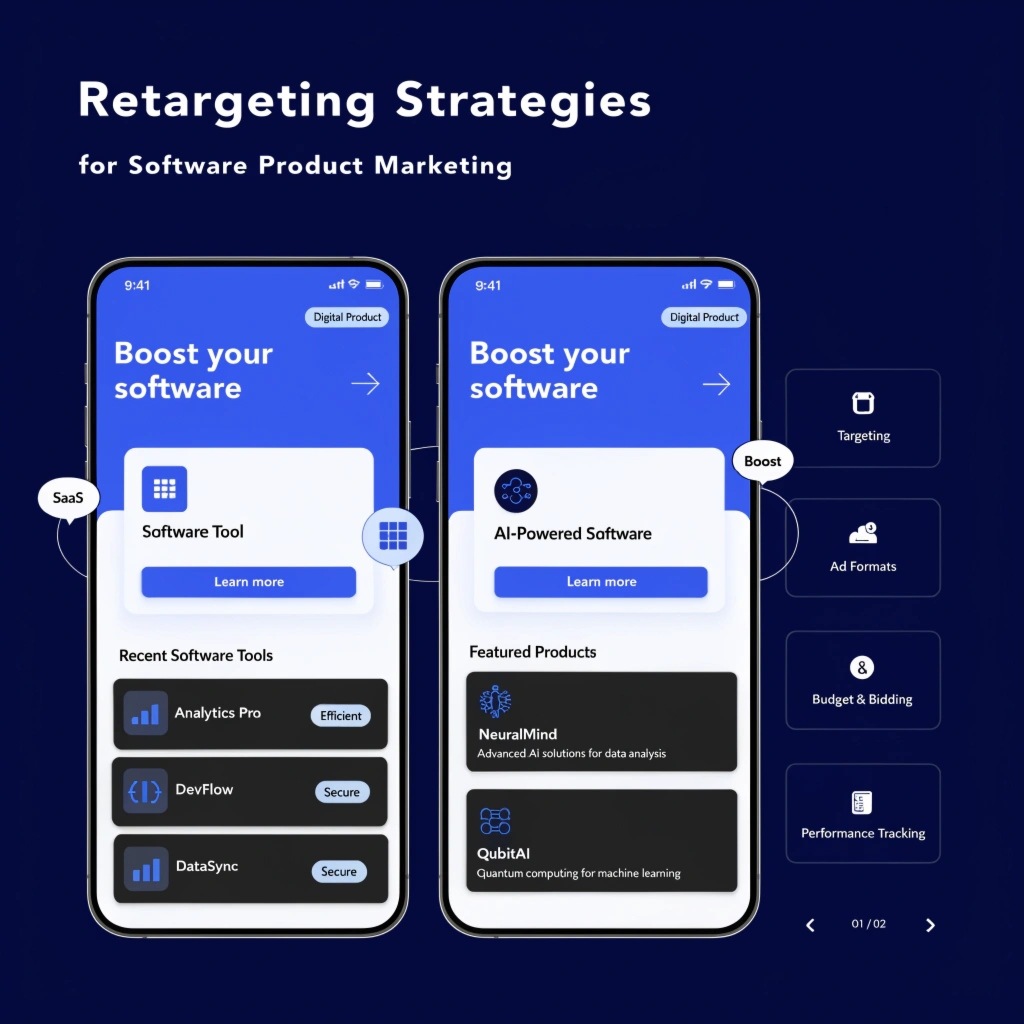
In today’s highly competitive software market, attracting users is only half the battle. Most visitors do not convert on their first interaction with a product. This is where retargeting strategies become essential for software product marketing. Retargeting allows businesses to reconnect with potential customers who have already shown interest, increasing the likelihood of conversion and improving return on investment (ROI).
Understanding Retargeting in Software Marketing
Retargeting, also known as remarketing, involves targeting users who have previously interacted with your website, app, or content but did not complete a desired action—such as signing up for a trial or purchasing a subscription. For software companies, this means re-engaging prospects who may still be evaluating options or need more convincing.
Segmenting Your Audience for Better Results
One of the most effective retargeting strategies is audience segmentation. Not all users are the same, and treating them as such can reduce campaign effectiveness. Segment users based on their behavior, such as:
- Visitors who viewed pricing pages
- Users who signed up for a trial but didn’t upgrade
- Customers who abandoned the checkout process
By tailoring your messaging to each segment, you can address specific pain points and increase engagement.
Personalized Messaging and Dynamic Ads
Generic ads often fail to capture attention. Personalized messaging, on the other hand, can significantly improve performance. Use dynamic ads that display features or benefits relevant to the user’s previous interactions. For instance, if a user explored a specific feature of your software, highlight that feature in your retargeting ad.
Personalization builds trust and shows users that you understand their needs, making them more likely to return and convert.
Multi-Channel Retargeting Approach
Relying on a single platform limits your reach. A successful retargeting strategy involves multiple channels, such as:
- Display ads on websites
- Social media platforms
- Email remarketing campaigns
Combining these channels ensures that your brand stays top-of-mind across different touchpoints. For example, a user who sees your ad on social media and later receives a follow-up email is more likely to engage.
Timing and Frequency Optimization
Timing plays a crucial role in retargeting success. Showing ads too soon can feel intrusive, while waiting too long may result in lost interest. Use data analytics to determine the optimal timing for your campaigns.
Additionally, avoid overwhelming users with excessive ads. Frequency capping helps maintain a balance, ensuring your brand remains visible without becoming annoying.
Leveraging Content for Retargeting
Content-driven retargeting is highly effective for software marketing. Instead of pushing sales immediately, offer value through:
- Case studies
- Whitepapers
- Product demos
- Webinars
This approach nurtures leads and educates potential customers, gradually guiding them toward conversion.
Retargeting for Different Stages of the Funnel
Different users are at different stages of the buyer journey. Tailor your retargeting strategies accordingly:
- Top of Funnel: Focus on brand awareness and educational content
- Middle of Funnel: Highlight features, benefits, and comparisons
- Bottom of Funnel: Offer discounts, free trials, or limited-time deals
By aligning your messaging with the user’s stage, you can improve conversion rates significantly.
Measuring and Optimizing Campaign Performance
No retargeting strategy is complete without performance tracking. Monitor key metrics such as:
- Click-through rates (CTR)
- Conversion rates
- Cost per acquisition (CPA)
- Return on ad spend (ROAS)
Use A/B testing to experiment with different creatives, messaging, and targeting options. Continuous optimization ensures that your campaigns remain effective and deliver maximum ROI.
Common Mistakes to Avoid
While retargeting is powerful, certain mistakes can reduce its effectiveness:
- Targeting too broad an audience
- Using repetitive or irrelevant ads
- Ignoring mobile optimization
- Failing to update audience lists
Avoiding these pitfalls can help you create more impactful campaigns.
Conclusion
Retargeting is a critical component of software product marketing. By leveraging audience segmentation, personalized messaging, and multi-channel strategies, businesses can effectively re-engage potential customers and drive conversions. In a market where competition is intense and attention spans are short, retargeting provides a second chance to make a lasting impression.
When implemented correctly, it not only boosts conversions but also strengthens customer relationships and enhances brand recall.