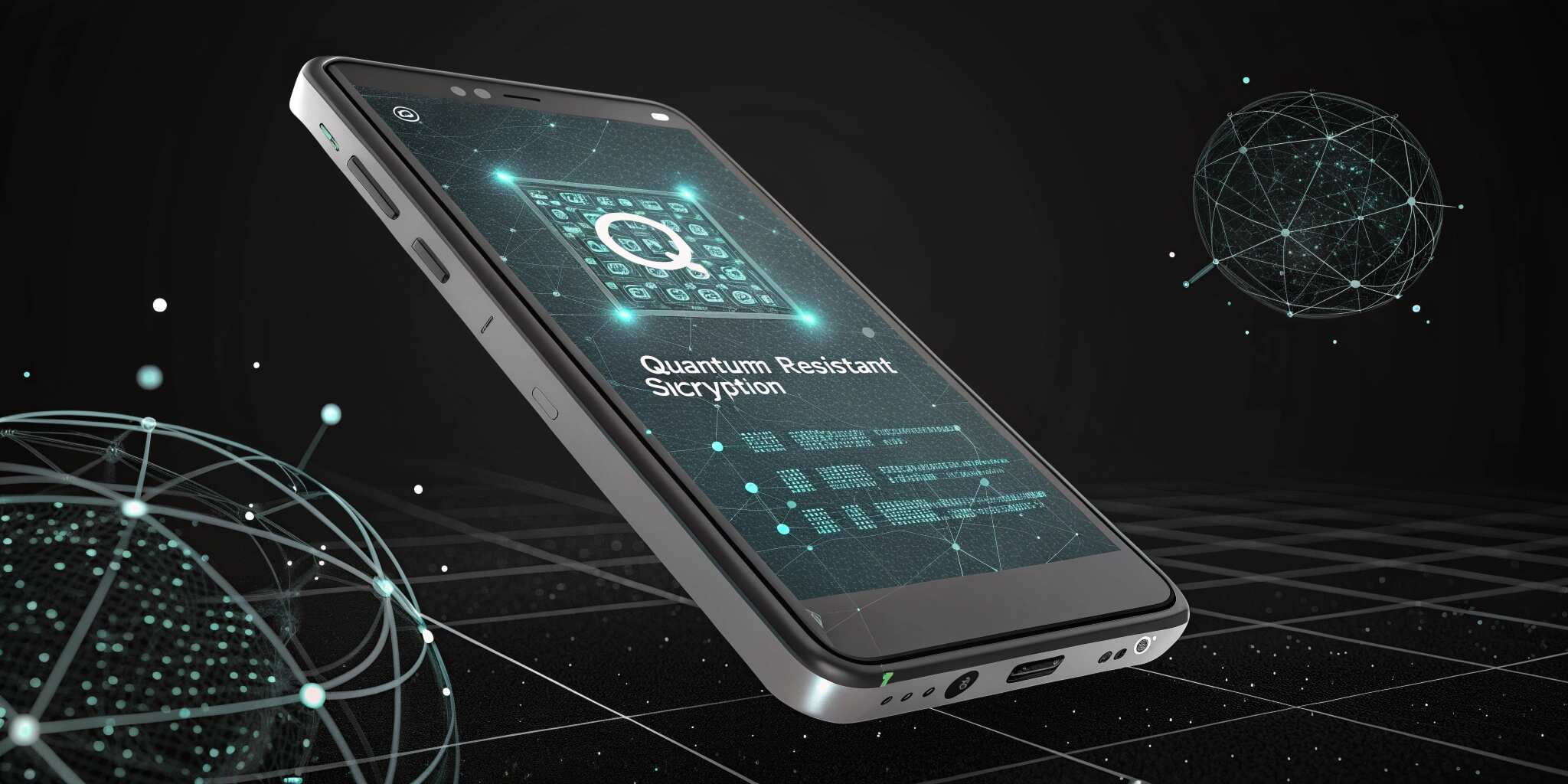
Quantum computing is advancing at a pace that could soon threaten the very foundation of modern digital security. Traditional encryption methods like RSA, ECC (Elliptic Curve Cryptography), and Diffie-Hellman rely on mathematical problems that classical computers struggle to solve. However, quantum computers—using algorithms such as Shor’s algorithm—could break these cryptosystems in minutes. For mobile applications handling sensitive data such as financial transactions, healthcare records, identity verification, and personal communication, this poses a significant and unavoidable threat. The solution lies in quantum-resistant encryption, also known as post-quantum cryptography (PQC).
Why Quantum-Resistant Encryption Matters
Mobile apps are deeply integrated into everyday life, storing and transferring critical user information. As quantum computers grow more powerful, cybercriminals may exploit them to decode encrypted mobile data, intercept communications, or compromise backend systems. Even more concerning is the “harvest now, decrypt later” model, where attackers store encrypted data today with the intention of decrypting it once quantum capabilities mature. Ensuring mobile apps are quantum-safe now helps mitigate future breaches and long-term risks.
Understanding Post-Quantum Cryptography (PQC)
Post-quantum cryptography includes cryptographic algorithms engineered to resist quantum attacks. Unlike traditional methods, these new algorithms rely on mathematical structures that quantum computers cannot efficiently solve. In 2022 and 2023, the National Institute of Standards and Technology (NIST) finalized the first set of PQC algorithms for standardization, creating a clear roadmap for quantum-safe security.
The main families of PQC algorithms include:
- Lattice-based Cryptography – Considered the strongest resistance and most scalable for mobile devices.
- Hash-based Cryptography – Ideal for digital signatures but not always suitable for encryption.
- Multivariate Polynomial Cryptography – Good for authentication and signature schemes.
- Code-based Cryptography – Reliable but sometimes resource-heavy for mobile devices.
For mobile app developers, NIST-recommended lattice-based schemes such as CRYSTALS-Kyber (for key encapsulation) and CRYSTALS-Dilithium (for digital signatures) are widely accepted as the best options.
Implications for Mobile App Development
Transitioning to quantum-resistant encryption involves architectural considerations and proactive strategy. Developers must assess areas within the mobile ecosystem vulnerable to quantum threats, including:
- API communication and network encryption
- Device authentication and login mechanisms
- Local database storage
- Secure key exchange for end-to-end encryption
- Push notification systems handling sensitive data
- Cloud backend and server-side cryptography
Developers need to adopt hybrid approaches that combine traditional encryption with PQC algorithms, ensuring compatibility with current devices while building future-proof systems.
Practical Steps to Implement Quantum-Safe Encryption
- Adopt Hybrid Cryptographic Protocols:
- Combine RSA/ECC with PQC algorithms to maintain backward compatibility while introducing quantum safety.
- Implement NIST-Approved PQC Libraries:
- Many frameworks and SDKs now support CRYSTALS-Kyber and Dilithium through open-source libraries like Open Quantum Safe (OQS).
- Upgrade Key Exchange Mechanisms:
- Use quantum-resistant key encapsulation mechanisms for secure communication between app and server.
- Strengthen Digital Signatures:
- Replace vulnerable ECC signatures with PQC signature schemes for verifying user identities and securing app updates.
- Conduct Quantum Threat Modeling:
- Assess data flows and identify where quantum vulnerabilities exist in current mobile architecture.
- Educate Development Teams:
- Ensure your engineering teams understand PQC, NIST guidelines, and how to implement secure algorithms efficiently.
Real-World Use Cases
- Banking and FinTech apps preparing to protect user transactions.
- Healthcare mobile platforms safeguarding patient records.
- Enterprise apps managing authentication and confidential communication.
- Messaging apps building quantum-safe end-to-end encryption.
Future of Quantum-Safe Mobile Development
Building quantum-resistant mobile apps is no longer optional. As quantum hardware becomes more accessible, businesses that fail to prepare may face catastrophic security failures. Early adoption not only protects user data but also establishes trust and long-term cybersecurity resilience.
The future of mobile security belongs to organizations that embrace quantum-resistant encryption today.