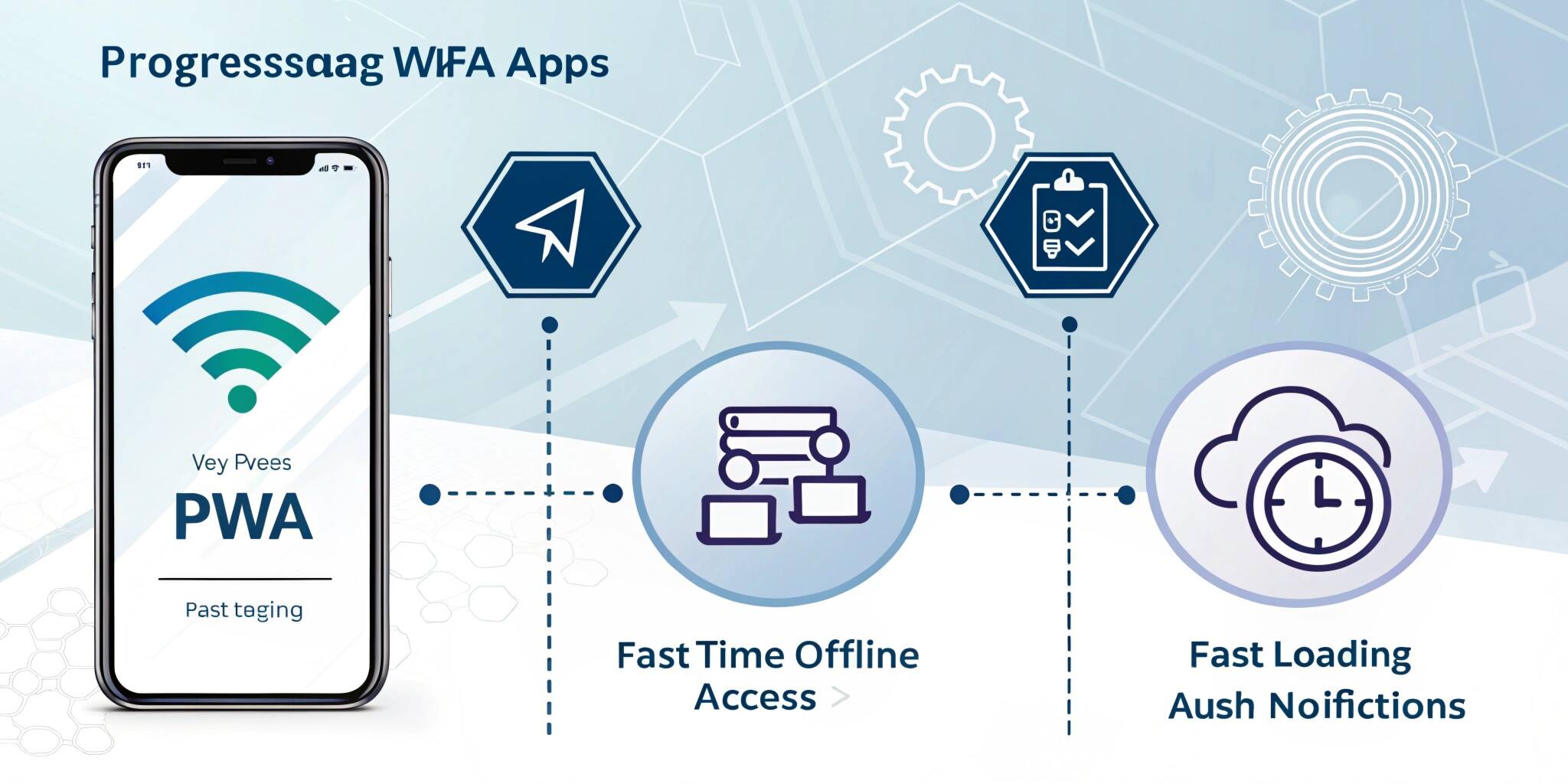
The gap between websites and mobile applications has existed for years. Websites are easy to access but often slow and limited, while native mobile apps provide better performance but require installation, updates, and higher development costs. Progressive Web Apps (PWAs) were introduced to bridge this gap.
A Progressive Web App is essentially a website enhanced with modern browser capabilities that allow it to behave like a native mobile application. Users can open it in a browser, install it on their device, receive notifications, and even use it offline.
Today, companies such as Twitter (X Lite), Starbucks, Pinterest, and Uber have successfully adopted PWAs to improve performance and user engagement.
What Makes a Website a PWA?
A normal responsive website does not automatically qualify as a Progressive Web App. A PWA must include three core technologies:
- Service Workers
- Web App Manifest
- Secure HTTPS connection
Together, these technologies provide speed, reliability, and installability.
1. Service Workers (The Heart of PWA)
Service workers are background scripts that run separately from the web page. They act as a network proxy between the browser and the internet.
They allow the application to:
- Cache assets (images, CSS, JS)
- Load pages instantly
- Work without internet connection
- Sync data when connection returns
This is what enables offline usage — one of the most powerful features of PWAs.
For example, a user can open a shopping website, browse products offline, and once internet returns, the cart automatically updates.
2. Web App Manifest
The Web App Manifest is a JSON file that defines how the app appears when installed on a device.
It includes:
- App name
- Icon
- Theme color
- Splash screen
- Display mode (full screen)
Because of this, the website can appear on the phone’s home screen exactly like a mobile application — without Play Store or App Store installation.
3. HTTPS Security
PWAs must run over HTTPS. Since service workers intercept network requests, secure connections are necessary to prevent data tampering and ensure safe communication.
Key Features of Progressive Web Apps
Offline Functionality
Users can access content even without internet connection through caching strategies.
Installable Experience
Users can “Add to Home Screen” directly from the browser.
Fast Loading Speed
PWAs load instantly because assets are cached locally.
Push Notifications
Websites can send notifications just like mobile apps, improving user engagement and retention.
Background Sync
Actions performed offline are automatically completed when connectivity returns.
Responsive Design
PWAs adapt to mobile, tablet, and desktop screens seamlessly.
Business Benefits of PWAs
1. Lower Development Cost
Instead of building:
- Android app
- iOS app
- Website
Companies only need a single codebase.
This drastically reduces development and maintenance costs.
2. Improved Performance
PWAs significantly improve page speed. Fast loading directly impacts:
- User satisfaction
- Bounce rate
- Conversion rate
Google research shows users often leave a website if it takes more than 3 seconds to load.
3. Higher User Engagement
Push notifications and offline capability bring users back to the platform regularly. Many companies report higher session duration and repeat visits after adopting PWAs.
4. No App Store Dependency
Users do not need to search, download, or update apps. This removes the biggest barrier to user adoption — installation friction.
5. Better SEO
Unlike native apps, PWAs are indexable by search engines. This means businesses gain organic traffic from Google while still providing an app-like experience.
When Should You Choose PWA?
PWAs are ideal for:
- E-commerce platforms
- News portals
- Booking systems
- Educational platforms
- SaaS dashboards
However, heavy 3D games or applications requiring deep hardware access (Bluetooth, advanced sensors) may still require native apps.
Future of Web Development
PWAs represent the direction modern web development is moving toward: fast, lightweight, cross-platform experiences. Browsers are continuously expanding capabilities such as file access, payments, and device APIs, making PWAs increasingly powerful.
For startups and businesses, PWAs offer a strategic advantage — reach users instantly without installation barriers while maintaining performance close to native apps.
Final Thoughts
Progressive Web Apps are not just a trend; they are a shift in how applications are delivered on the internet. By combining web accessibility with mobile app experience, PWAs help businesses improve engagement, reduce costs, and scale faster.
As user expectations grow, providing fast, reliable, and installable web experiences is becoming essential rather than optional.