Main Content
The way people learn and train is evolving rapidly. Traditional classroom sessions, static e-learning modules, and one-size-fits-all training programs are no longer sufficient in a fast-changing digital economy. Enter next-generation training, powered by Virtual Reality (VR), Augmented Reality (AR), and Artificial Intelligence (AI)—a powerful combination that is reshaping how organizations educate, upskill, and prepare their workforce.
The Shift Toward Immersive Learning
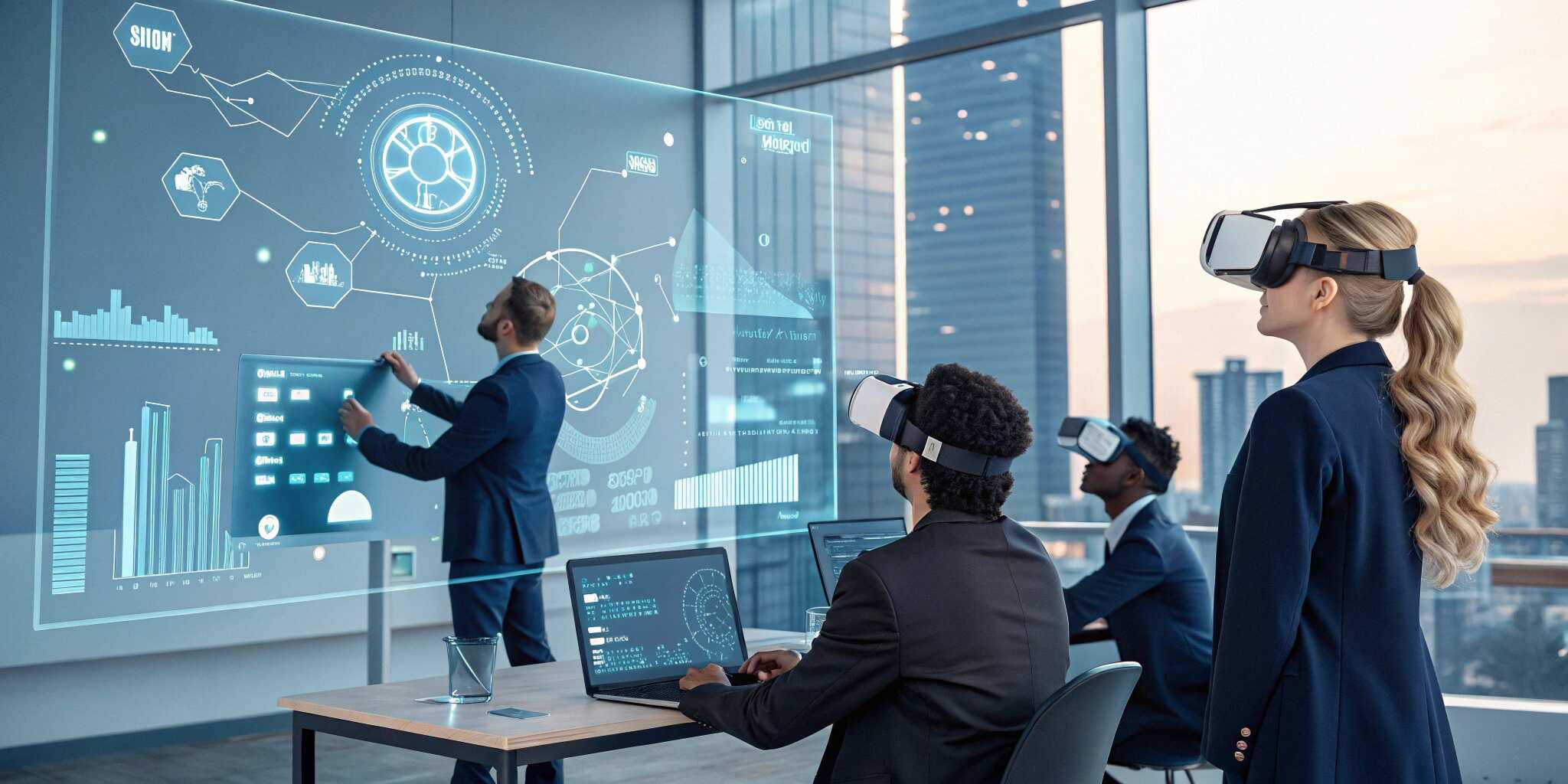
VR and AR introduce immersive and interactive environments that allow learners to experience real-world scenarios in a controlled, risk-free setting. Instead of reading manuals or watching videos, learners can practice by doing. For example, VR can simulate hazardous industrial environments, while AR can overlay step-by-step guidance onto real equipment.
This experiential approach significantly improves knowledge retention. Studies consistently show that learners remember more when they actively participate rather than passively consume information. Immersive training also boosts confidence, as employees can repeat scenarios until they master the required skills.
The Role of AI in Smart Learning
While VR and AR provide immersion, AI brings intelligence and personalization. AI-driven learning systems analyze user behavior, performance, and learning speed to adapt training content in real time. This means no two learners follow the exact same path.
AI can:
- Identify skill gaps and recommend targeted modules
- Adjust difficulty levels dynamically
- Provide instant feedback and performance insights
- Predict future training needs based on data patterns
By tailoring learning journeys, AI ensures that training is efficient, relevant, and aligned with individual and organizational goals.
VR/AR + AI: A Powerful Combination
When combined, VR/AR and AI create a truly next-gen training ecosystem. AI tracks how users interact within immersive environments—where they struggle, how long tasks take, and what mistakes are repeated. This data is then used to refine scenarios, personalize experiences, and improve outcomes.
For instance, in a VR safety training simulation, AI can detect hesitation or incorrect responses and immediately adapt the scenario, offering guidance or additional practice. In AR-based maintenance training, AI can recognize errors and display contextual tips in real time.
Industry Use Cases
Corporate Training:
Organizations use VR and AI to onboard employees, train leadership skills, and simulate customer interactions. Sales teams can practice pitches, while managers can experience realistic conflict-resolution scenarios.
Healthcare:
Medical professionals use VR simulations for surgical training and emergency response, while AI evaluates precision and decision-making. This reduces risk and enhances real-world preparedness.
Manufacturing & Engineering:
AR-based training helps technicians repair complex machinery with AI-guided instructions, minimizing downtime and errors.
Education & Skill Development:
Institutions are adopting immersive learning labs where students explore virtual science experiments, historical environments, or engineering simulations with AI-powered assessments.
Benefits of Next-Gen Training
- Higher Engagement: Gamified and immersive experiences keep learners motivated.
- Personalized Learning: AI adapts content to individual needs.
- Cost Efficiency: Reduced travel, equipment damage, and instructor dependency.
- Scalability: Training programs can be rolled out globally with consistency.
- Data-Driven Insights: Organizations gain measurable performance metrics.
Challenges to Consider
Despite its advantages, next-gen training comes with challenges such as high initial setup costs, hardware requirements, and the need for skilled content developers. However, as VR/AR devices become more affordable and AI platforms mature, these barriers are steadily decreasing.
The Future of Learning and Development
Looking ahead, next-gen training will evolve toward metaverse-based learning environments, where employees collaborate in shared virtual spaces. AI will play a larger role in predictive learning, recommending skills before gaps emerge. Integration with enterprise systems like HRMS and ERP platforms will further align training with business outcomes.
Conclusion
Next-generation training using VR, AR, and AI-driven learning is no longer a futuristic concept—it is a strategic necessity. Organizations that embrace immersive, intelligent training solutions will gain a competitive edge through better-skilled, more confident, and future-ready teams. As technology advances, learning will become more human-centric, adaptive, and impactful than ever before.